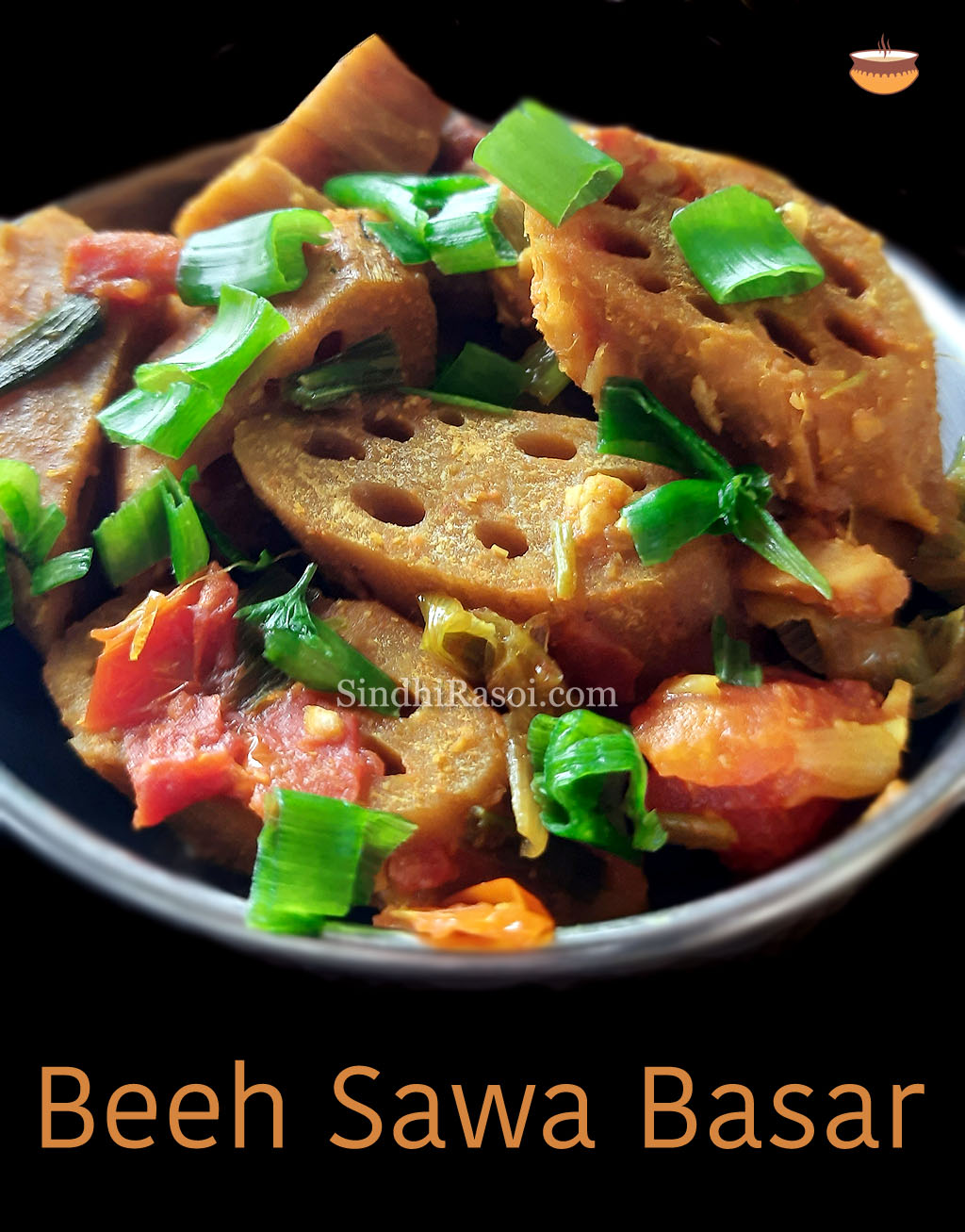
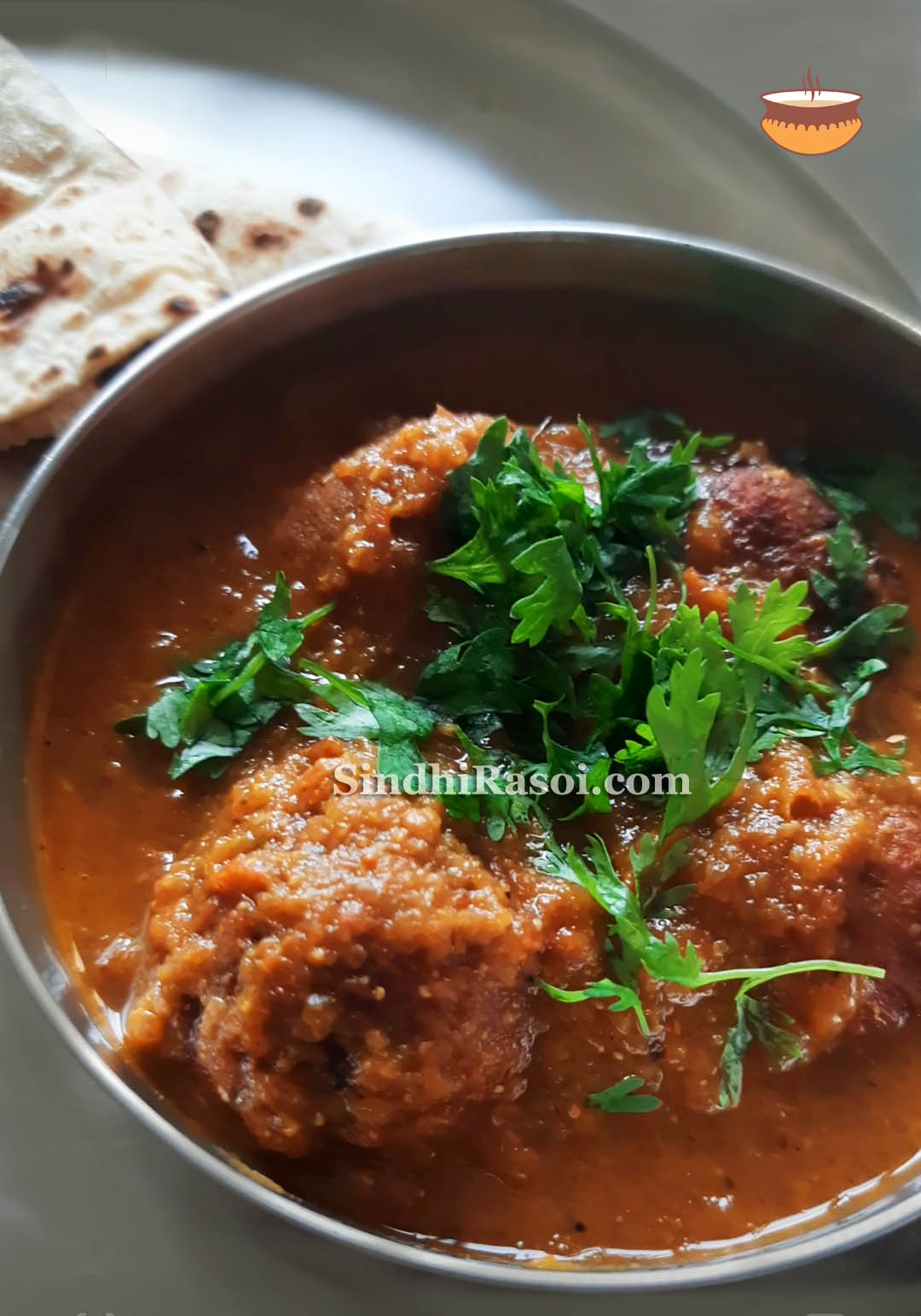
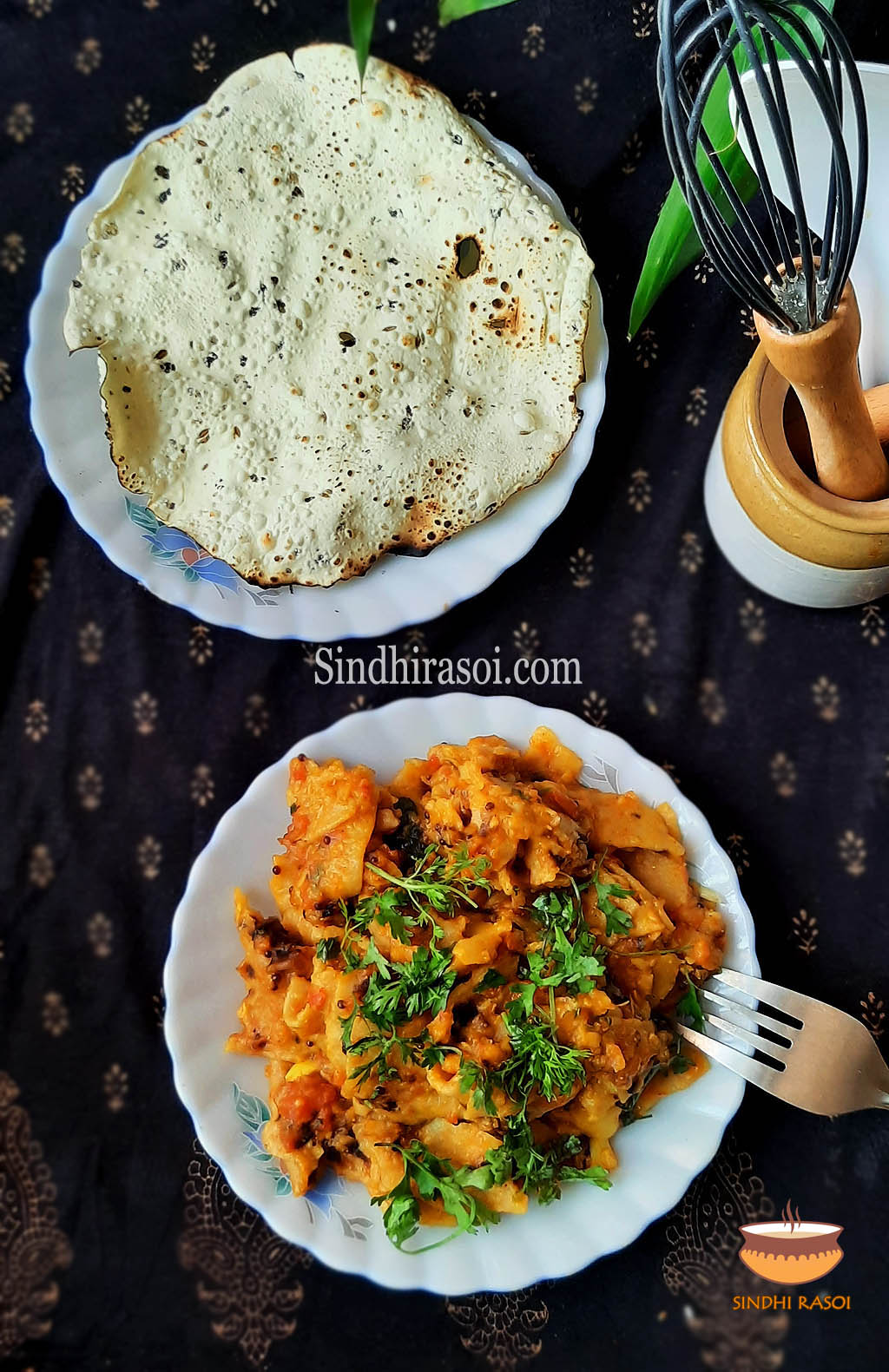
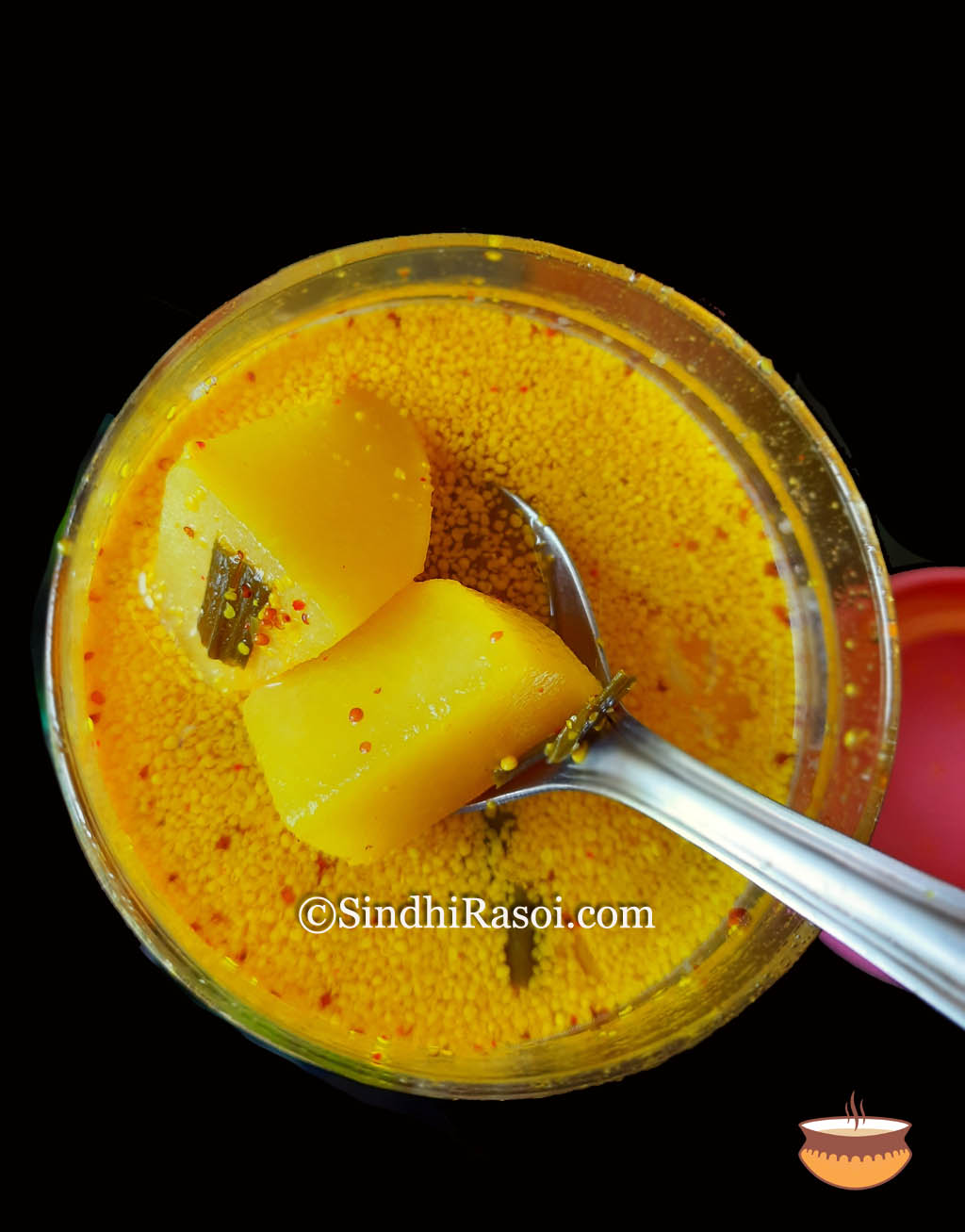
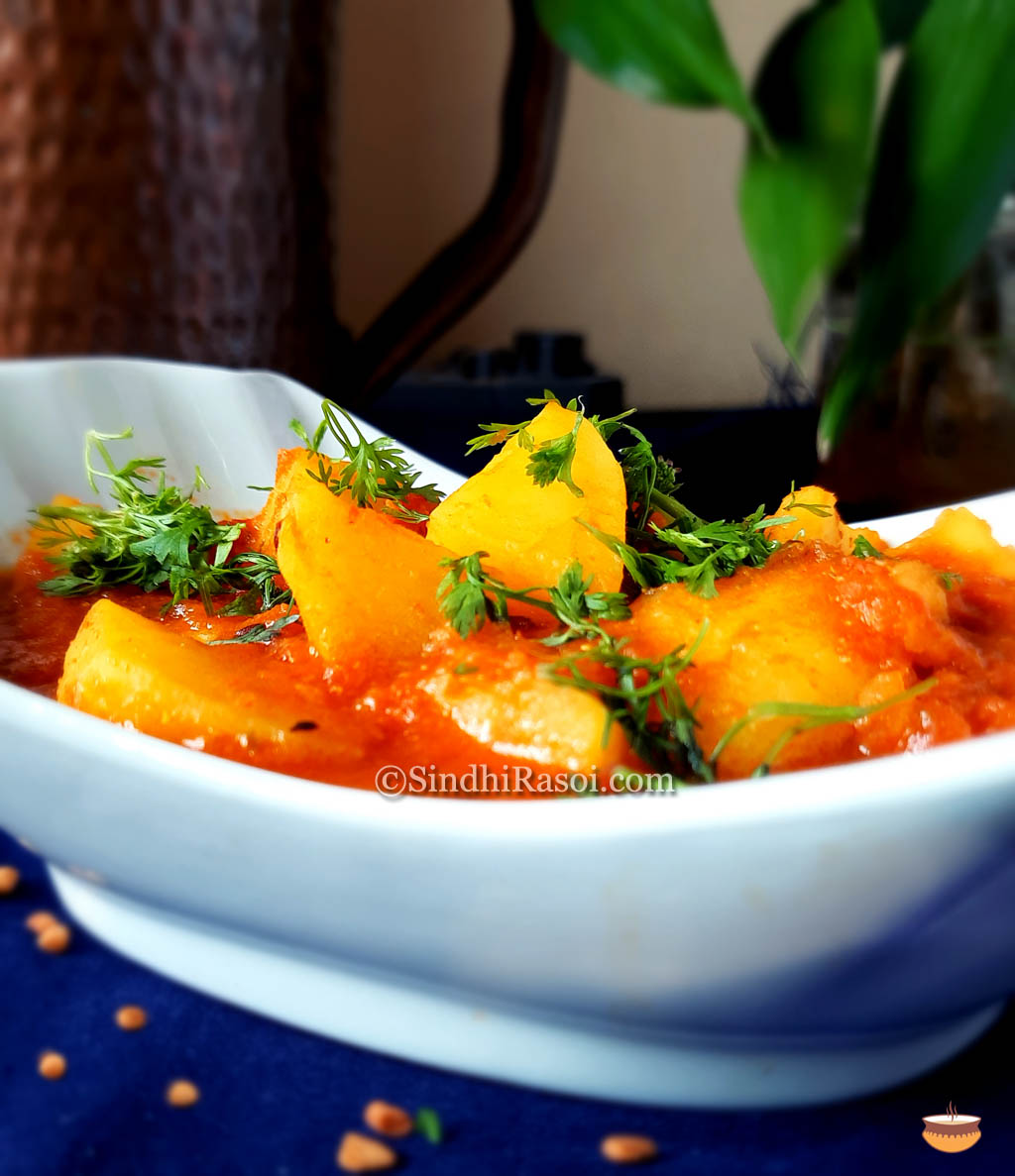
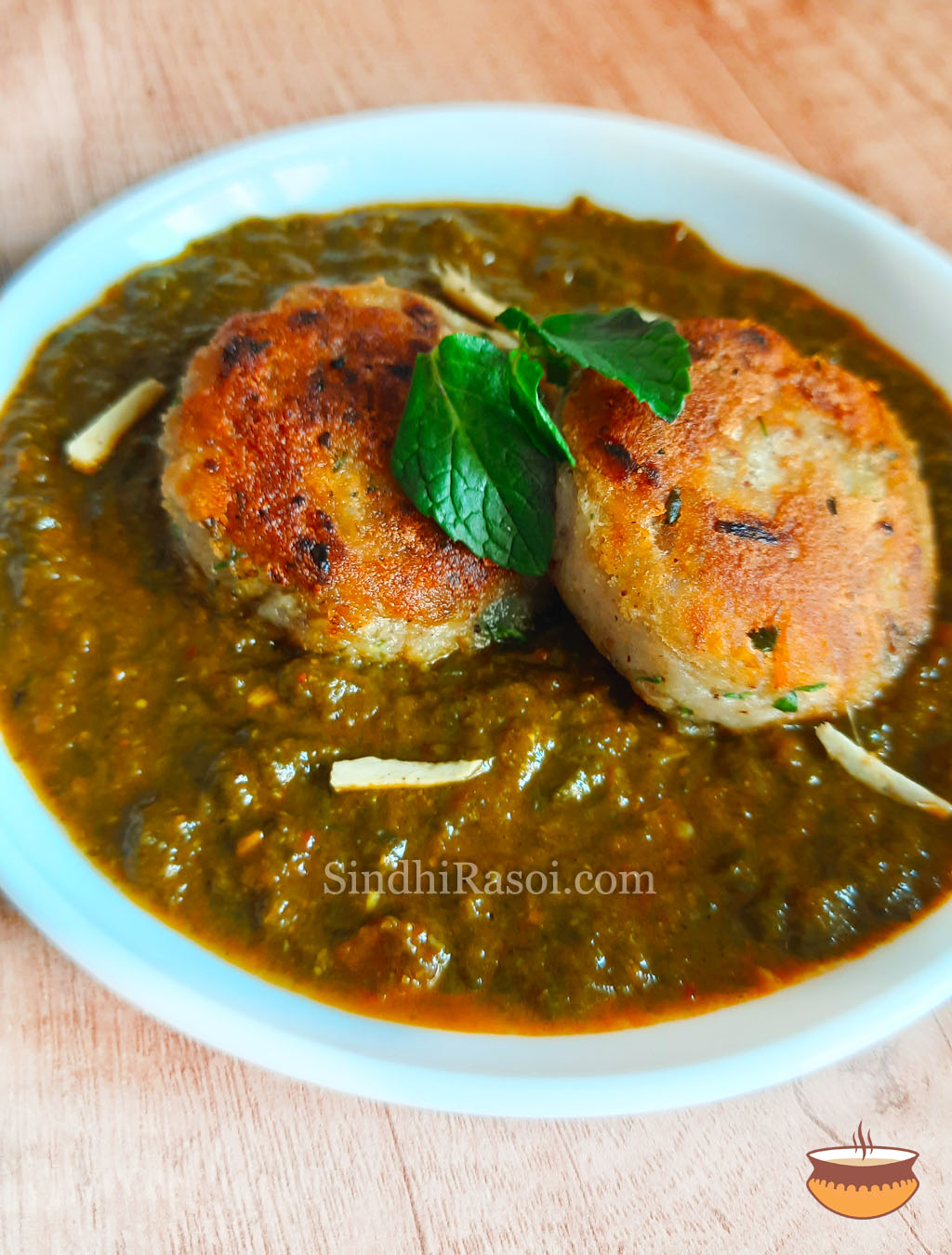
Beeh or Lotus stem is very popular in Sindhi cuisine. It is used to cook many traditional Sindhi dishes like Beeh Patata, Beeh Ji Tikki, Kuneh Jo Beeh etc. About Sindhi Beeh TIkki Paalak: One of the most popular Sindhi Style Lotus stem dishes is Beeh Ji Tikki made by mashing boiled Lotus stem and potatoes, flavouring the mash, dipping in the besan batter and deep frying it. It tastes delicious but then how often can you eat deep fried food?Few days ago I had some boiled lotus stem and potatoes as well. I was planning to make the Beeh…
-
-
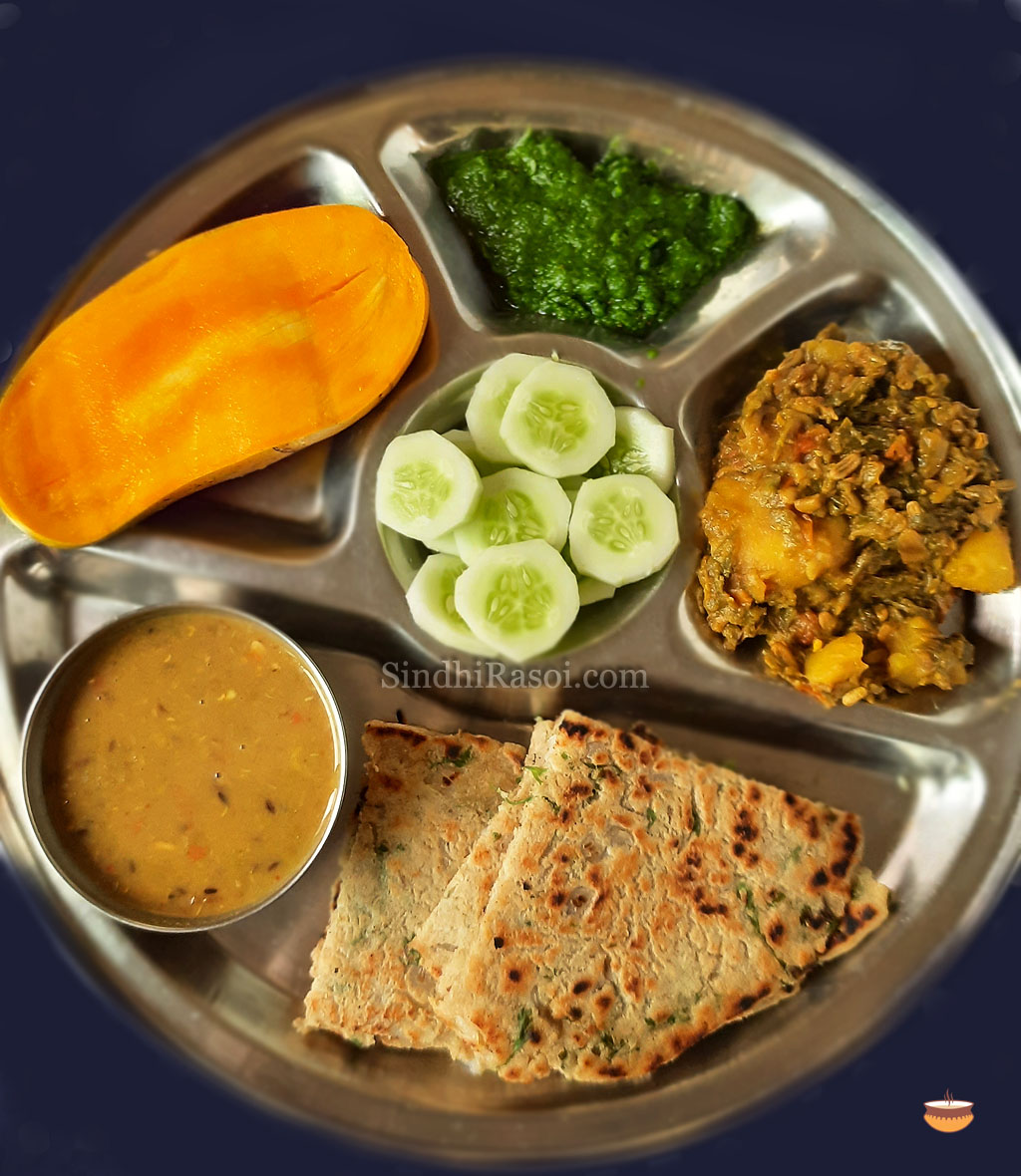
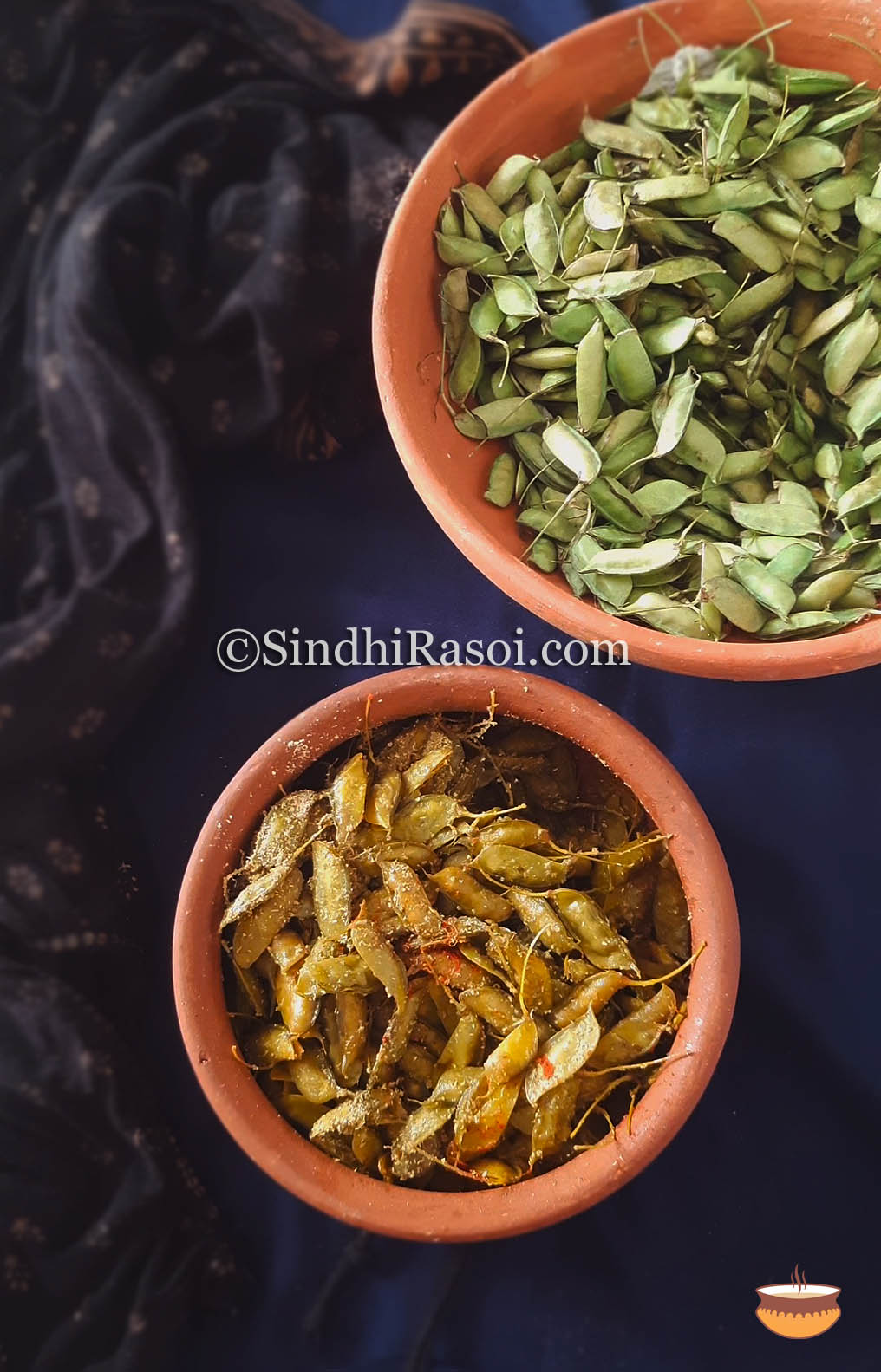
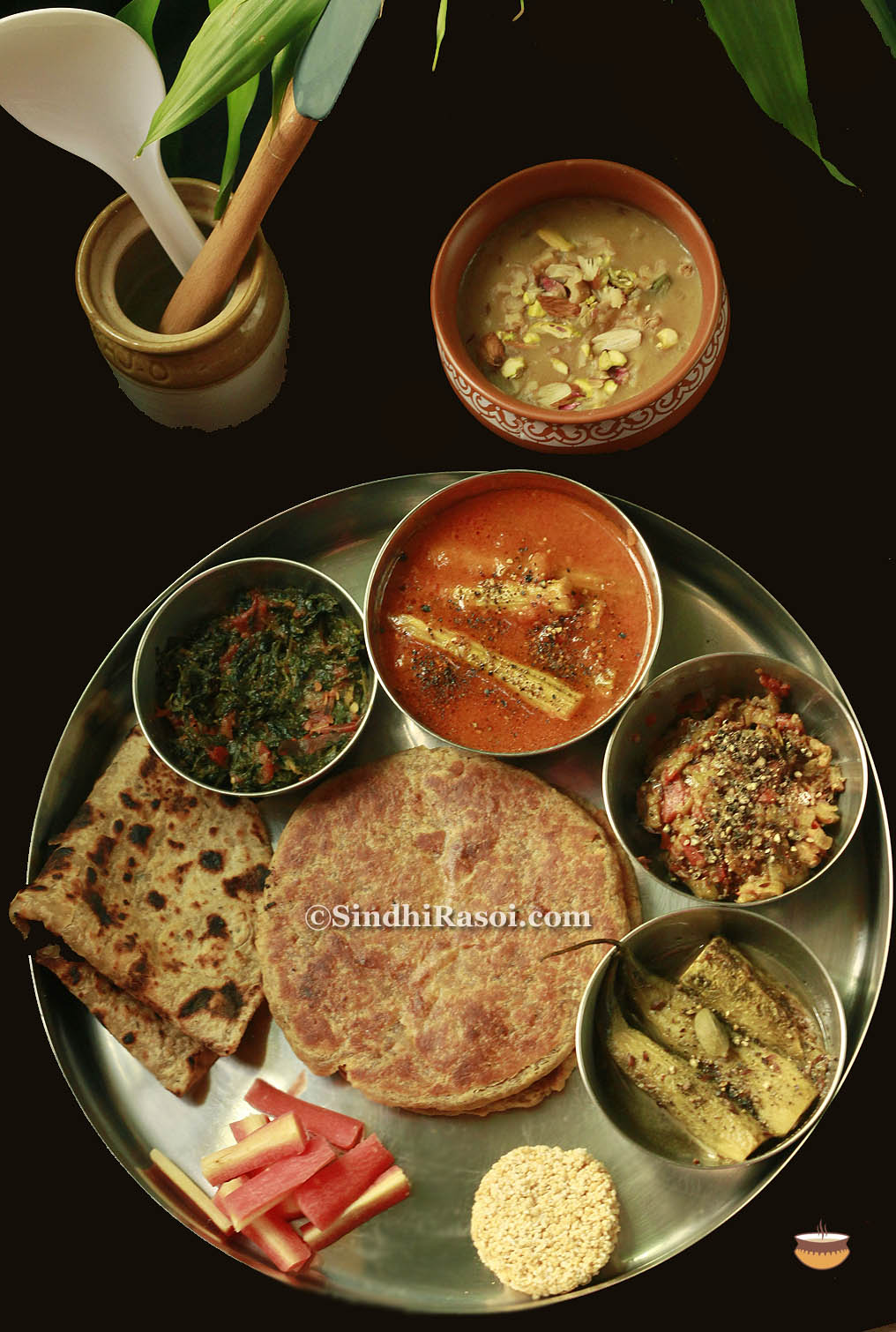
Pharyun in Sindhi could mean the pod of any legume or pulse grains but most of the Sindhis consider french beans as the Pharyun. Chauran (or Raanh) means Chawli or black eyed beans and the whole beans are called Chauran Jyun (of) Pharyun. Tender Long beans are not commonly had in many Sindhi homes though fresh pods from the matured beans are often cooked in Sindhi style gravy dish (Ras mein). Recently I found extremely fresh tender long beans and couldn’t resist buying a bunch of it. I cooked it the way Sindhis make Gvar/Guar patata. In the Thali: Chithyal…
-
D^adhri, a healthy snack loaded with nostalgia! I grew up in Ulhasnagar, a place where many Sindhis still follow their traditions, where the old rituals are still valued, where you can hear the locals speaking in Sindhi language, the families eating Sindhi food on daily basis and Sindhi festivals being celebrated traditionally. It is a place where you can still find the forgotten food like Kuneh Ja beeh, Lor^h, Beeh Ja pakora/Tikki, Suhanjhro, Pali etc. As a child growing up in a typical middle class Sindhi family, I remember consuming only seasonal vegetables, fruits/food and nothing fancy/exotic/imported. It was not…
-
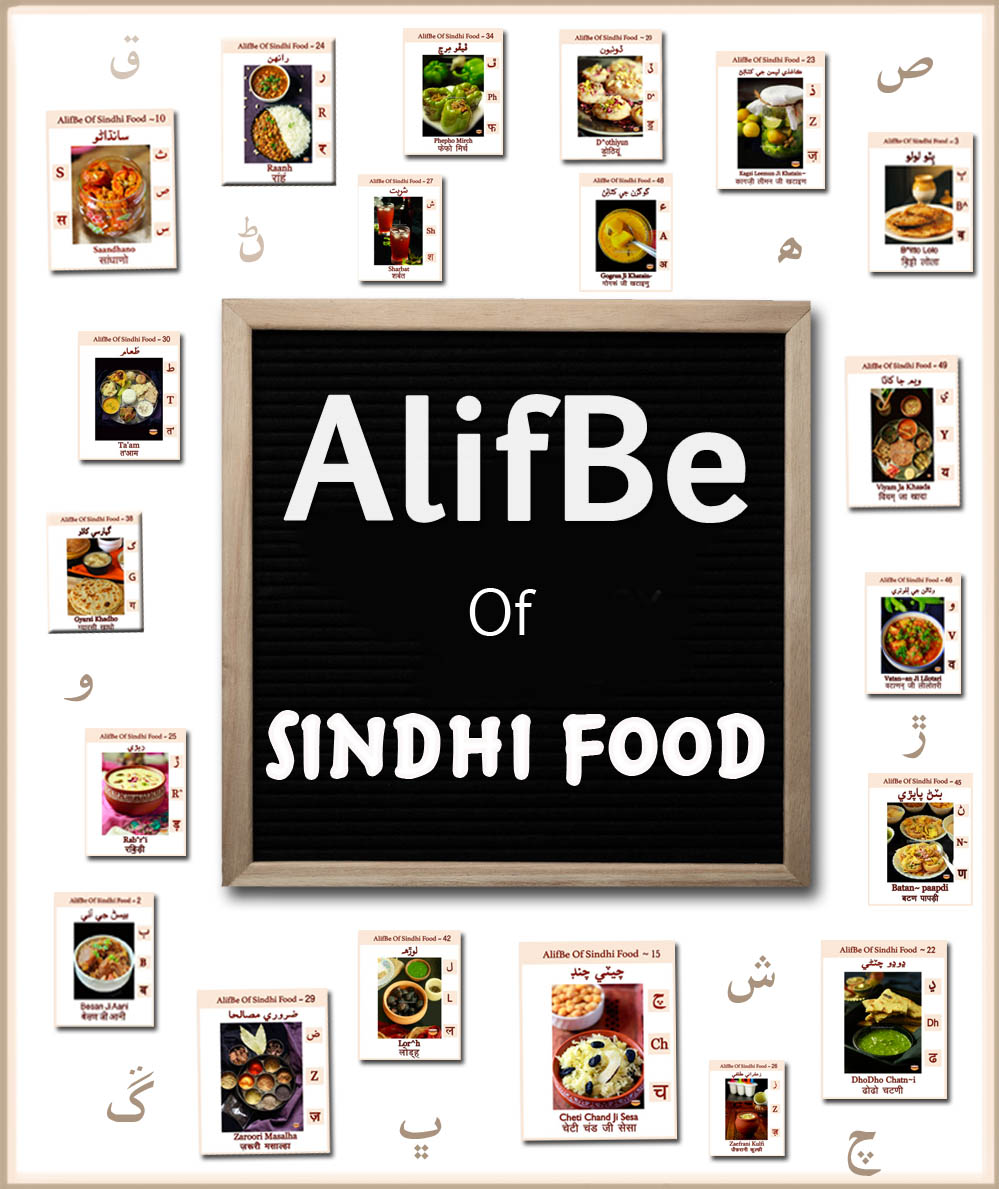
When I started working on my project about documenting ancient, traditional as well as lost recipes from Sindhi cuisine, a few years ago, the biggest challenge I faced was the lack of accessible information about the same. The limited documents that I could access, were in Arabic Sindhi, a script that I never could learn, despite of trying umpteen number of times, since my childhood. I felt stuck up. So the only way to move forward was to learn the Arabic script and to make sure that I don’t give up this time, I took up a challenge; The AlifBe…
-
The AlifBe of Sindhi food series is inching towards the end and I am trying to stay focused and enthusiastic about blogging beyond the AlifBe series. Wish me luck, dear friends! For the uninitiated, there are 52 alphabets in Arabic Sindhi script. Out of 52, I have skipped three alphabets, namely ح , ظ , ث i.e ‘S’, ‘Z’ and ‘H’ respectively as these are used in the words of Non Sindhi origin (i.e in words that are Arabic, Persian etc) while هہ , ز , س are used for the similar sounds (S, Z, H) in words of Sindhi…
-
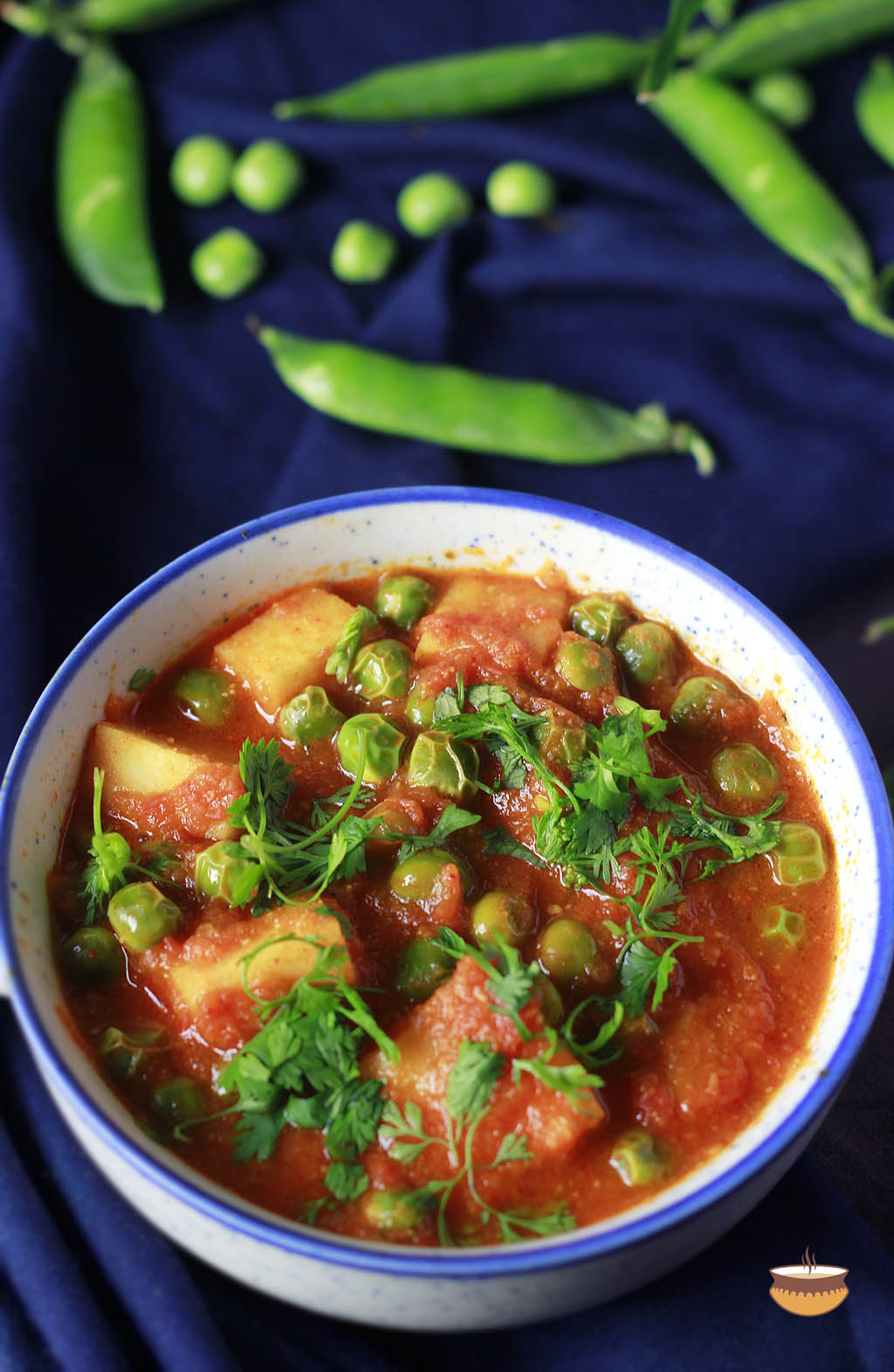
The 46th Alphabet of Sindhi AlifBe (Persio – Arabic script ) is و in Sindhi, व in Devanagari and V in Roman Sindhi. And the corresponding dish for AlifBe` 46 is Vatan~an (Vataran) Ji Lilotari ! I know many of you will wonder whether it actually is a dish from Sindhi cuisine (coz. it sounds like a Gujarati style subzi) but well, it is indeed a traditional Sindhi Brahma Khastriya style curry and many of us know it by the name ‘Peas Tamate mein’ ( peas in tomato gravy)! Sindhi Brahma Khastriya community is yet another subset of Sindhi community…
-
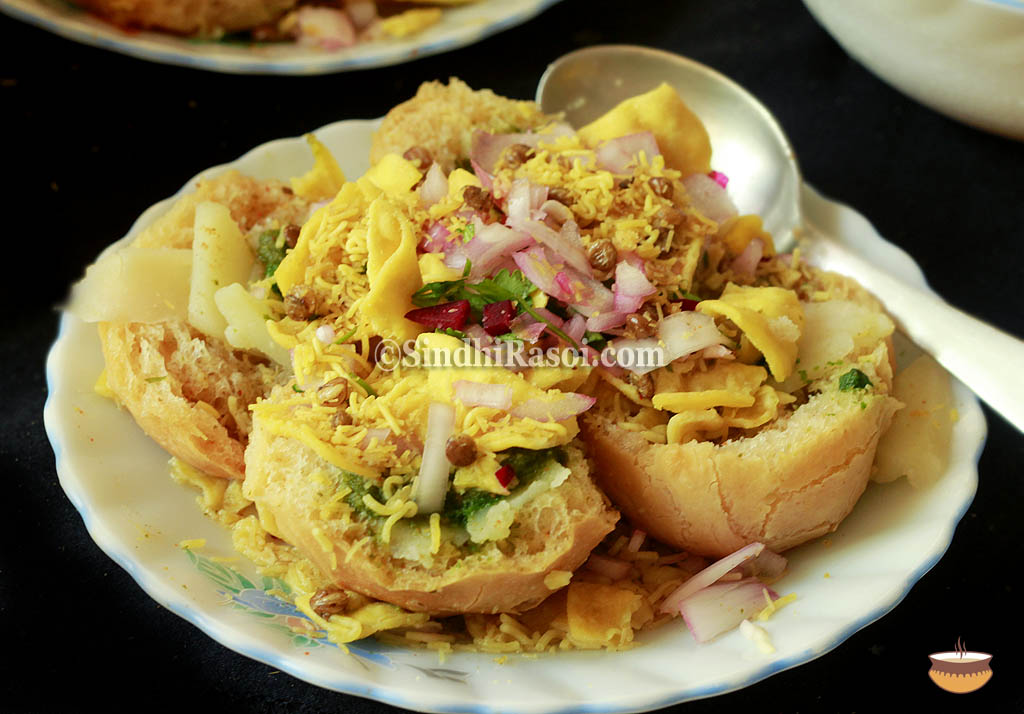
Want secret recipes of Batan Papdi Chutney and special Chaat masala? Do check the video recipe : AlifBe~ 45 The 45th Alphabet of Arabic Sindhi script is ڻ in Sindhi, ण in Devanagari and N~ in Roman Sindhi. In Hindi or Devanagari, no word starts with this particular alphabet. Same is the case with the Sindhi script and the ण appears in the middle or at the end of any word. In English it is generally denoted by ‘N’ as in Ramayan, Raavan, Brahman etc due to lack of proper corresponding alphabet for ण, in English. And I have picked…