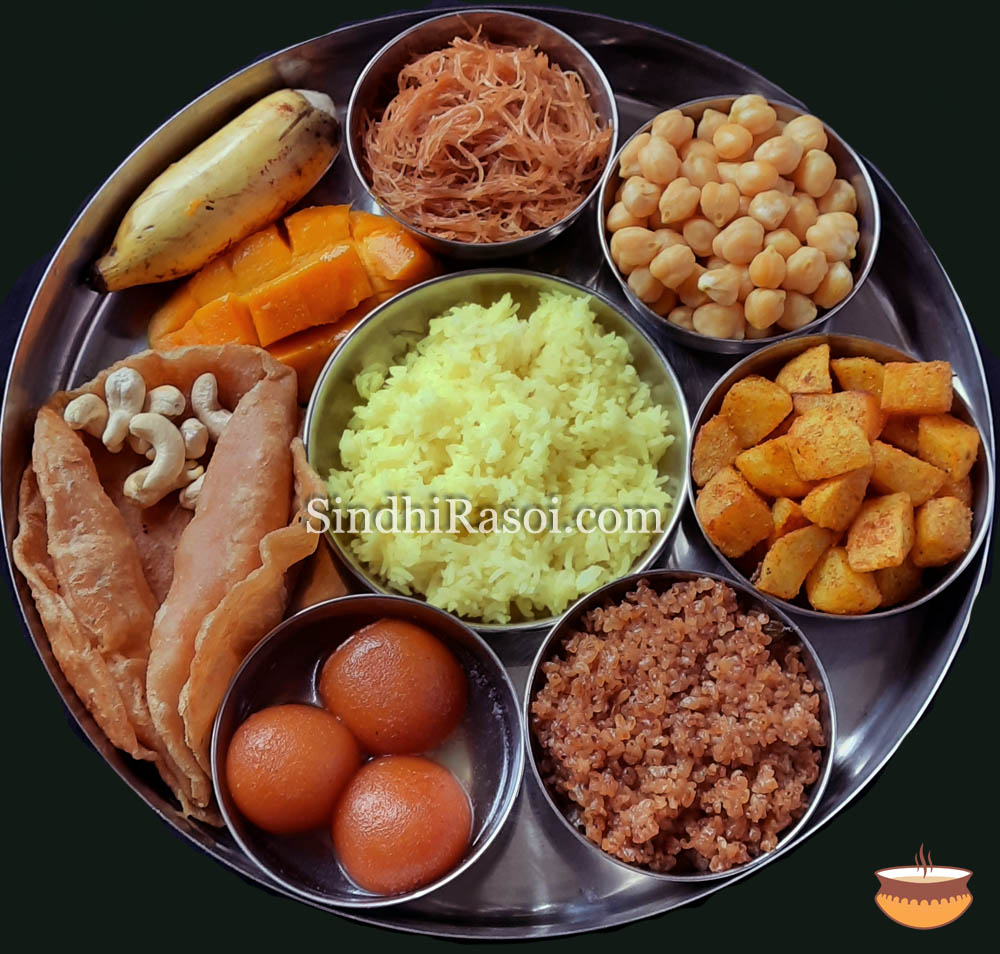
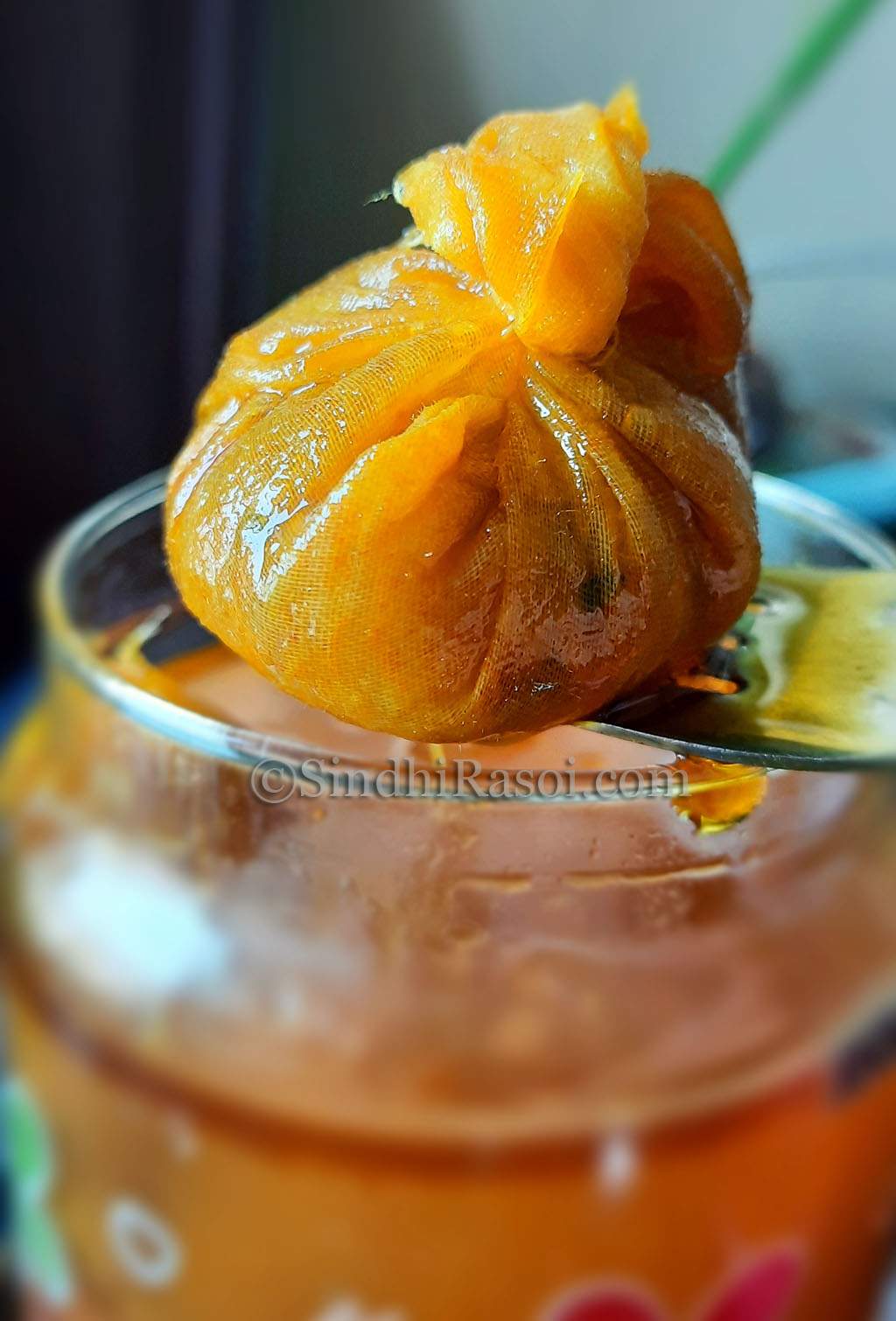
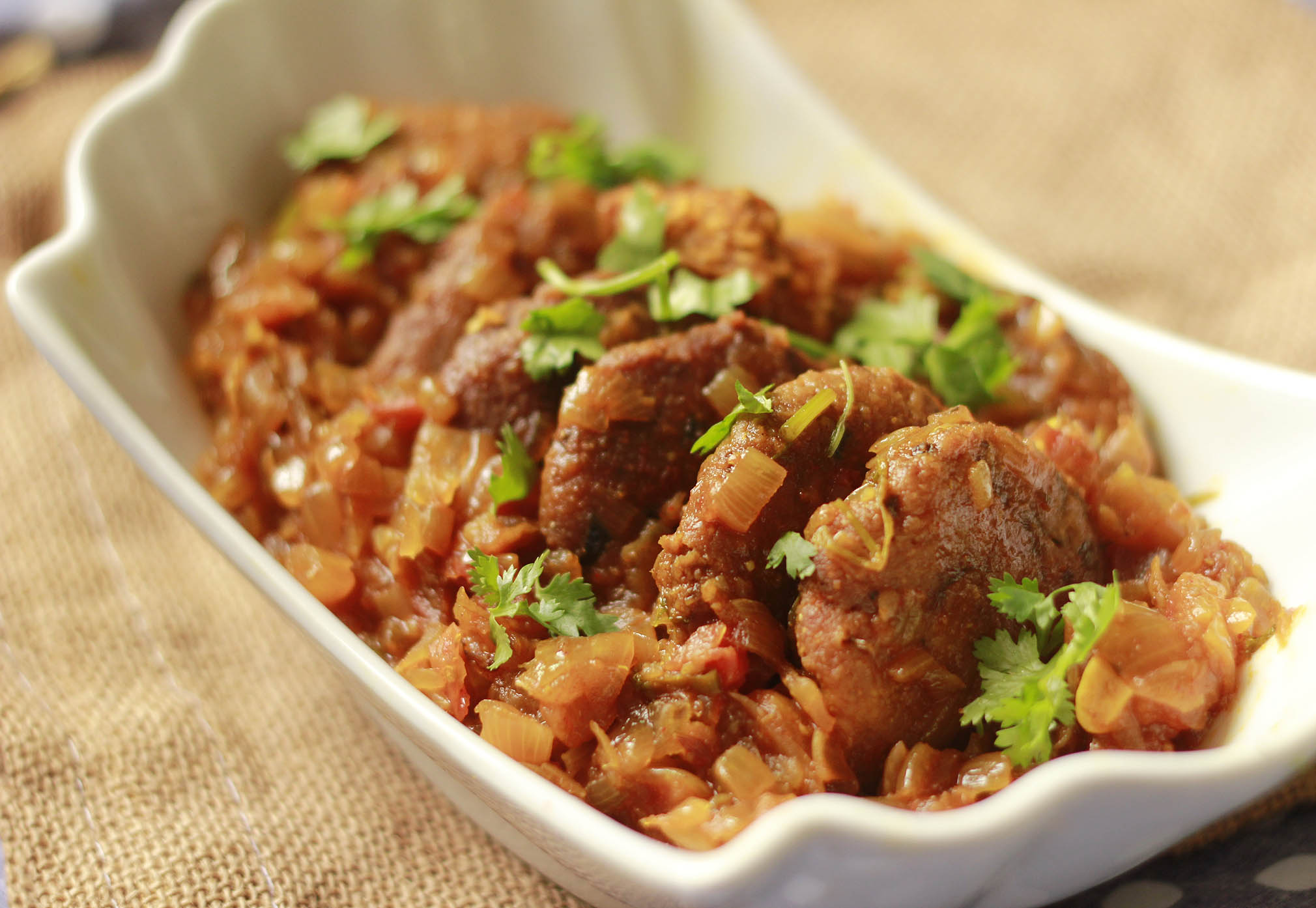
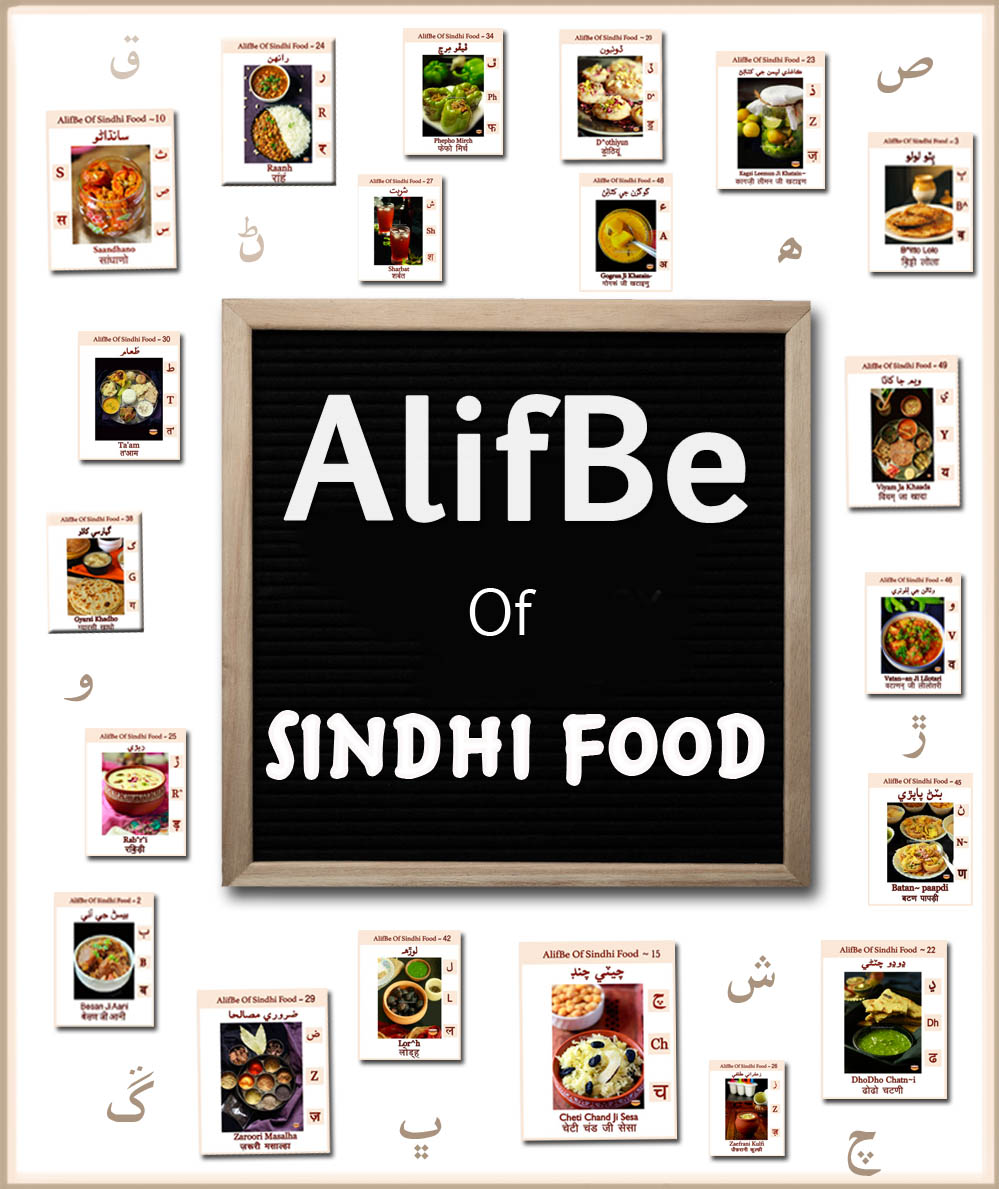
When I started working on my project about documenting ancient, traditional as well as lost recipes from Sindhi cuisine, a few years ago, the biggest challenge I faced was the lack of accessible information about the same. The limited documents that I could access, were in Arabic Sindhi, a script that I never could learn, despite of trying umpteen number of times, since my childhood. I felt stuck up. So the only way to move forward was to learn the Arabic script and to make sure that I don’t give up this time, I took up a challenge; The AlifBe…
-
-
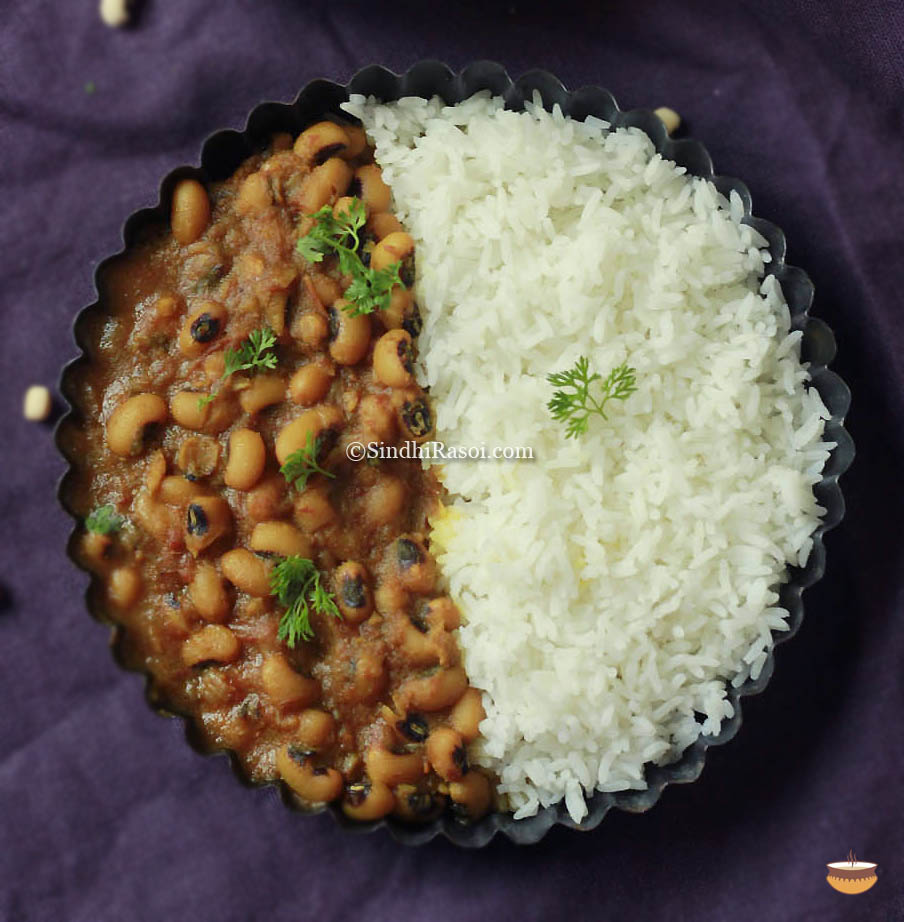
As mentioned many times in the AlifBe series, the 52 letters of Sindhi Alphabet are divisible into 16 shape groups and so far four shape groups are done and dusted! For the recap of the alphabets covered so far, please check this list! In the 5th shape group there are three letters and the first one in this group isر in Arabic Sindhi, र in Devanagari, while in Roman Sindhi it is R as in Ratnagiri/Rajasthan etc. And the corresponding Sindhi dish is Raanh, also called Chauran and Chawli for AlifBe of Sindhi Food #24 Raanh or Black eyed beans…
-
The 12th consonant in Sindhi Alif Be is ڄ, a unique one, because it is used in very few languages, one of it being Sindhi (Saraiki is another language where this is used). In Roman Sindhi it is written as J^ and as ॼ in Devanagari. ڄ is a Voiced (vocal chords vibrate when you utter this) Palatal (middle of the tongue touches hard palate) Implosive ( you breathe in instead of breathing out while uttering this). You can check this link to know how ڄ is pronounced! There are limited number of Sindhi words starting with this alphabet. Some…
-
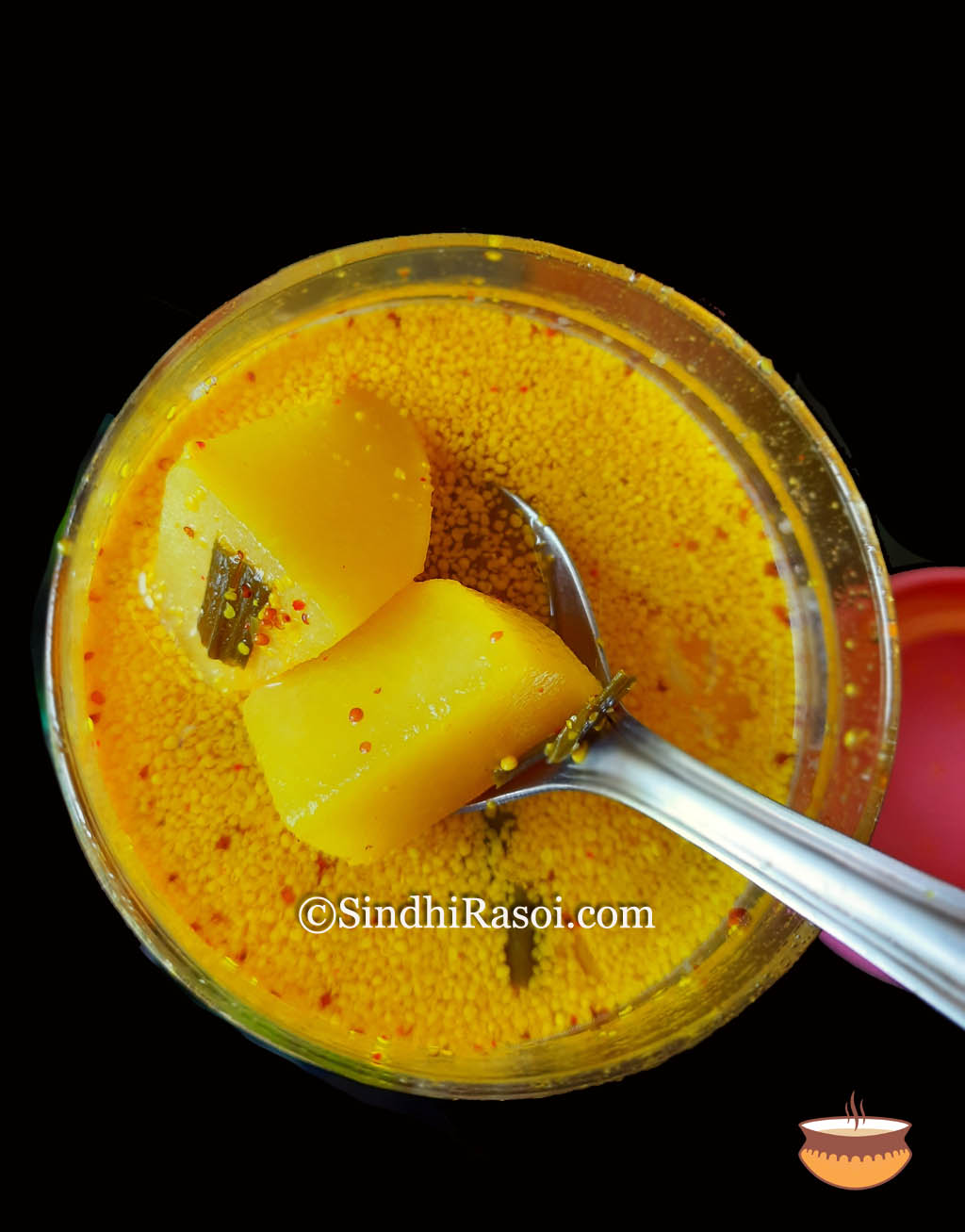
The next letter in AlifBe for Sindhi food series is ڀ i.e Bh or भ as in Bharat or Bhutan. Please Note: If you don’t wish to read further but want to directly move to the recipe of Bheendi Pickle, then kindly click here! Else, do read on…… If you remember previous posts then you nay have noticed that except first alphabet ا (A), rest three alphabets covered so far ; ب (B), ٻ (B^), پ (P) have same basic shape while the number of dots vary! The fifth alphabet is formed using the same basic shape having 4 dots…
-
We are on the 4th Alphabet of Arabic Sindhi Alphabet which is پ or P as in Roman Sindhi! Different books/ websites or articles related to Persio Arabic script will show varying results if you search for this alphabet. I am going with the Balbharti book of Arabic Sindhi (Maharashtra) as it is source I am referring for Alif Be series. You can find the scanned copy of this book here! Not only you will find the consonants and vowels in this book but also some rhymes and lessons covering the basics like alphabets, vowels, word formation etc. To make…
-
#Alif Be of Sindhi Food~2 The second alphabet of Arabic Sindhi is ب as B in Baby!As mentioned in the previous post, the Sindhi alphabet is divisible into 16 basic shape groups. In the first shape group we have just one alphabet ا i.e ‘A’! In the second shape group there are 9 alphabets with similar basic shapes, followed by two more alphabets that are similar to some extent. And yet each alphabet is unique because of the position and number of dot/s in each alphabet. So the 1st alphabet of this group, which is the second alphabet of Alifbe…
-
So here I am, as promised, trying to bridge the gap between Sindhi Language and cuisine, with a series of posts, sharing a Sindhi Alphabet and a corresponding Sindhi dish!Firstly some interesting facts about Sindhi Script:To begin with, there is no consensus about the origin of Sindhi language. While some authorities believe that the language may have its roots in Pre Sanskrit era, in one of the most ancient civilizations known to us, the Indus Valley Civilization, others believe it to be originating from Prakrit. The carved stone seals excavated from Mohen Jo Daro (the place and era that Sindhis…