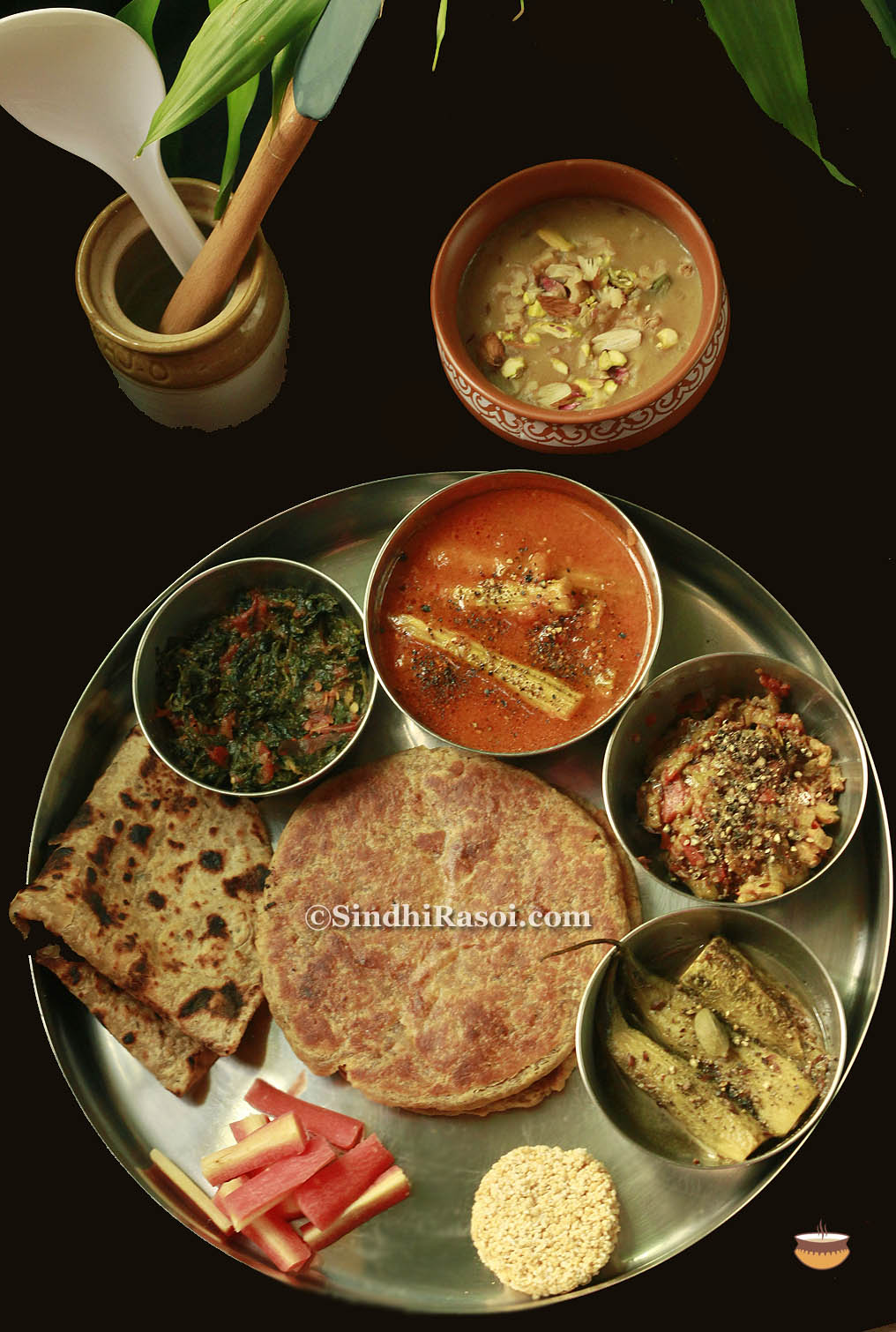
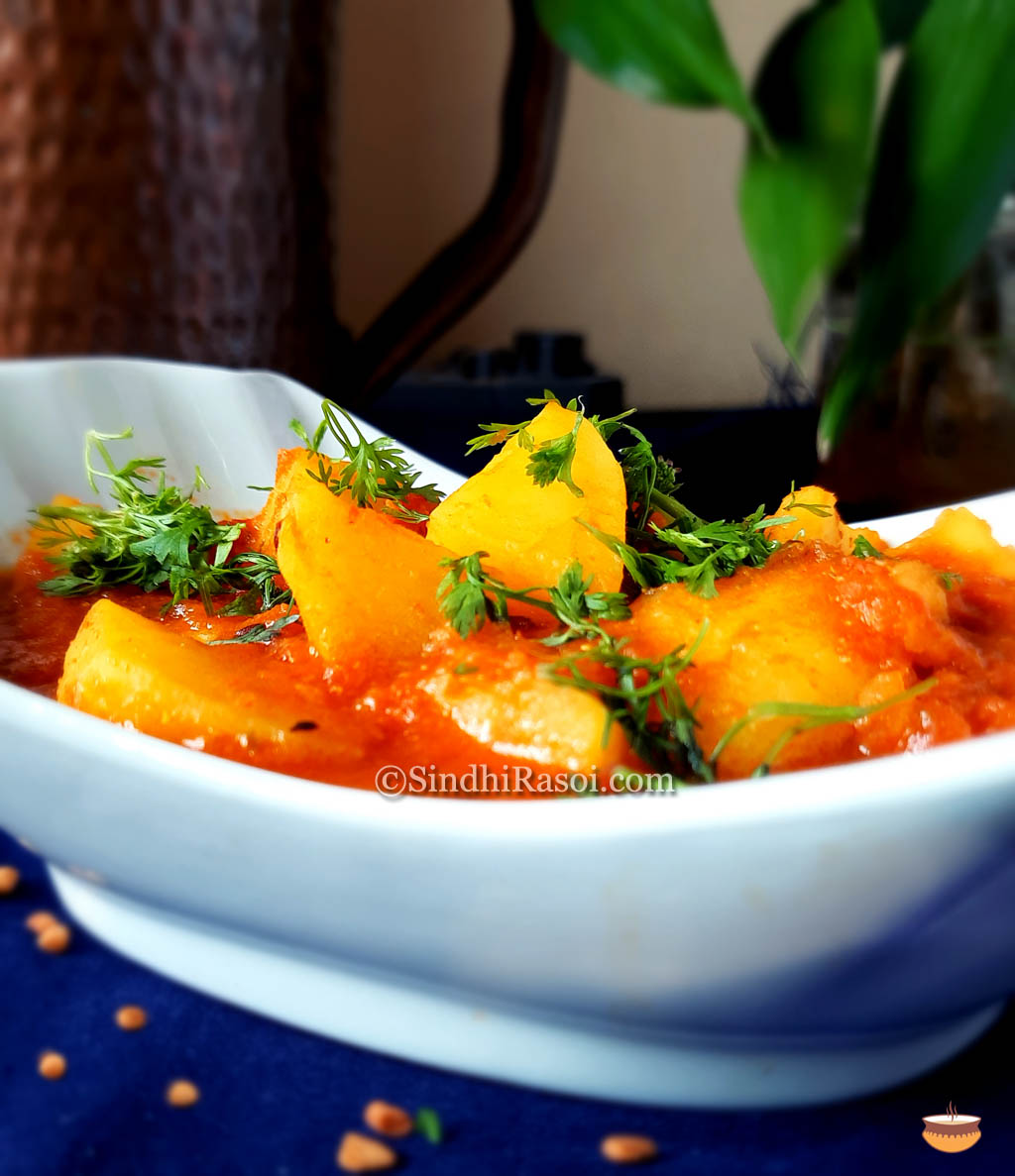
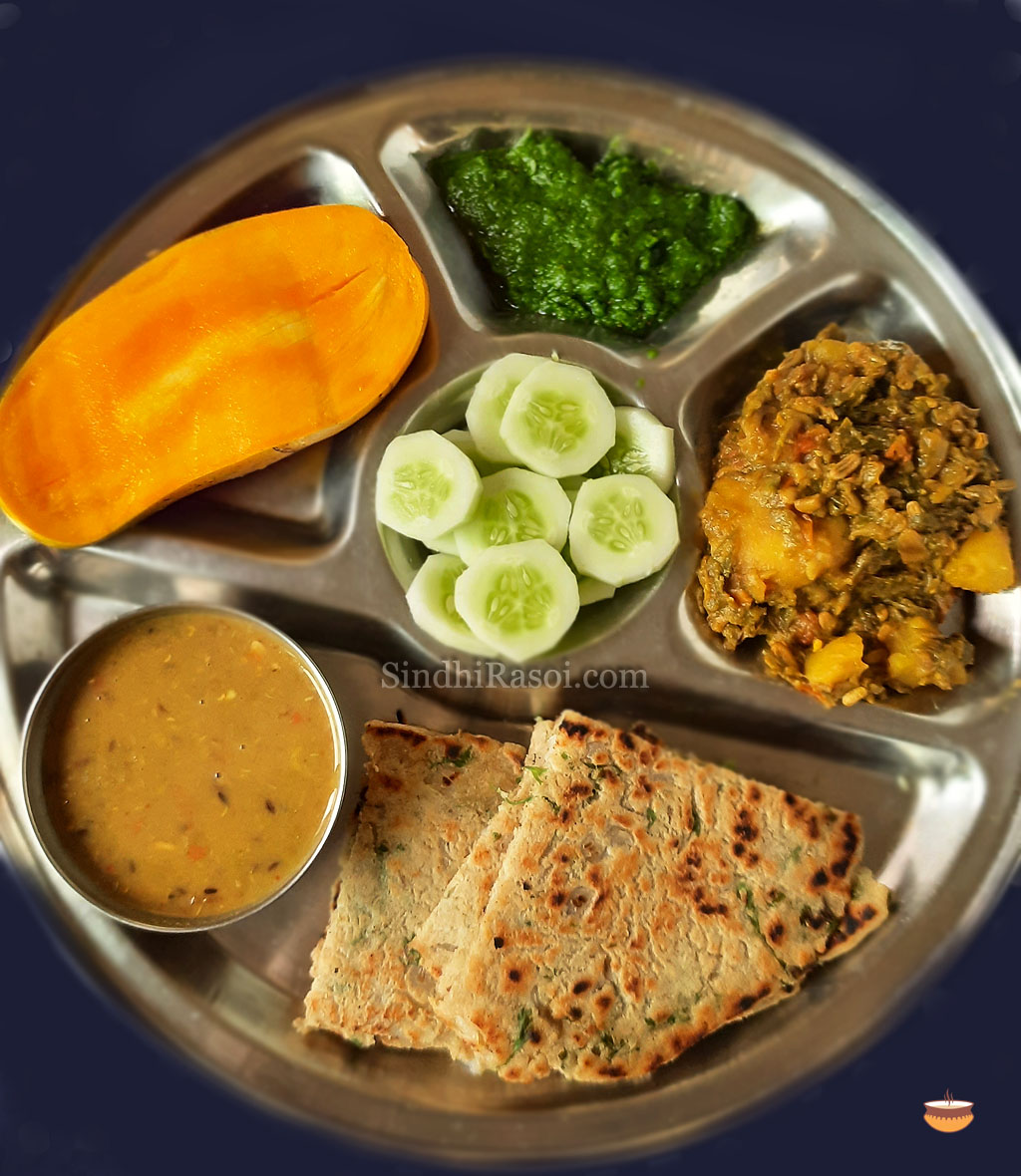
Pharyun in Sindhi could mean the pod of any legume or pulse grains but most of the Sindhis consider french beans as the Pharyun. Chauran (or Raanh) means Chawli or black eyed beans and the whole beans are called Chauran Jyun (of) Pharyun. Tender Long beans are not commonly had in many Sindhi homes though fresh pods from the matured beans are often cooked in Sindhi style gravy dish (Ras mein). Recently I found extremely fresh tender long beans and couldn’t resist buying a bunch of it. I cooked it the way Sindhis make Gvar/Guar patata. In the Thali: Chithyal…
-
-
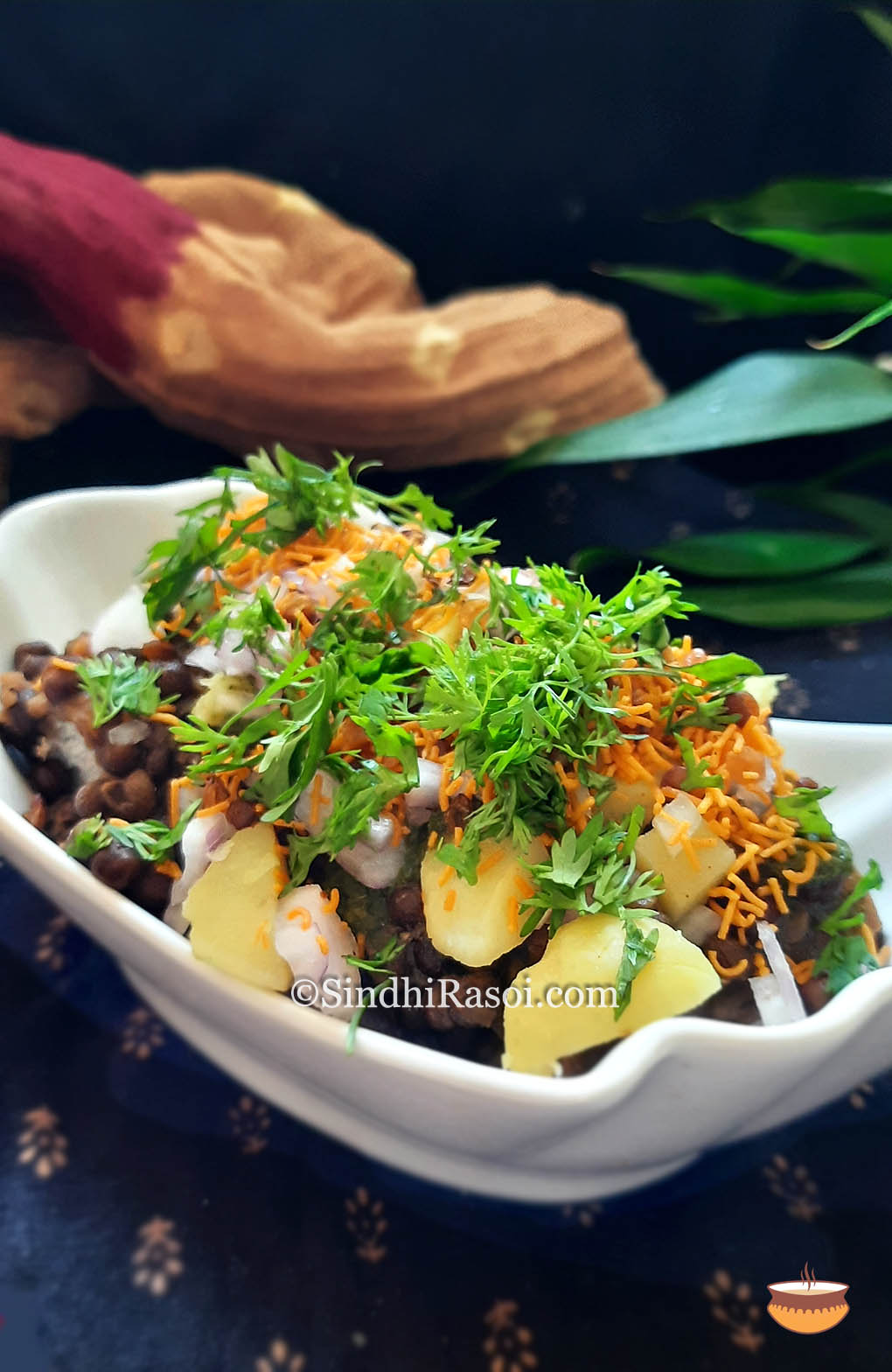
Matar Pao or the black vatana chaat is a classic street food dish from Ulhasnagar, my home town! It is made by cooking dried black peas (Kaala Matar/Vatana) with salt and water and the curry is generally flavoured with just pepper. A spicier version is made by adding garam masala powder by many vendors. The rustic flavours of the dish come from cooking vatana for longer duration, till soft and then by mashing some to make the gravy more thicker, homogenous and flavourful. Dried black peas take forever to cook and hence soaking these for 12 – 24 hours is…
-
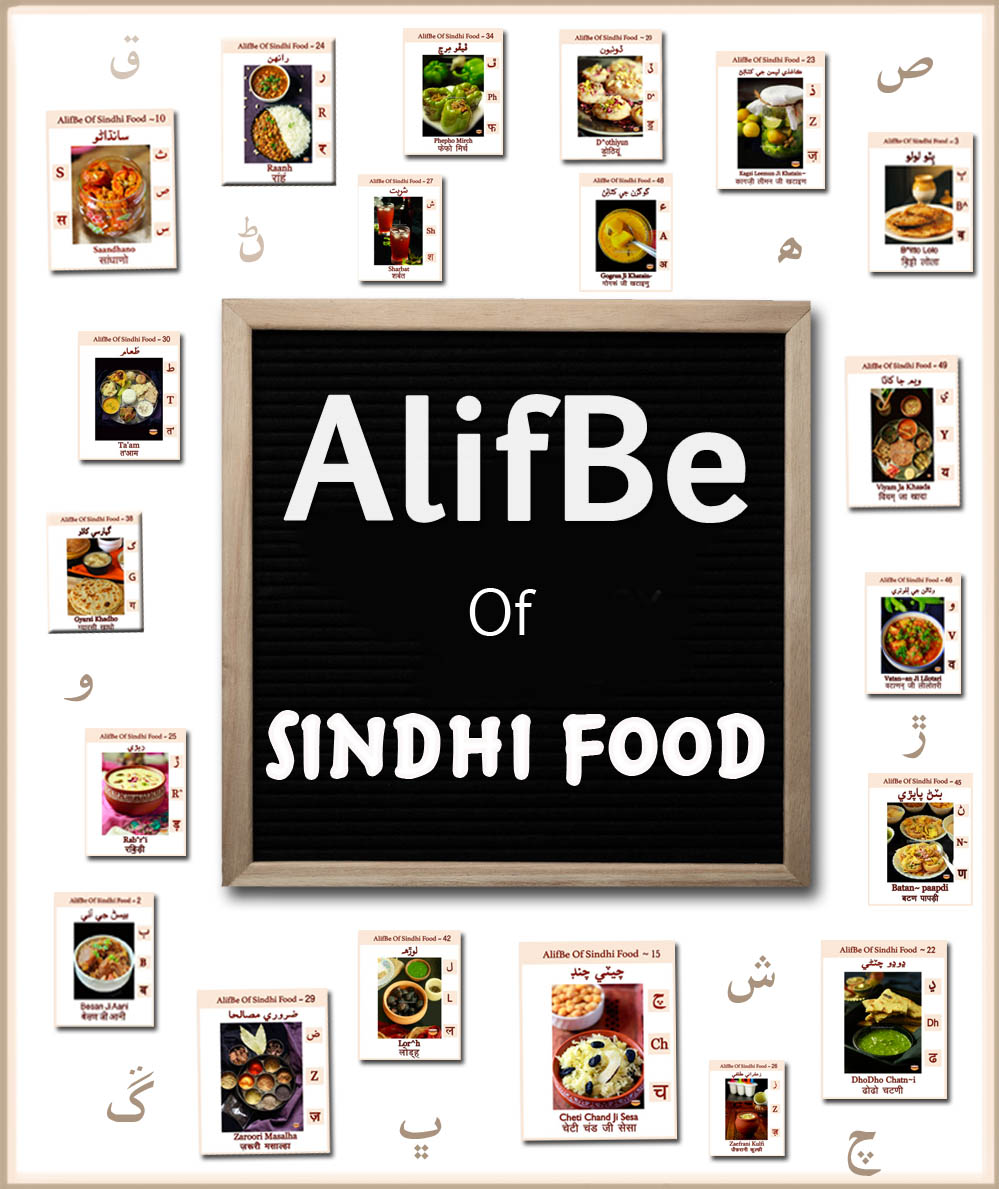
When I started working on my project about documenting ancient, traditional as well as lost recipes from Sindhi cuisine, a few years ago, the biggest challenge I faced was the lack of accessible information about the same. The limited documents that I could access, were in Arabic Sindhi, a script that I never could learn, despite of trying umpteen number of times, since my childhood. I felt stuck up. So the only way to move forward was to learn the Arabic script and to make sure that I don’t give up this time, I took up a challenge; The AlifBe…
-
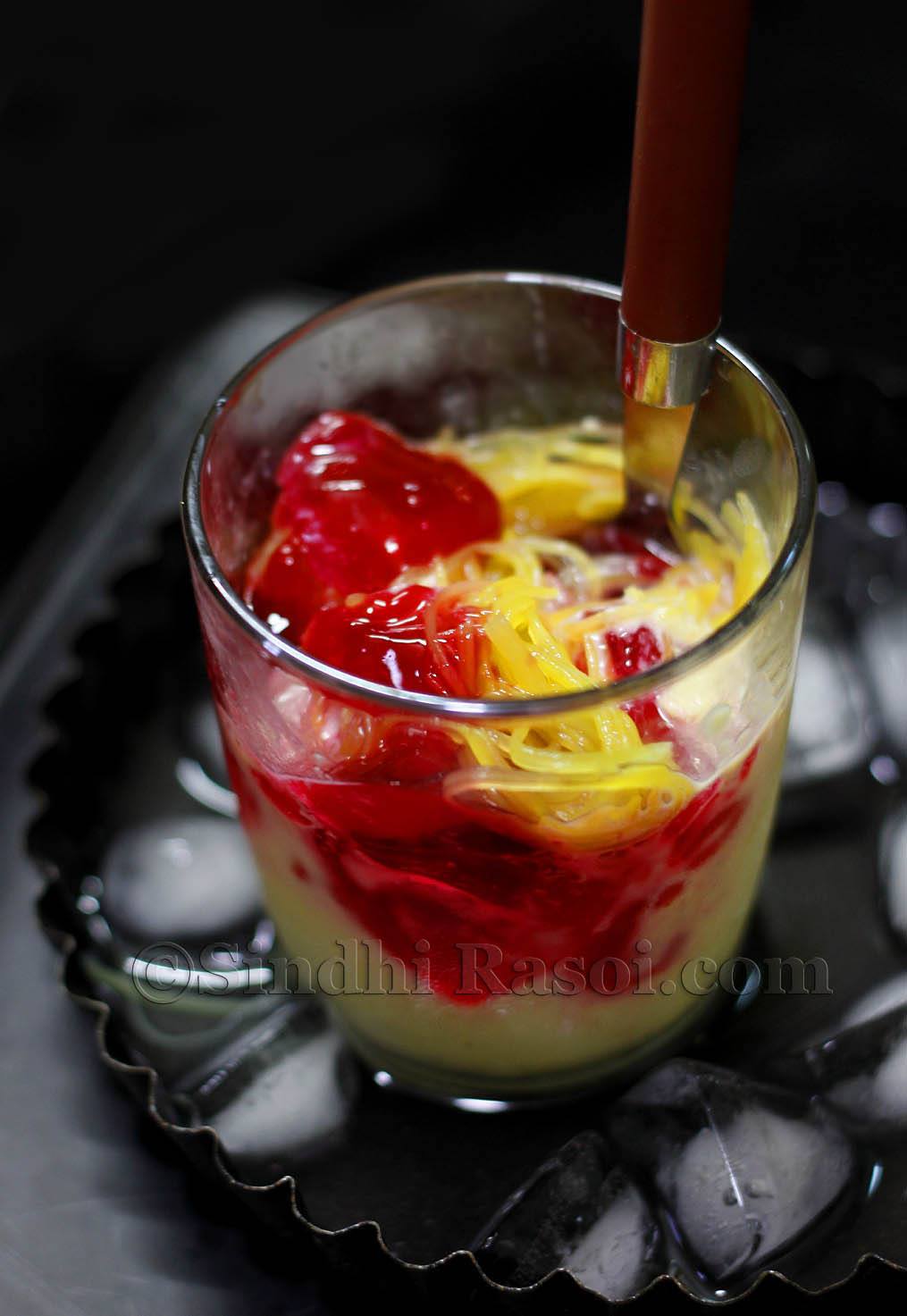
Watch the video about how to make Faluda Sev at home. It is my first video recipe: If you assume that making Faluda sev at home is difficult, then please do check today’s recipe! Hello everyone, hope you all are doing good! I am here today to share a very simple recipe of Faluda sev. It barely takes 15-20 minutes to make it at home. But before I hop on to the recipe, let’s talk about today’s alphabet i.e ف in Arabic Sindhi, फ़ in Devanagari and ‘F‘ in Roman. There ain’t any Sindhi Dish starting with this…
-
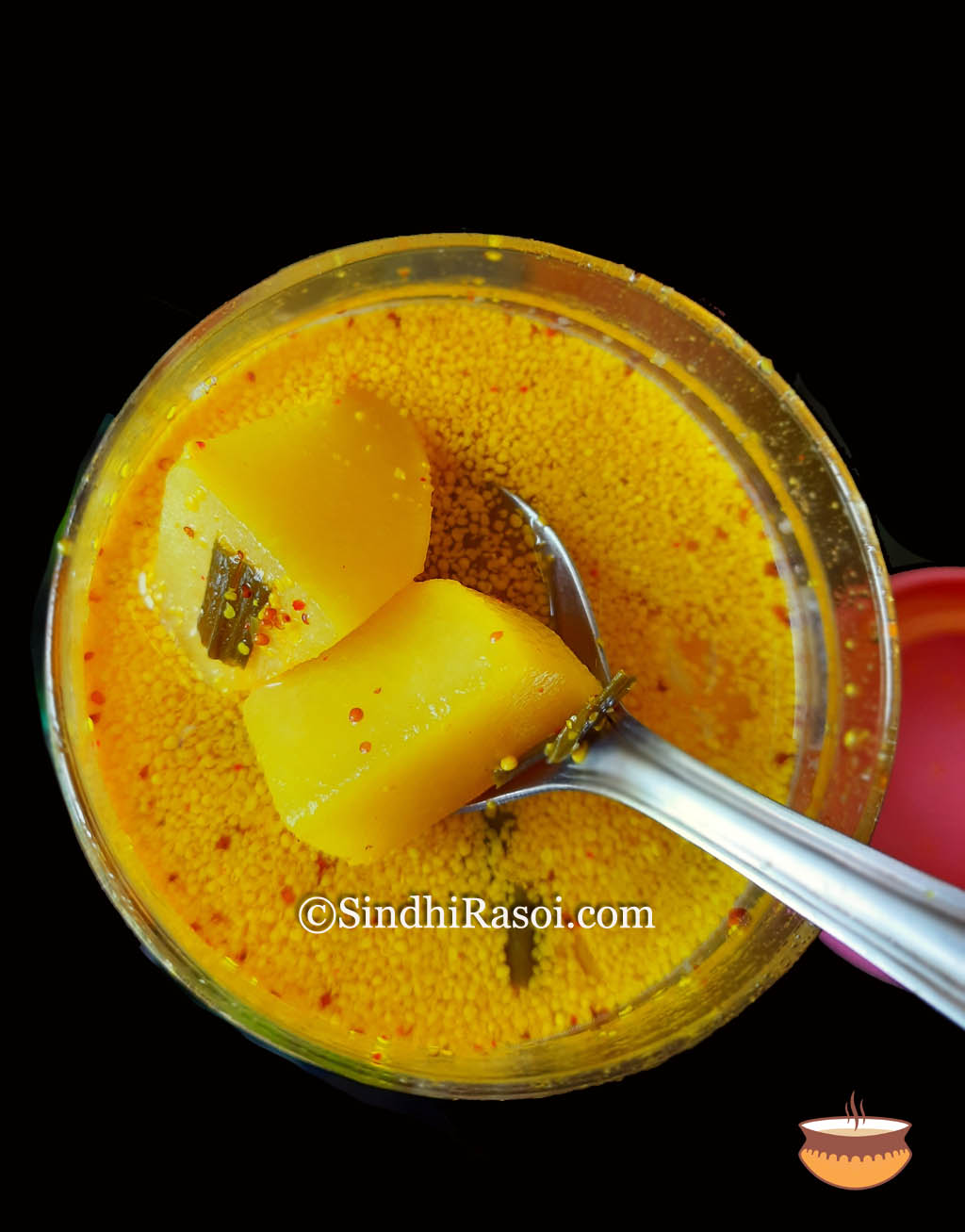
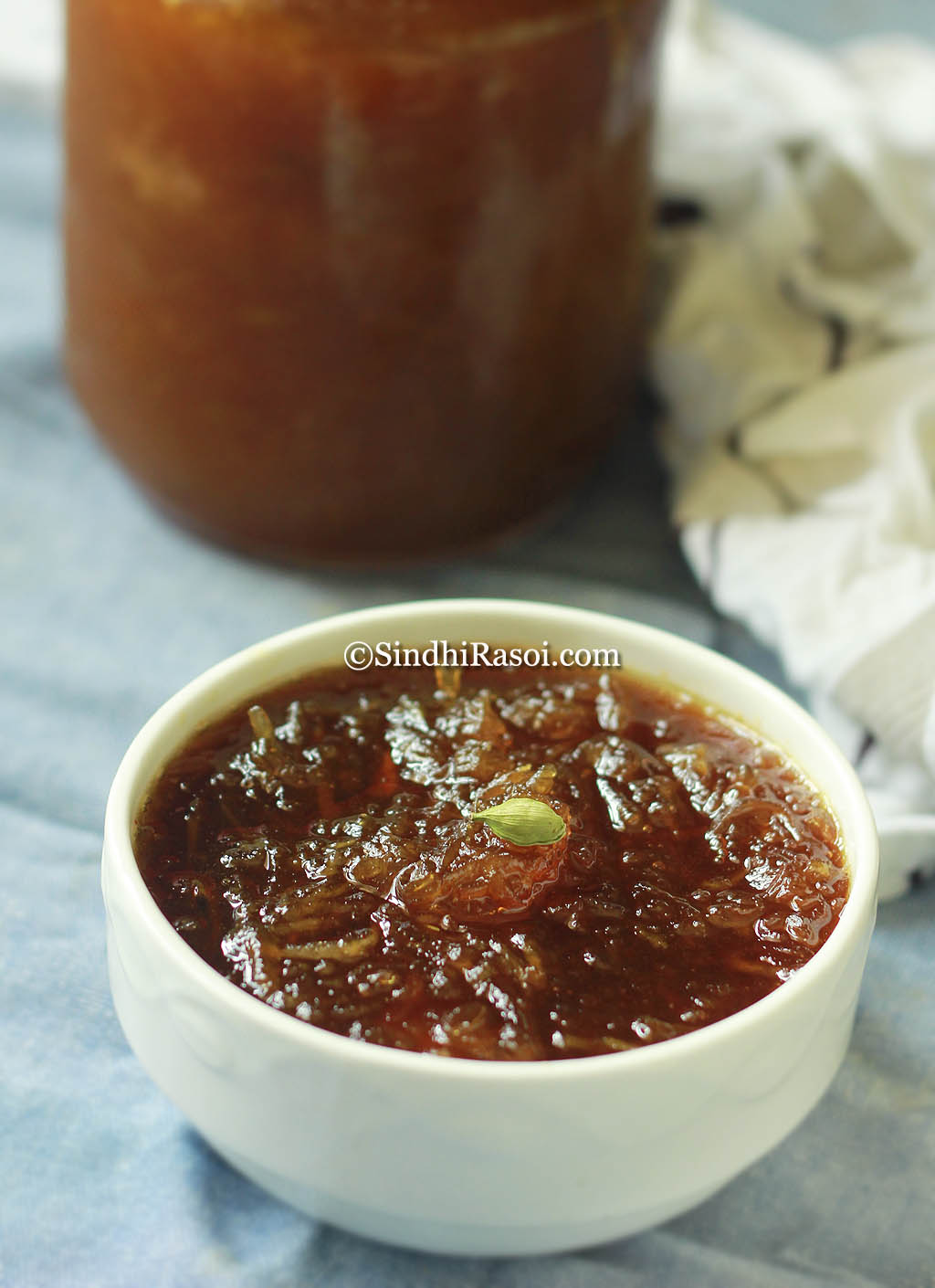
Since many of you have been asking for various Sindhi pickle recipes, I thought to make a post by listing all the pickle recipes here! Sindhi Pickles, like pickles from any regional cuisine, could be divided into sweet, spicy, oil based or water based (zero oil)! Sweet/Sugar based: Awran Jo Murbo: Super food Awla, cooked in Sugar syrup to make a delicious Awla Murraba or Gooseberry Conserve. Click here for the detailed recipe! Ambh Jo Kadhukas (Mango Jam/Chhunda) This Chhunda like Mango jam, cooked on a stove top is my MIL’s recipe and I make sure to replenish the stock…
-
Towards the end of the year 2007, I was toying with an idea to start an online journal to share my mom’s recipes since there was absolutely no presence of Sindhi cuisine across the World Wide Web and slowly but gradually with the help of my techie hubby I was able to start the blog ‘SindhiRasoi.com’ and managed to publish the first post on 29 th January 2008. The rest, as they say, is the history! This baby is now a teenager! Looking back, I am amused how one thing led to another and my life changed with every baby…
-
Millets the latest category of superfood, as approved by the West had traditionally been a part of staple food in many regional cuisines but were considered as fodder food by many. Now when the world is waking up to a new era of wholesome, nutritious and ‘real’ food, millets are the new fad. Thankfully few varieties of millets like sorghum (Jowar), Bajra, Samo etc are part of traditional Sindhi cuisine and we have been relishing these in the form of patted flatbreads (Doda/Dodoh), porridge (Samo porridge known as Kirng in Sindhi), for cooking Satvik meals using Sauri (Bagar/Barnyard) for Gyaaras…