In olden days, a wedding in a Sindhi home would mean a buzzing neighbourhood. The male clan would deal with the logistics of a wedding, distributing wedding cards, booking tickets for relatives traveling from far and wide, making arrangements for their stay, booking Maharaj or cook/s to cater to family/relatives, friends etc. The female clan (from the family as well as from the neighborhood) on the other hand would take charge of stocking spices, grains, pulses etc. Almost a fortnight before marriage eve, ladies in the family and around would wind up the daily chores and come together to make…
-
-
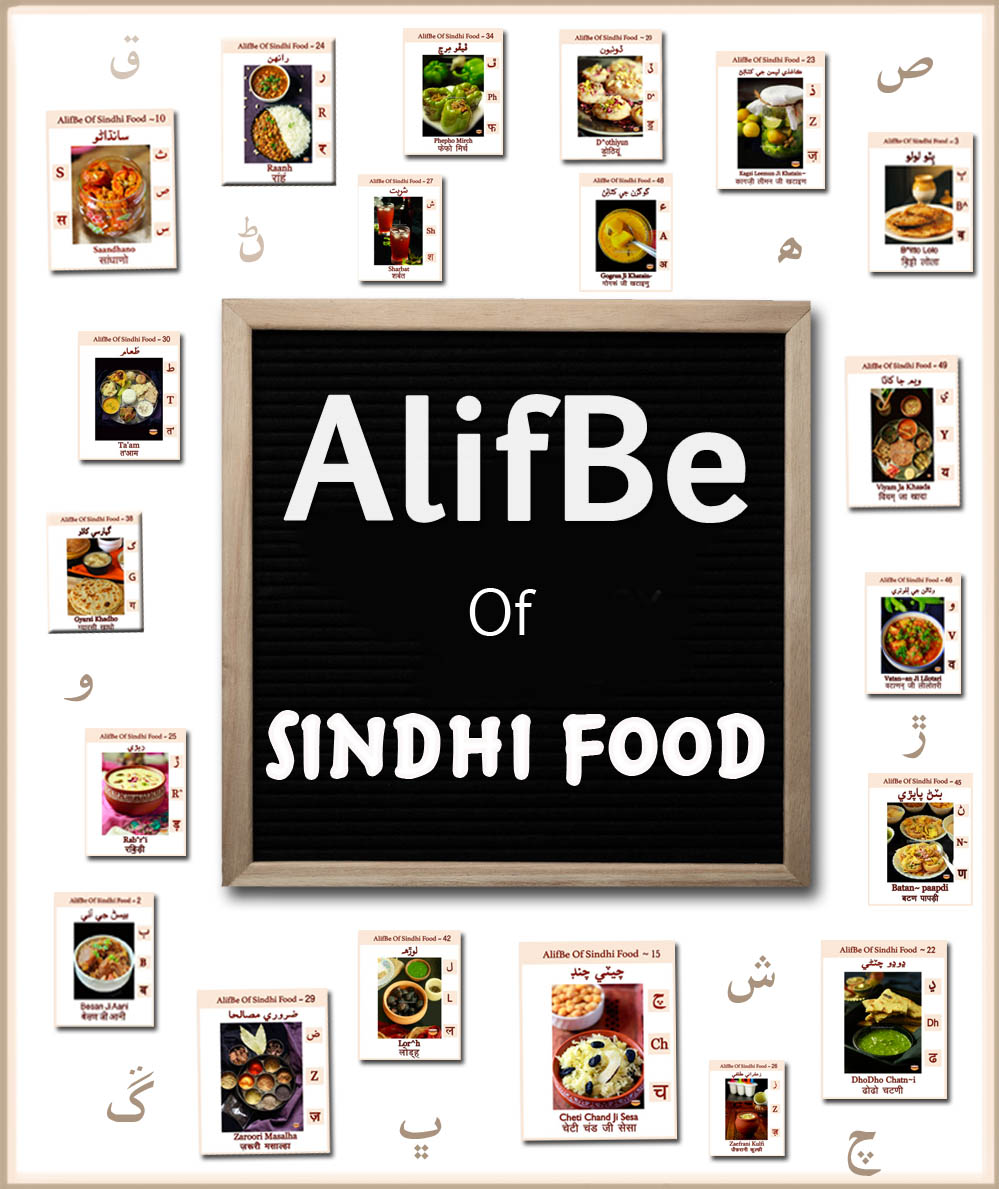
We are now at the 8th alphabet in The AlifBe series! AlifBe of Sindhi Food is a series of blog posts where I proceed alphabetically, as per Arabic Sindhi Alphabet ( AlifBe) and I share a corresponding Sindhi Vegetarian dish, the name of which starts with the same letter of the alphabet. So not only we learn a new alphabet every time, but also the pronunciation of each consonant, recipe of a dish and some interesting facts too. I also share short videos about the formation of each consonant i.e how to write it in Arabic Sindhi. And if you…
-
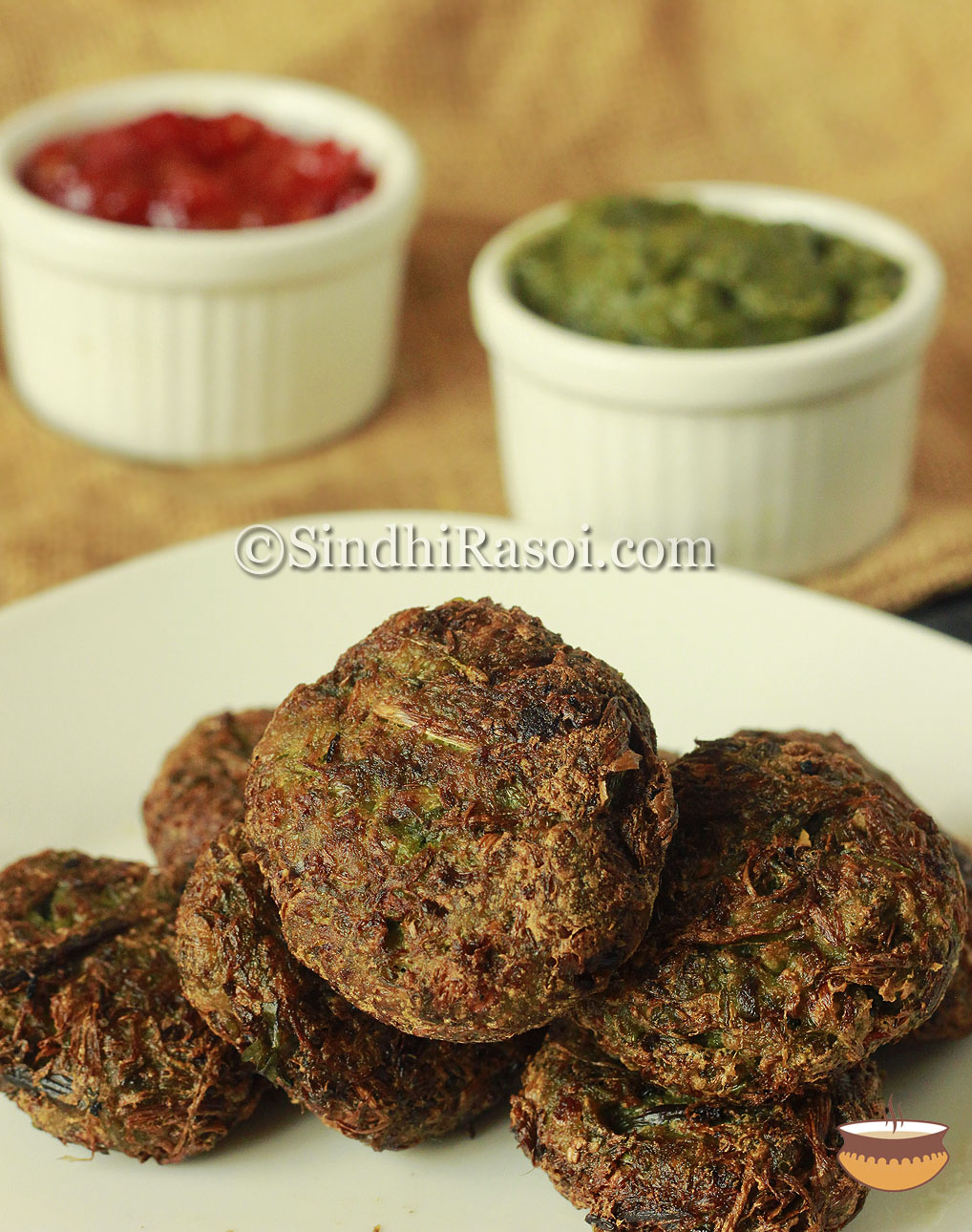
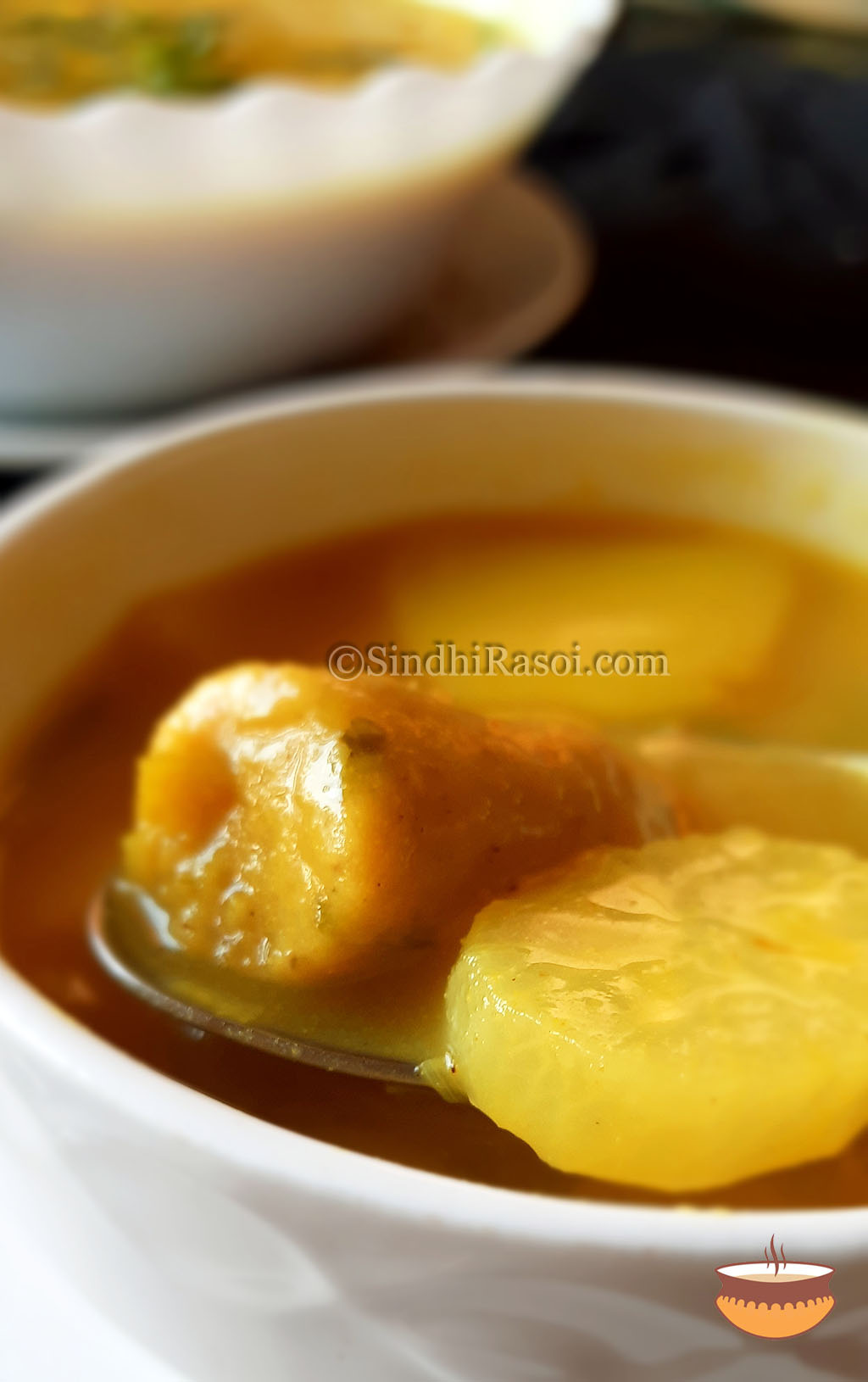
In my last post, when I shared some of my memories about Aunt K, a Chhapru Sindhi in our old neighbourhood along with her recipe of Thumaro, I was not sure if I would share another recipe starting with the same alphabet ٿ or Th~ since I am picking only one recipe per Sindhi Alphabet. But I couldn’t resist this one as this is a seasonal dish and the green garlic, the star ingredient here, is just about to disappear from the markets. So a wise person will make hay while the sun shines and a foodie like me would make…
-
The 7th Consonant in AlifBe i.e the Perso-Arabic Sindhi script (Alphabet) is ٿ which is थ in Devanagari while in Roman Sindhi it is written as Th~ i.e by using a Tilde (~) as suffix as we don’t have a corresponding alphabet in English. It is pronounced as Th~ as in Thailand,Theory, Thaw, Theatre etc. In Sindhi it is taught as ٿ for Thumbo/Thambo i.e a Pillar! And a dish starting with Th~ is a special one! It is something that I often crave for when I am under weather or when I miss my mother and Aunt K…
-
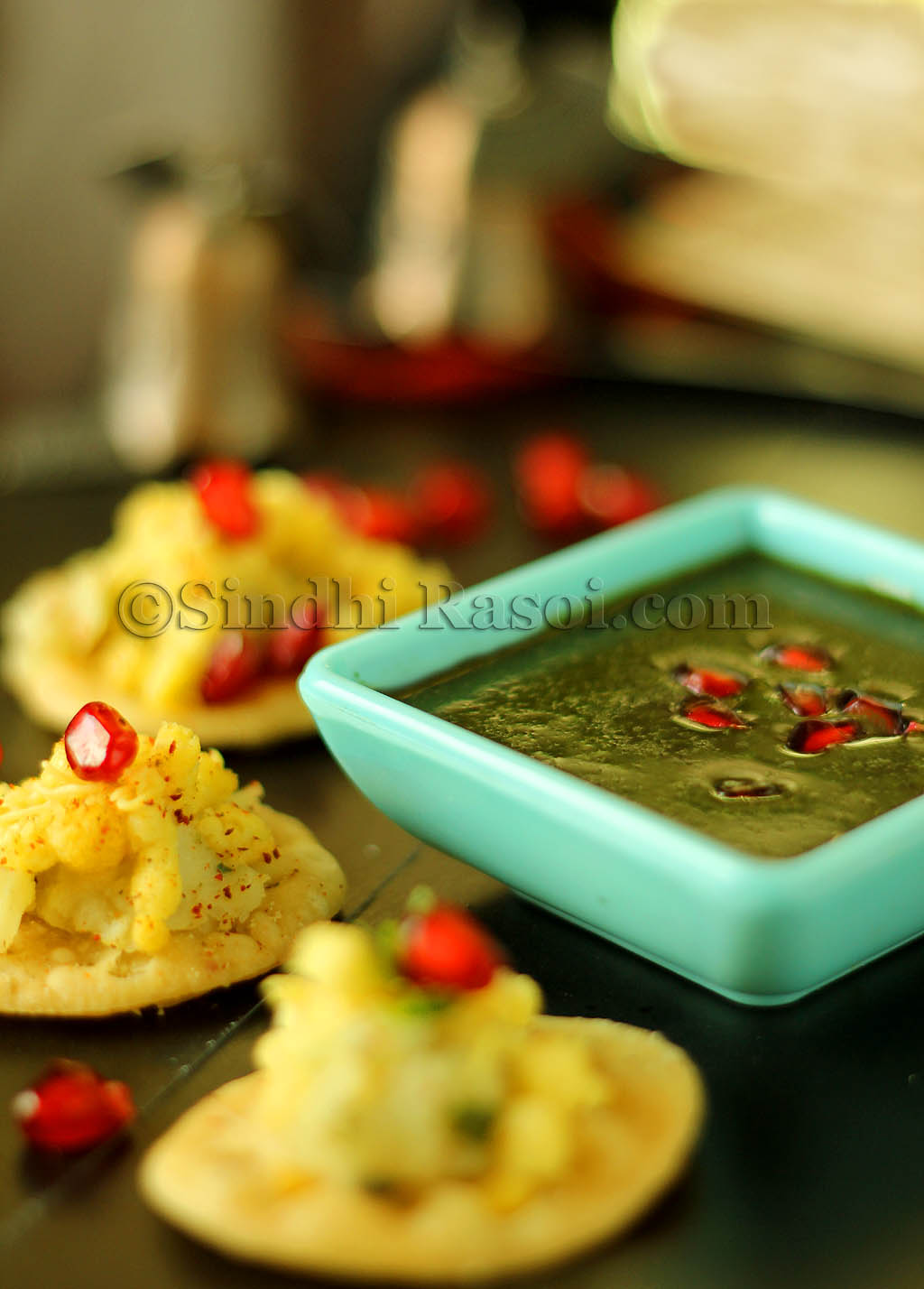
D^ar^oon or Pomegranate is yet another exotic ingredient used conventionally in Sindhi cuisine. Generally the dried seeds of Pomegranate, commonly known as D^ar^oon Khaata (Annardana) are used in popular Sindhi food like Koki , Sannah pakora, Tidali dal etc. But the chutney made from fresh pomegranate seeds is also served at many street food carts selling popular sindhi snacks like Pakora, samosas and even Panipuri. D^ar^oon Ji chutney has a very refreshing flavor imparted by fresh, juicy, sweetish, slightly tart pomegranate seeds and some earthiness from coriander leaves. The hint of minty flavor and aroma, and the heat of chillies, well…
-
Long long ago when life was all about school, homework, friends, doll marriages, ludo, carom, skipping ropes, sibling fights and having crush on Bollywood stars, food was not a hyped fad and terms like Gourmet, Haute cuisine, Molecular gastronomy, were unheard of. Eating out was a luxury strictly indulged in, during Diwali and the family get- togethers meant a bunch of family members slogging all the day to prepare the feast. Festivals meant some extra cooking, little ahead of the D-day, to share food with friends, family and neighbors. Packaged food was nowhere in the scene and food was generally…
-
Kirng or Samo seeds rice is often used in India to cook ‘fasting foods. Also known as Bhagar or Moraia , Samo seeds are a kind of wild rice (seeds), hence named as ‘Jungle rice’. Botanically known as Echinochloa colona, it is actually a weed growing in rice fields. Samo is widely used in India, to prepare rice, sweet porridge and Upma. The samo flour is also used to make unleavened flat breads and is generally consumed during fast, when one needs to avoid grains like rice and wheat. I cooked it as a regular upma, replacing semolina with samo…