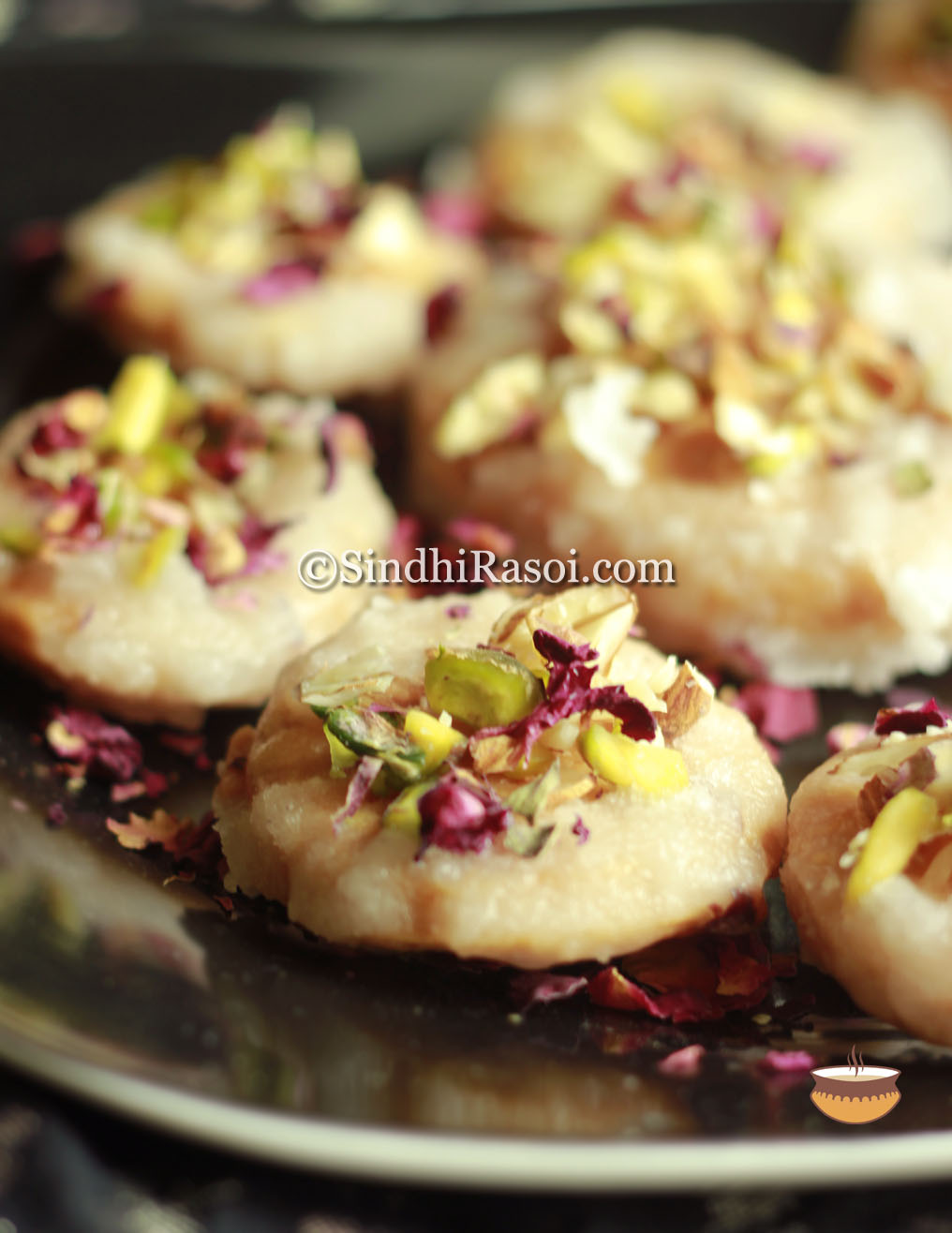
Parsad (Prasad or an oblation) distributed in Sindhi temples or Tikana could be as unpretentious as Misri (rock candy) or as eye appealing as D^othee , it could be as sacrosanct as the Karah parsad (Kadah Prasad) or as revered as the Dona parsad of the Puj Chaliha Sahib Mandir (in Ulhasnagar). Mostly anything sweet is offered to the deities and a prasad is generally made from different kind of flours, ghee, sugar, jaggery, used in various combinations and proportions and cooked in varying ways to make sweets of infinite flavors and textures. Fresh fruits too are abundantly distributed in…
-
-
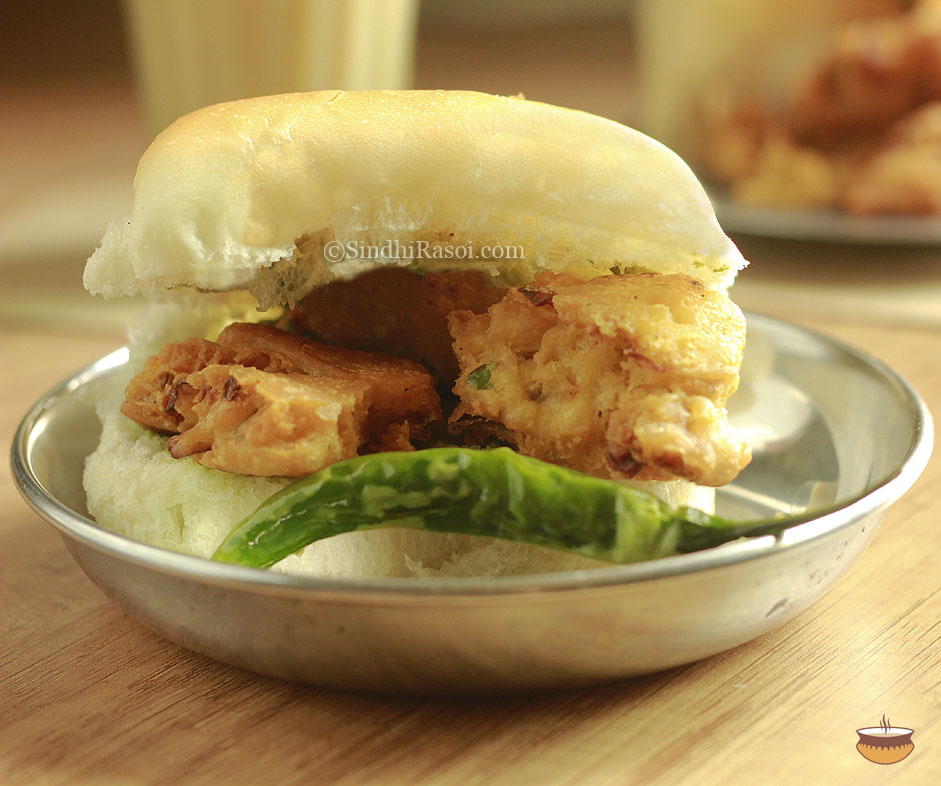
Alifbe of Sindhi Food, the series about A-Z of Sindhi food is now at the 21st letter; ڊ or D in Roman Sindhi and ड in Devanagari ! D as in Daddy, Dairy, Daily etc! And I couldn’t help but pick one of the most popular Sindhi street foods, the Dab^al Pakor^a (In Roman Sindhi) or Dabal Pakora (Pakora pao/sandwich) for ڊ ! The term Dabal is used for Double roti which could mean Pav/Pao or even the sliced bread, in Sindhi! Bread is being commonly used in Sindhi households since past many decades (probably even before the Partition happened)…
-
Dothiyun (singular – Dothee) or Saatta, the popular Sindhi sweet, similar to Kutchi Saata or Gujarati Devada are highly addictive and a delight to relish. Basically a dothee (D^othee in Roman Sindhi) is a fried, sugar glazed cookie made from all purpose flour and ghee/vanaspati. Dothiyun are generally send in to married daughters and sisters on Vadhi Thadri . These are also a part of the ‘Phula Jalan’ or ‘Phula bhugra’ ritual after a child is born, when the mother is given Puffed rice, roasted chana, Mesu (Mysore Pak) and D^othiyun by the parents (maiden family of the new mother),…
-
I have been cooking food since last three decades or so. In all these years I have cooked for family, friends, relatives and even strangers.Have shared home made cakes, cookies, pickles, jams, curries, koki, snacks, Pulav and Biryanis with many of those whom I came across but none of these ever fetched me as many applauds as this humble, often uncherished, ignored and despised dish; stuffed bitter melons/bitter gourds! Of course this dish is on the menu only if I know that the person likes bitter gourds. I know many who love to hate this bitter tasting vegetable but thankfully…
-
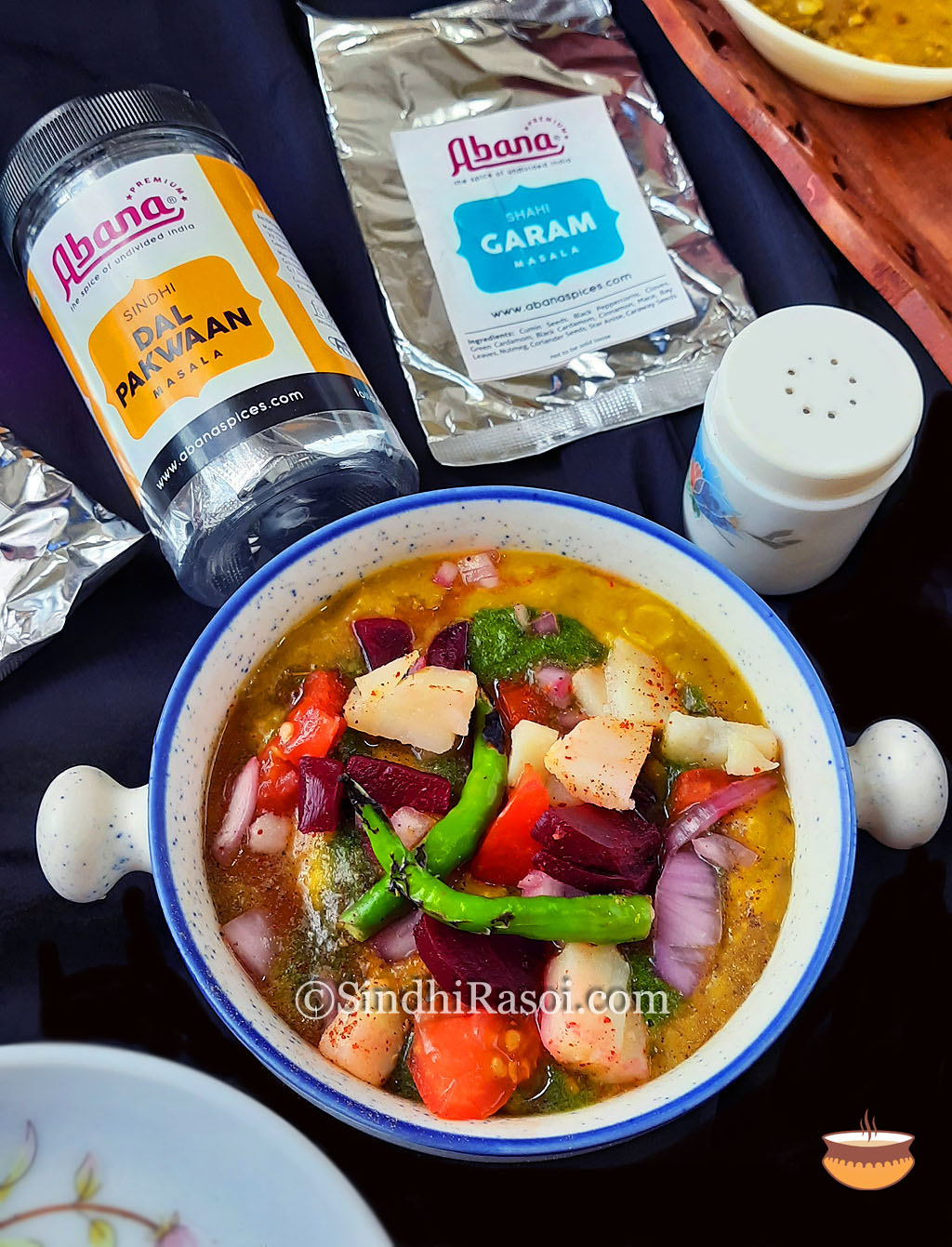
We have arrived at the 4th shape group in Sindhi Script with the 18th letter and it is د or ‘D~’ as in Daawat or as in Dehradun, in Roman Sindhi while द in Devanagari. To Check a recap for AlifBe series kindly click here ! The Sindhi dish starting with د is Dal Dimma or Dal mung! Folks from Sindhi populated areas might know how common it is for people to flock around the carts selling Dal pakwan, early mornings. Though traditionally Sindhi Pakwan is served with Chana dal, it is very common to find carts where you will get…
-
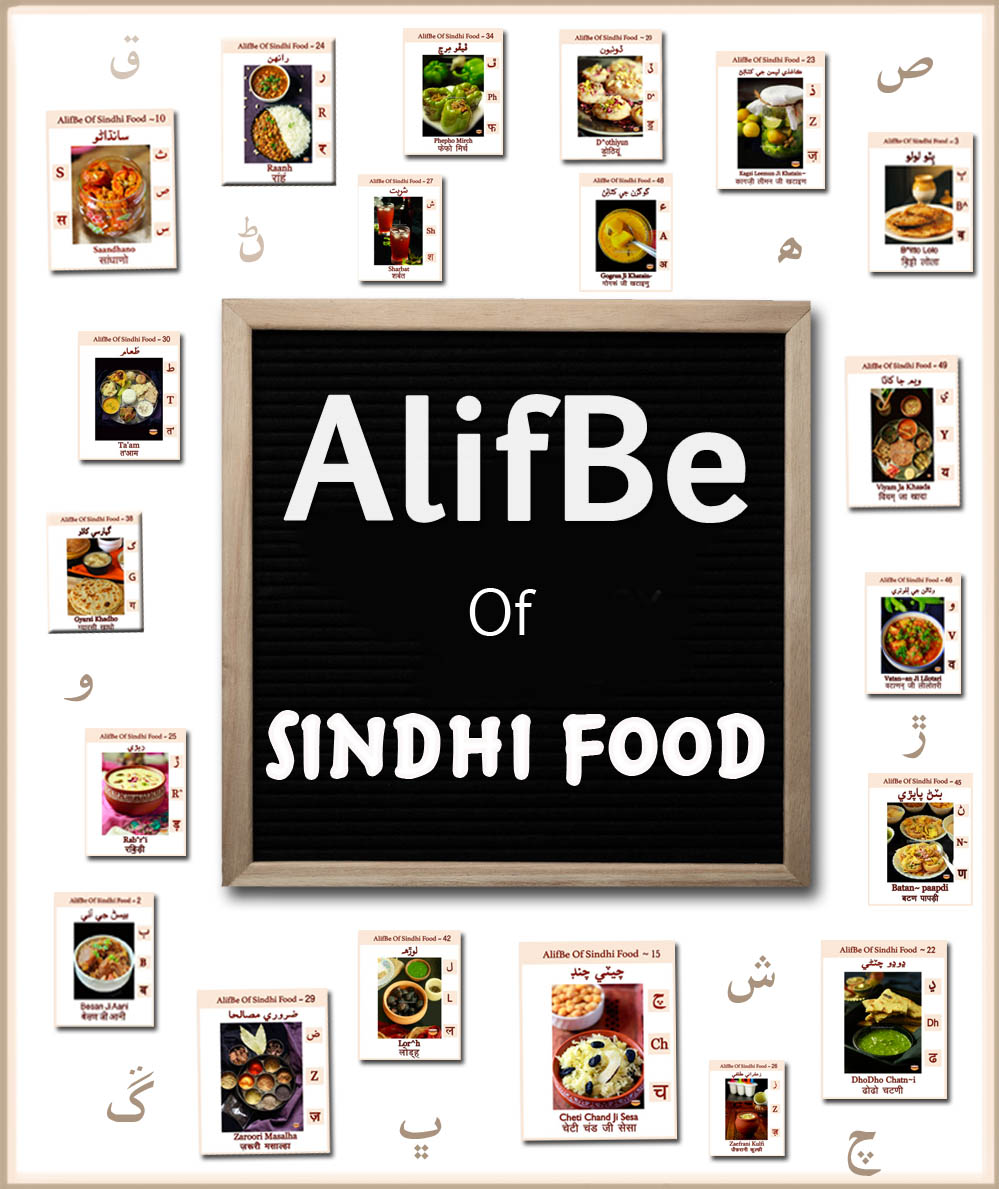
In my first post of AlifBe series I have mentioned that the 52 letters of Sindhi Alphabet, known as AlifBe or Alaph Ambhu, could be divided into sixteen basic shape groups. So far I have covered 17 ( Have skipped one alphabet as it is not used for words of Sindhi origin). Sharing a list of all that are covered so far! A short recap: 1st Shape Group: ا (अ/A) is the only alphabet in first shape group! ا as in ‘Attack’ or ا as in Atte Ja Ladoon The following 9 alphabets come under the second basic shape group characterised…
-
Technically the 17th letter of AlifBe or the Sindhi Alphabet is ح i.e ‘H’ but this particular alphabet is not used for words of Sindhi origin (there is another ‘H’in the AlifBe and it will be covered in future post when we will arrive on it) and hence there is no corresponding dish in Sindhi cuisine. So we will jump to next letter which, again, is used to write words of non Sindhi origin but thankfully we have a popular Sindhi dish starting with that letter. Any guesses?? Well, the 17th letter is خ which is ख़ in Devanagari (Kindly…