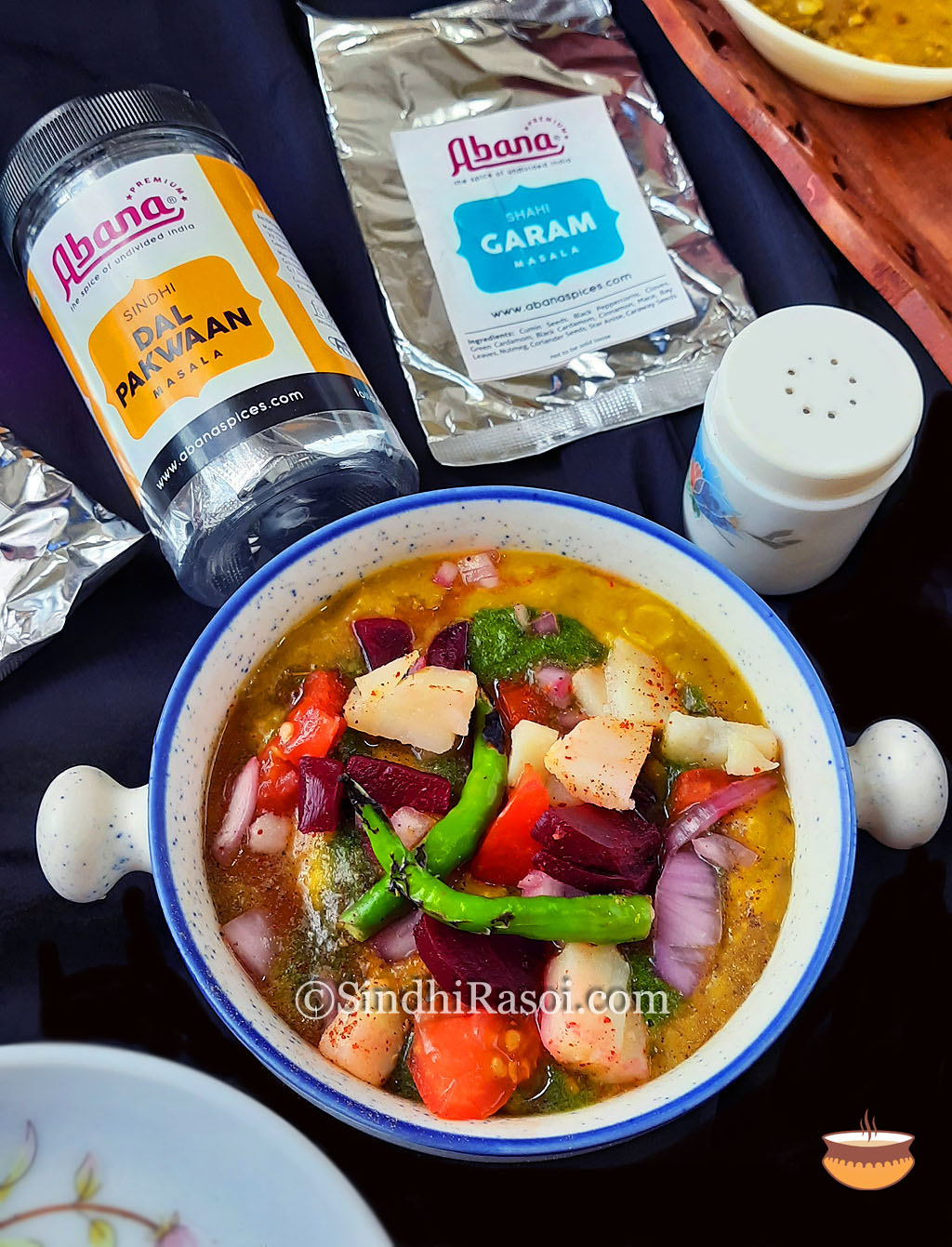
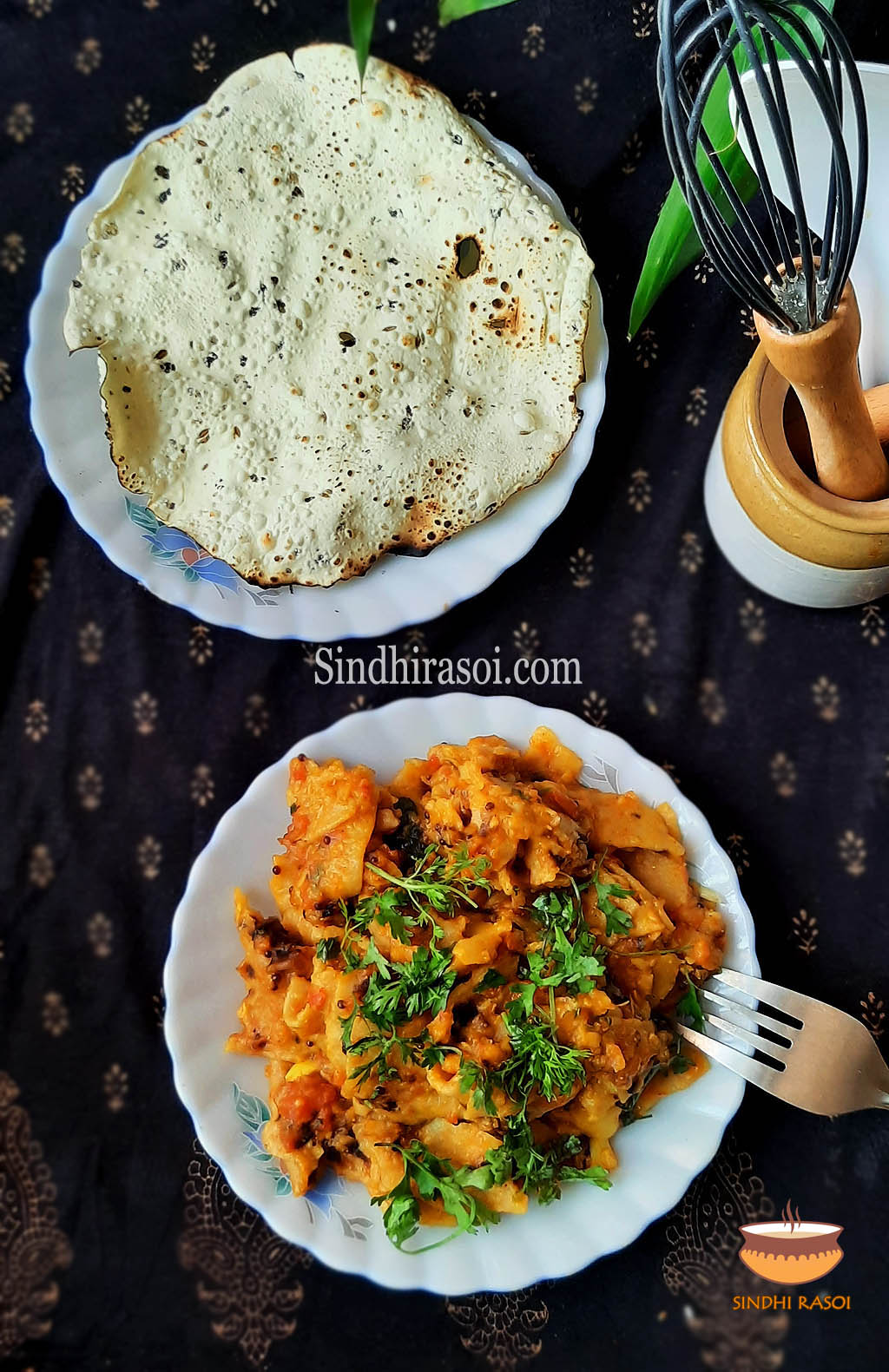
5 Sindhi Dishes made from the Leftovers No matter how particular you are about cooking just the right quantities of food, there may be some leftover food at your home, at some point of the time. Generally we just reheat the food and consume as it is but there are times when we relish the leftovers in a different avatar. Here are 5 such Sindhi style recipes requiring a few basic ingredients to give a makeover to your leftovers. Do tell me in the comments section if you have tried any of these. Also do tell me about your favorite…
-
-
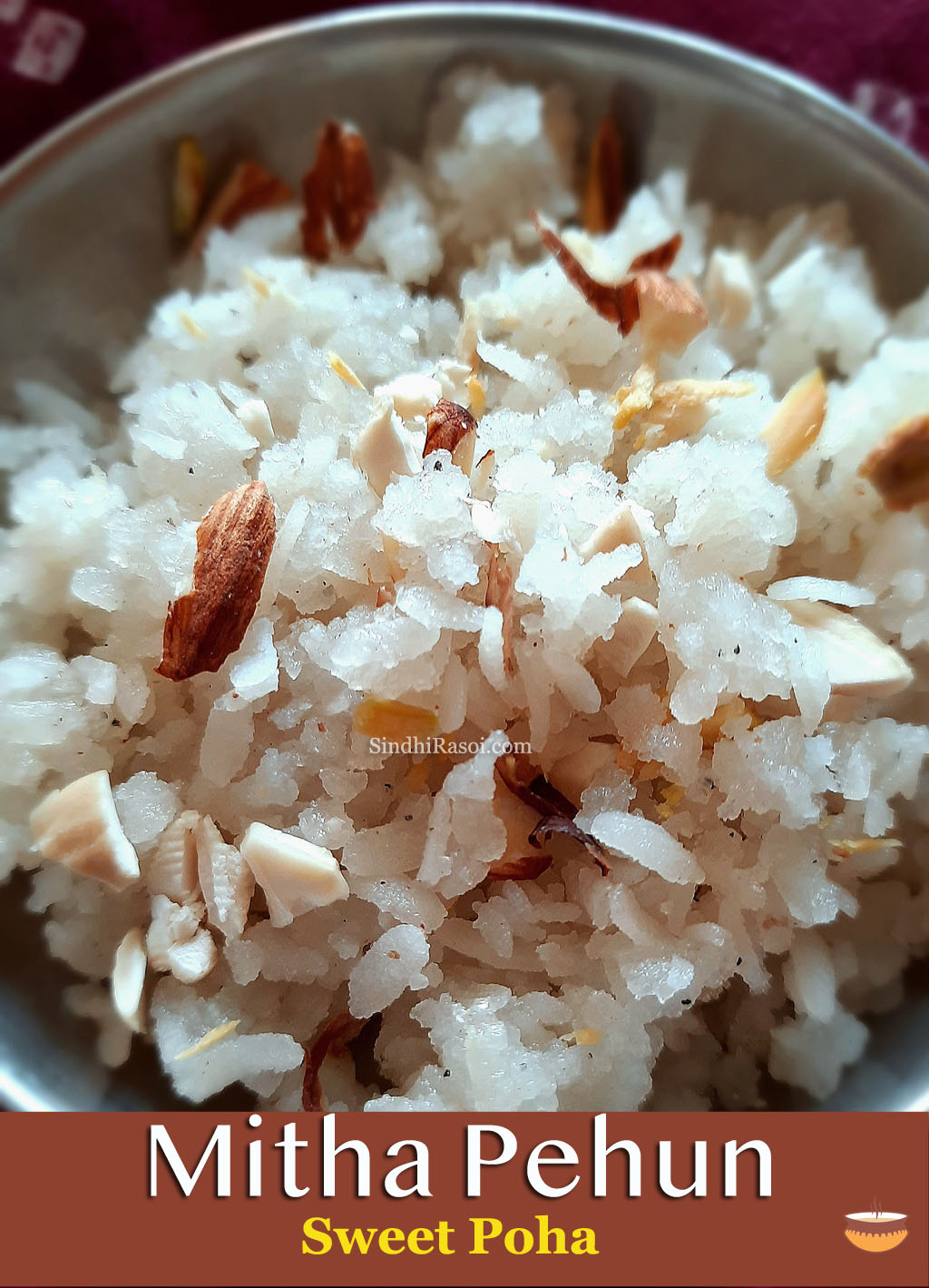
Mitha Pehun or/ Peyun ~ Sweet Poha I always thought that the dish Poha made in Sindhi homes is a relatively new adaptation from the kitchens of Maharashtrian neighbours. The popularity of the humble dish could be judged by the fact that it became one of the most preferred breakfast options for serving the guests, be it during weddings, condolence meets or even for religious gatherings like Varsi (Death Anniversaries) of religious or spiritual leaders. Gradually when I got to taste the traditional poha made at homes of my Maharashtrian and Gujarati friends and neighbours, I realised that there are…
-
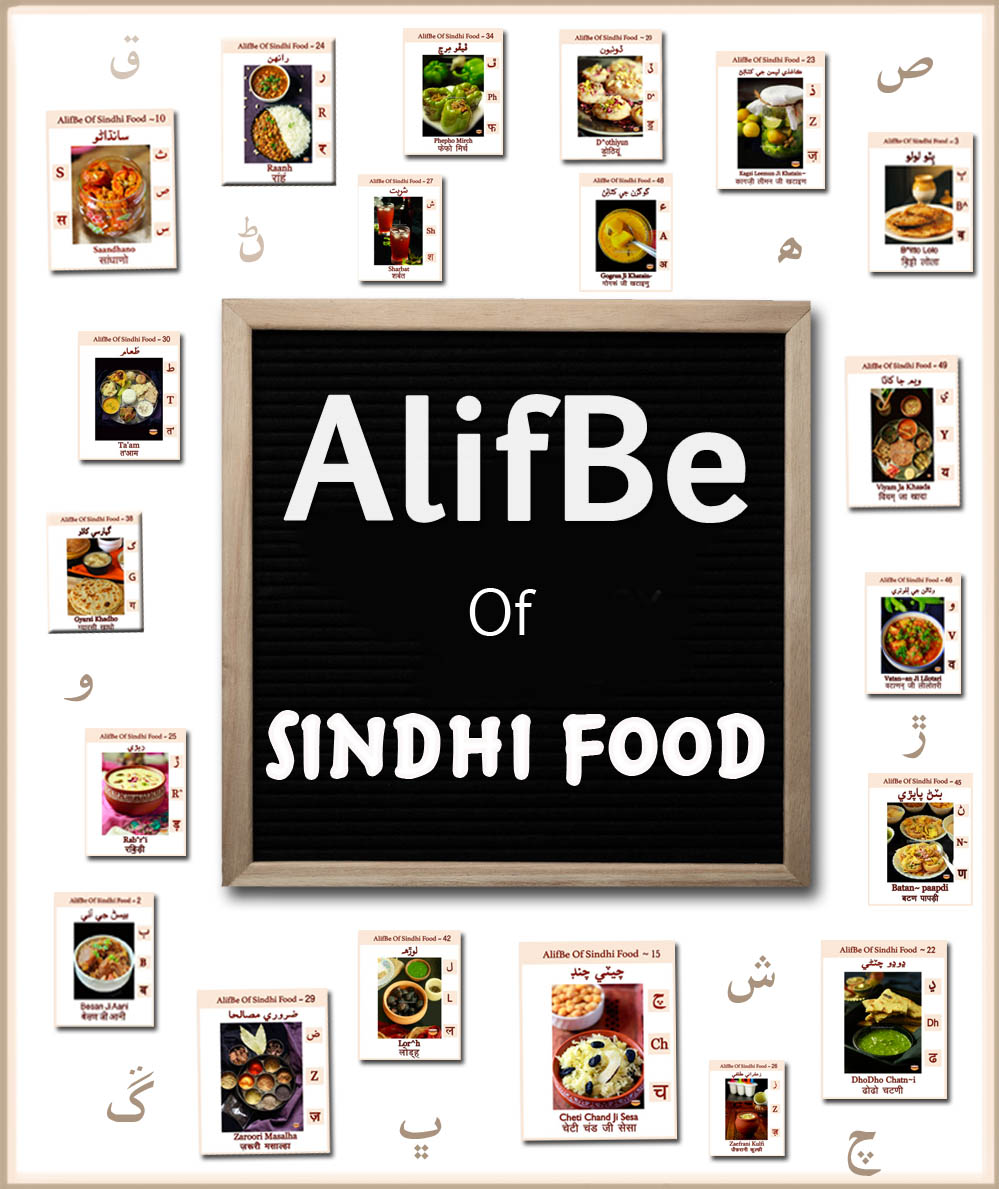
When I started working on my project about documenting ancient, traditional as well as lost recipes from Sindhi cuisine, a few years ago, the biggest challenge I faced was the lack of accessible information about the same. The limited documents that I could access, were in Arabic Sindhi, a script that I never could learn, despite of trying umpteen number of times, since my childhood. I felt stuck up. So the only way to move forward was to learn the Arabic script and to make sure that I don’t give up this time, I took up a challenge; The AlifBe…
-
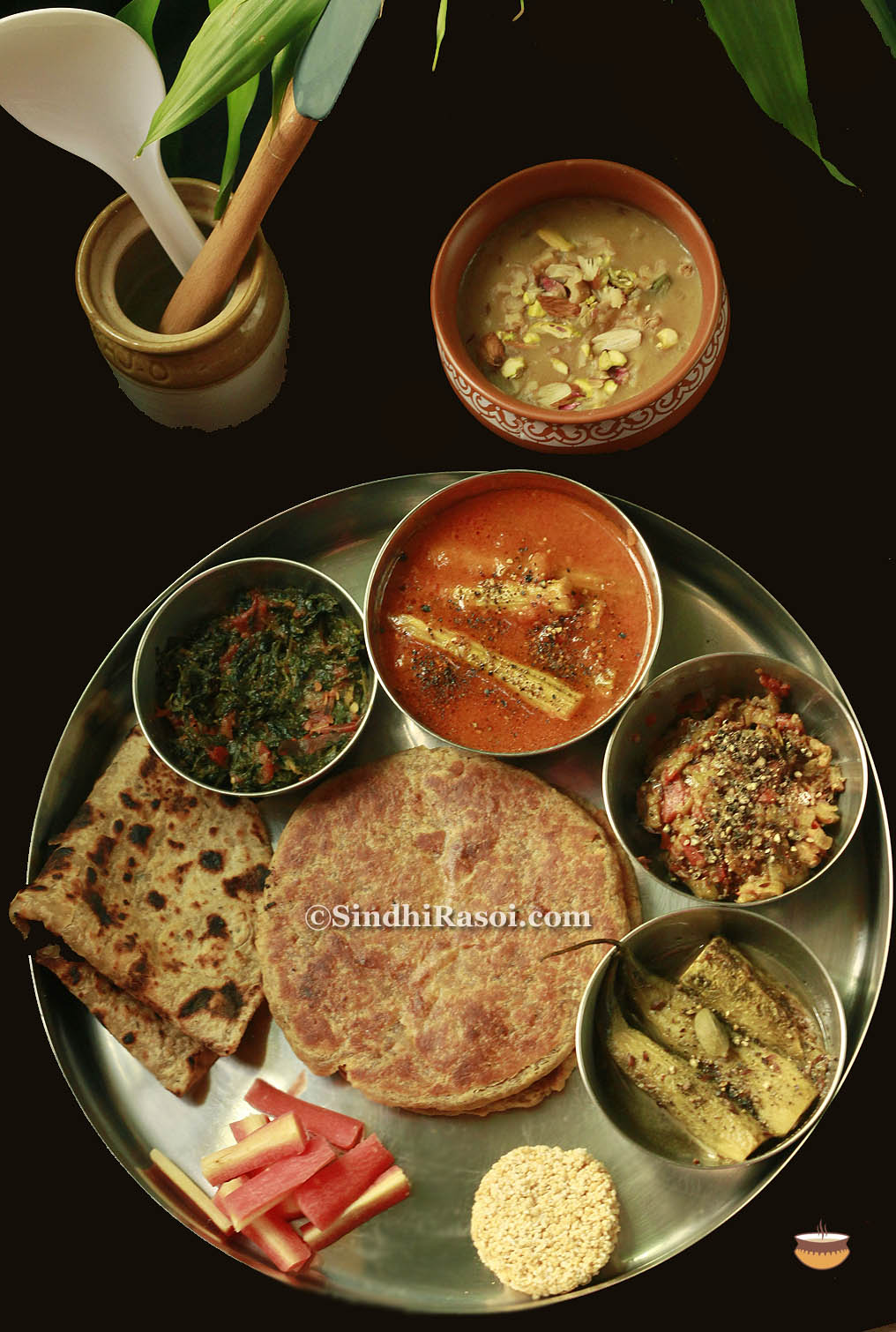
Gyarsi Khadho or the Sindhi Ekadashi food is my pick for the AlifBe of Sindhi food~ 38. The 38th alphabet in Persio Arabic script is گ in Sindhi, ग in Devanagari and ‘G‘ as in Ganga, in Roman Sindhi. Gyars: Gyars (Giyaras/ Igyas) is observed on the eleventh day of Hindu Lunar month. In each lunar month two Gyars (Ekadashi) are observed. Like many other communities, even Sindhi people observe the Ekadashi fast. Upvas or fasting as we call it, is an essential part of any culture. There are various ways to observe a fast and there are various types…
-
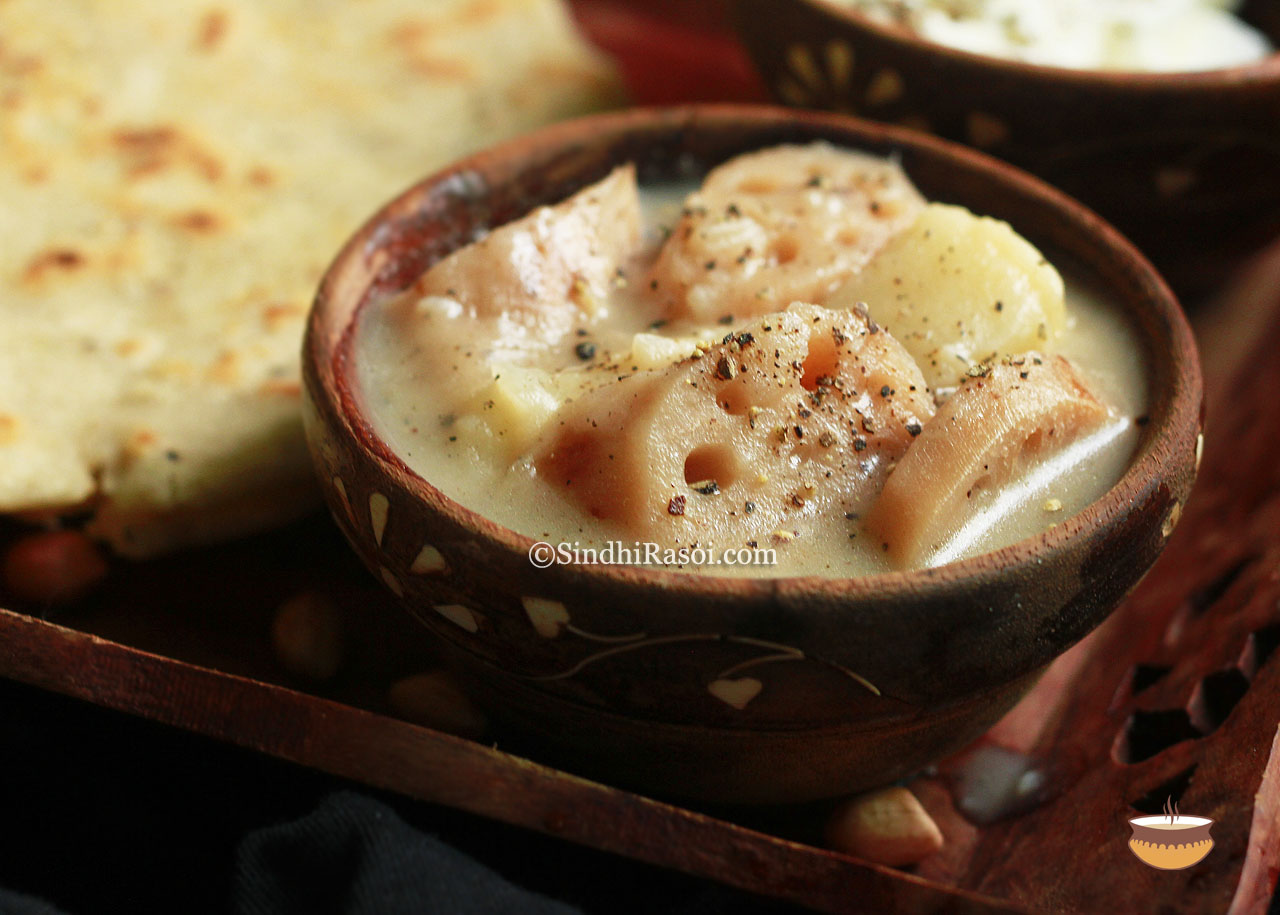
Parsad (Prasad or an oblation) distributed in Sindhi temples or Tikana could be as unpretentious as Misri (rock candy) or as eye appealing as D^othee , it could be as sacrosanct as the Karah parsad (Kadah Prasad) or as revered as the Dona parsad of the Puj Chaliha Sahib Mandir (in Ulhasnagar). Mostly anything sweet is offered to the deities and a prasad is generally made from different kind of flours, ghee, sugar, jaggery, used in various combinations and proportions and cooked in varying ways to make sweets of infinite flavors and textures. Fresh fruits too are abundantly distributed in…
-
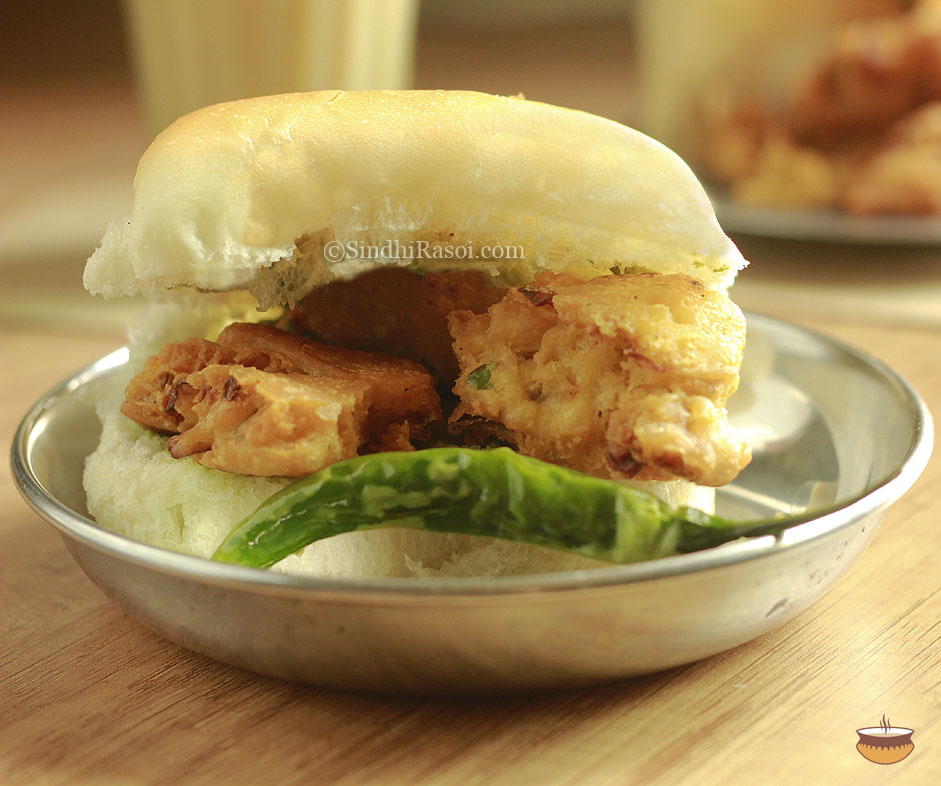
Alifbe of Sindhi Food, the series about A-Z of Sindhi food is now at the 21st letter; ڊ or D in Roman Sindhi and ड in Devanagari ! D as in Daddy, Dairy, Daily etc! And I couldn’t help but pick one of the most popular Sindhi street foods, the Dab^al Pakor^a (In Roman Sindhi) or Dabal Pakora (Pakora pao/sandwich) for ڊ ! The term Dabal is used for Double roti which could mean Pav/Pao or even the sliced bread, in Sindhi! Bread is being commonly used in Sindhi households since past many decades (probably even before the Partition happened)…
-
We have arrived at the 4th shape group in Sindhi Script with the 18th letter and it is د or ‘D~’ as in Daawat or as in Dehradun, in Roman Sindhi while द in Devanagari. To Check a recap for AlifBe series kindly click here ! The Sindhi dish starting with د is Dal Dimma or Dal mung! Folks from Sindhi populated areas might know how common it is for people to flock around the carts selling Dal pakwan, early mornings. Though traditionally Sindhi Pakwan is served with Chana dal, it is very common to find carts where you will get…