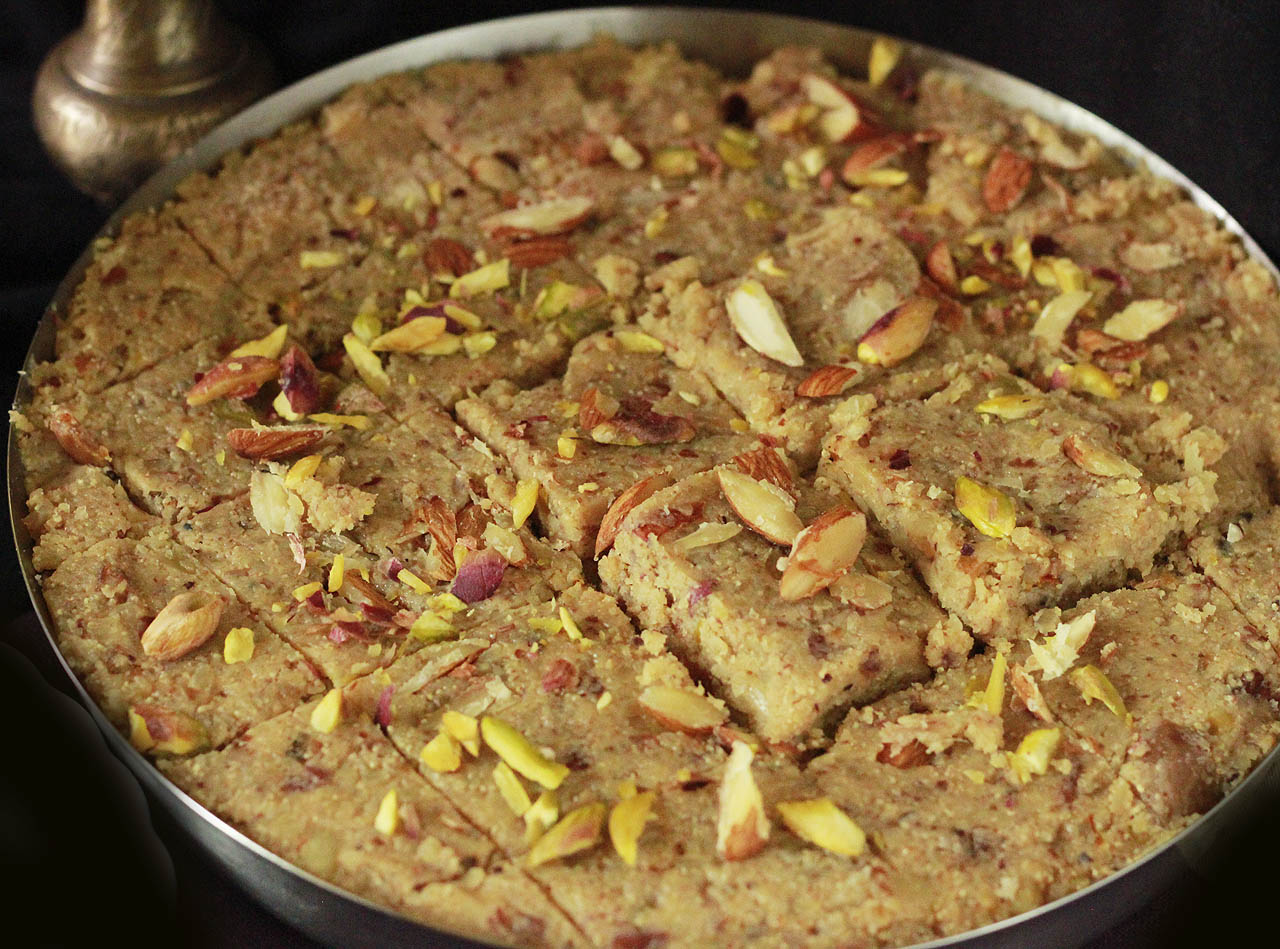
Firstly, wishing you all a very happy Diwali! May the light of peace, joy, prosperity and love erase the darkness of fear, sorrow, misfortune and hatred! AlifBe 43: The 43rd Alphabet of AlifBe of Sindhi Food is م in Sindhi, म in Devanagari and M in Roman Sindhi. M as in Milk, Mawa or Mithai and well, the corresponding dish also is a Mithai made from milk, mawa and dried fruits/nuts. Majoon Barfi is the dish of the day and let me clarify that it is different from the Majoon in terms of color and texture. You can find the…
-
-
Mahalakshmi Festival The Mahalakshmi Vrat ends today and like many other Indian communities who worship the Goddess of Wealth; Mahalakshmi Mata, Sindhis too, will celebrate the day by untying the Sagda (Auspicious thread), offering fried sweets and seeking blessings from the Mahalakshmi Mata. Mahalakshmi, the supreme ‘Mother- Goddess’ also referred to as ‘श्री’ (श्री in Sanskrit means ‘Noble’) is often considered same as the Goddess Lakshmi but it is believed that since it is impossible to imagine, to fathom and to describe the Supreme Goddess, hence the mere mortals generally follow Goddess Lakshmi, the manifestation of Mahalakshmi. The word Lakshmi…
-
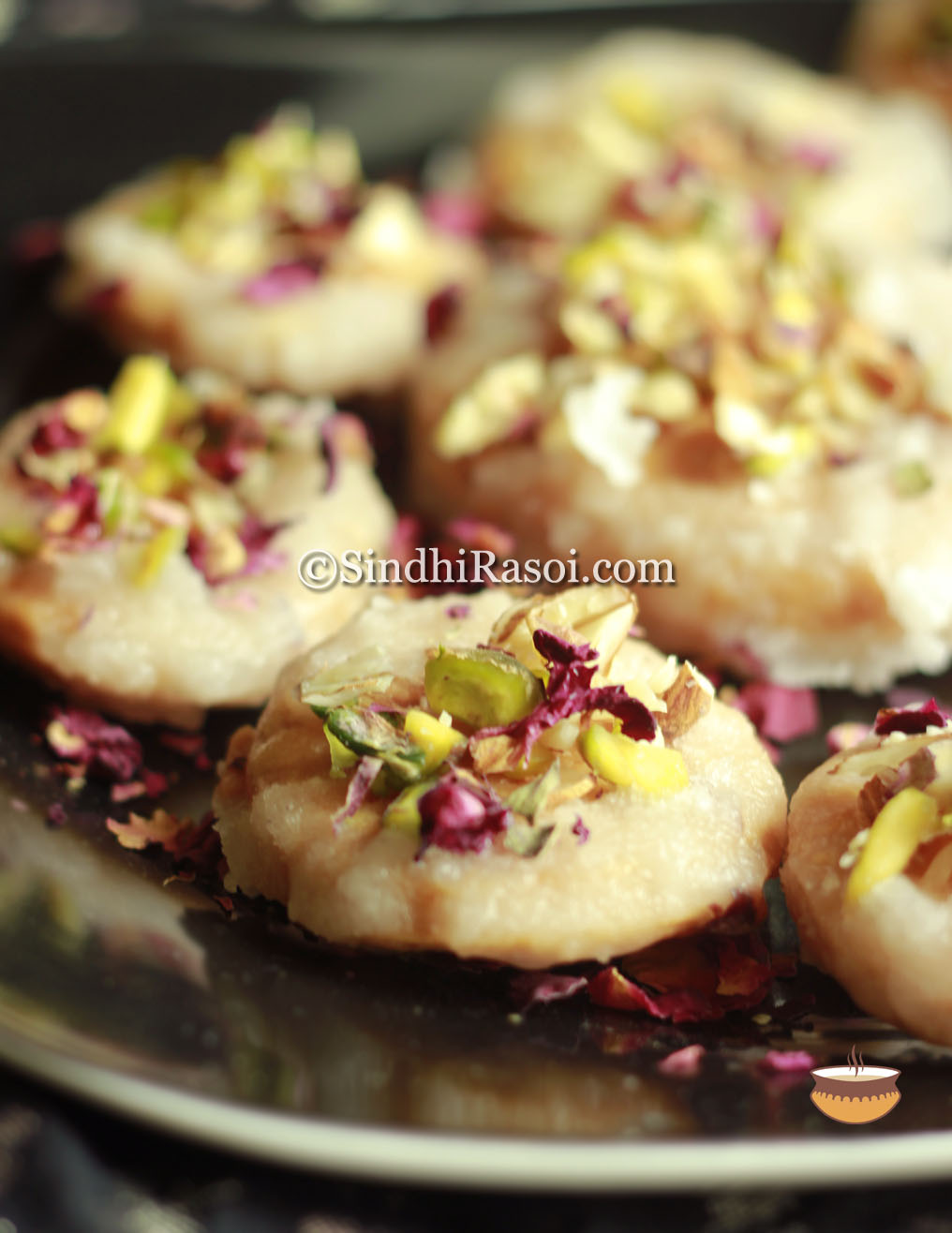
A G^ach, literally means a quarter in Sindhi language. The sweetened dough ball is rolled into a thick ‘roti’, cut into quarters and deep fried. These fried ‘cookies’ are then garnished with powdered sugar, chopped nuts, dried rose petals and a spoon full of hot oil is poured on sugar. It sort of, forms a crunchy sugar glaze and makes the cookie more visually appealing though, more calorie rich. Ideally G^ach are made using All purpose flour (Maida) with ghee for moyan but these taste good enough even if made with whole wheat flour. Video Recipe of G^ach: This time…
-
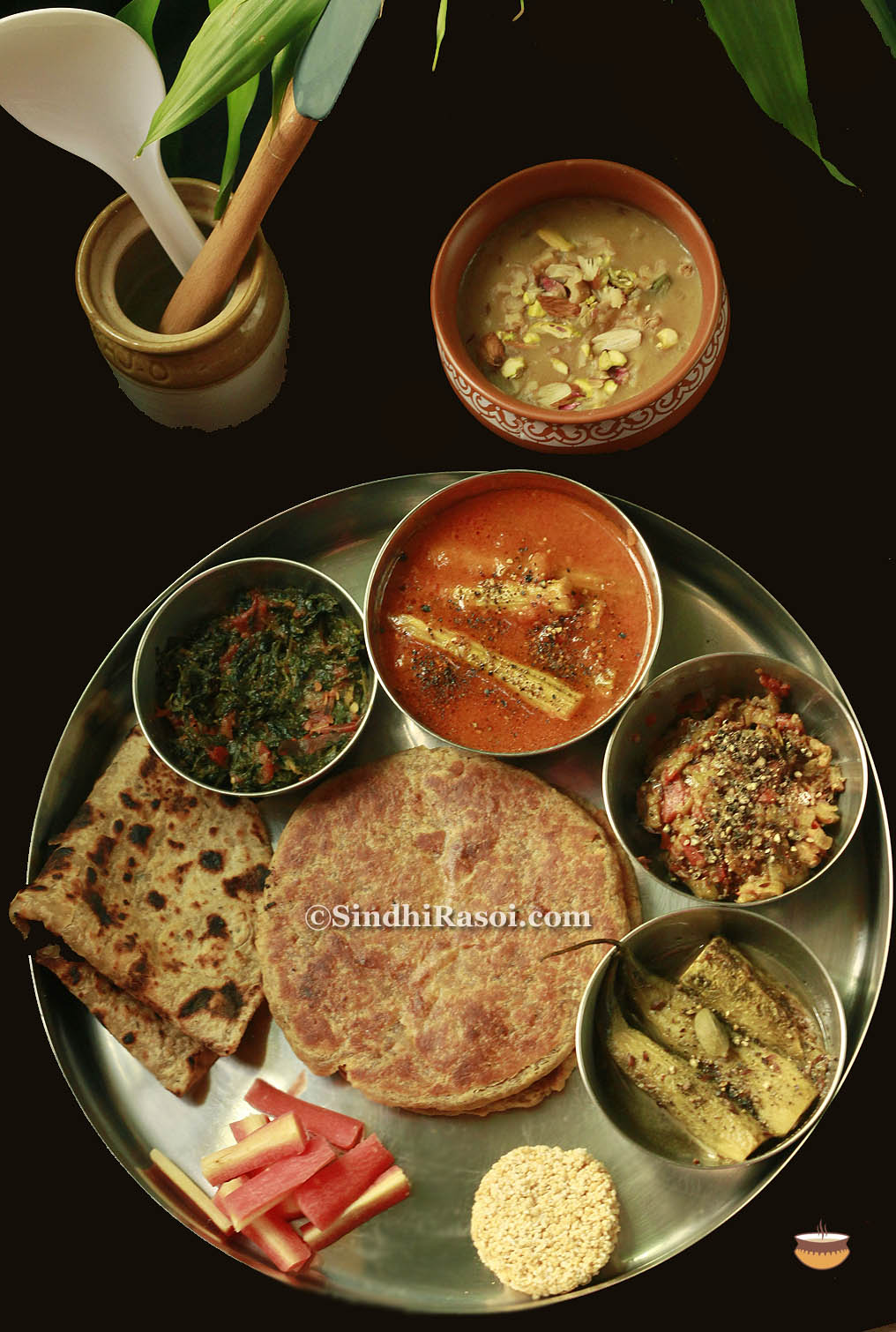
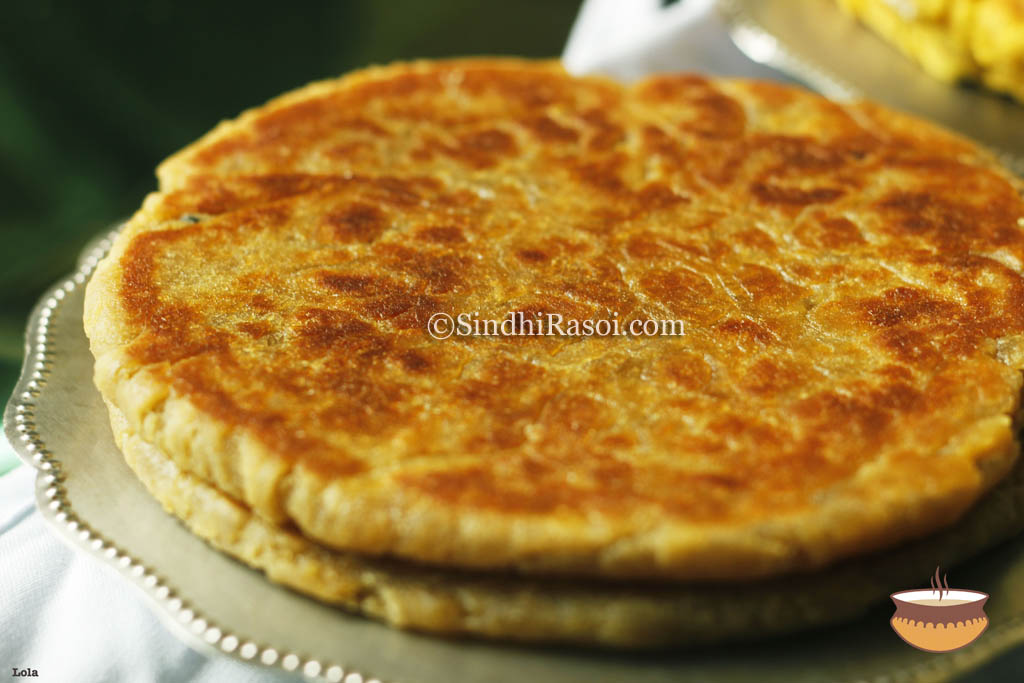
Gyarsi Khadho or the Sindhi Ekadashi food is my pick for the AlifBe of Sindhi food~ 38. The 38th alphabet in Persio Arabic script is گ in Sindhi, ग in Devanagari and ‘G‘ as in Ganga, in Roman Sindhi. Gyars: Gyars (Giyaras/ Igyas) is observed on the eleventh day of Hindu Lunar month. In each lunar month two Gyars (Ekadashi) are observed. Like many other communities, even Sindhi people observe the Ekadashi fast. Upvas or fasting as we call it, is an essential part of any culture. There are various ways to observe a fast and there are various types…
-
Gogo or Gogro is a Sindhi festival celebrated in honor of the God of snakes, named Gogal Devta. It is celebrated as Nag panchmi by many Indian communities. Gogo is now observed only by a small percentage of Sindhi families and many are not aware of the rituals as well. But for those who wish to know why and how this festival was celebrated, here I am, with some details about the Gogo festival. The Legend: Gogo (Gogal), as per a legend, was the grandson of King Gopichand who ruled a place in Thatta (Now in Sindh, Pakistan). Gogo’s mother…
-
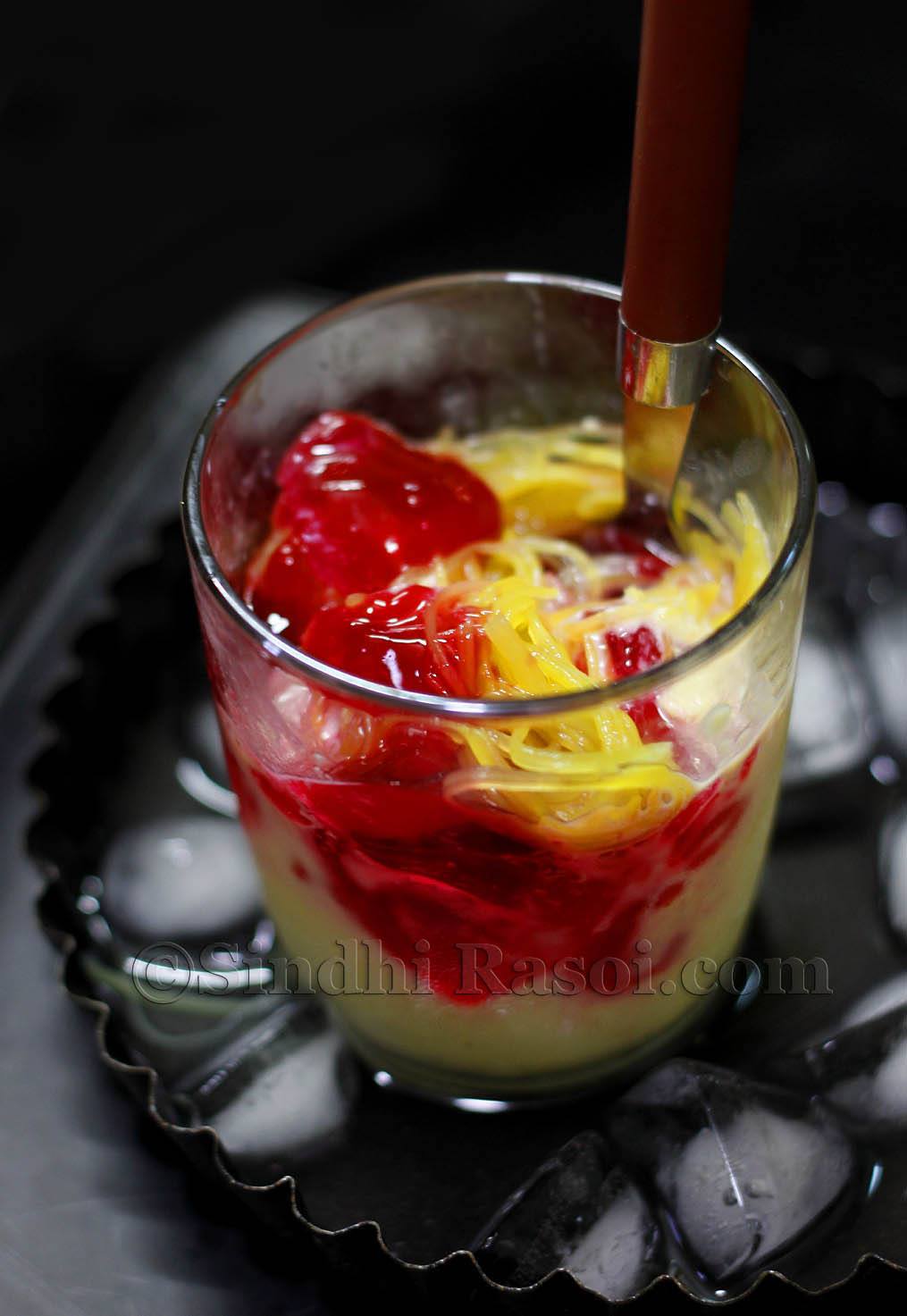
Watch the video about how to make Faluda Sev at home. It is my first video recipe: If you assume that making Faluda sev at home is difficult, then please do check today’s recipe! Hello everyone, hope you all are doing good! I am here today to share a very simple recipe of Faluda sev. It barely takes 15-20 minutes to make it at home. But before I hop on to the recipe, let’s talk about today’s alphabet i.e ف in Arabic Sindhi, फ़ in Devanagari and ‘F‘ in Roman. There ain’t any Sindhi Dish starting with this…
-
Dothiyun (singular – Dothee) or Saatta, the popular Sindhi sweet, similar to Kutchi Saata or Gujarati Devada are highly addictive and a delight to relish. Basically a dothee (D^othee in Roman Sindhi) is a fried, sugar glazed cookie made from all purpose flour and ghee/vanaspati. Dothiyun are generally send in to married daughters and sisters on Vadhi Thadri . These are also a part of the ‘Phula Jalan’ or ‘Phula bhugra’ ritual after a child is born, when the mother is given Puffed rice, roasted chana, Mesu (Mysore Pak) and D^othiyun by the parents (maiden family of the new mother),…