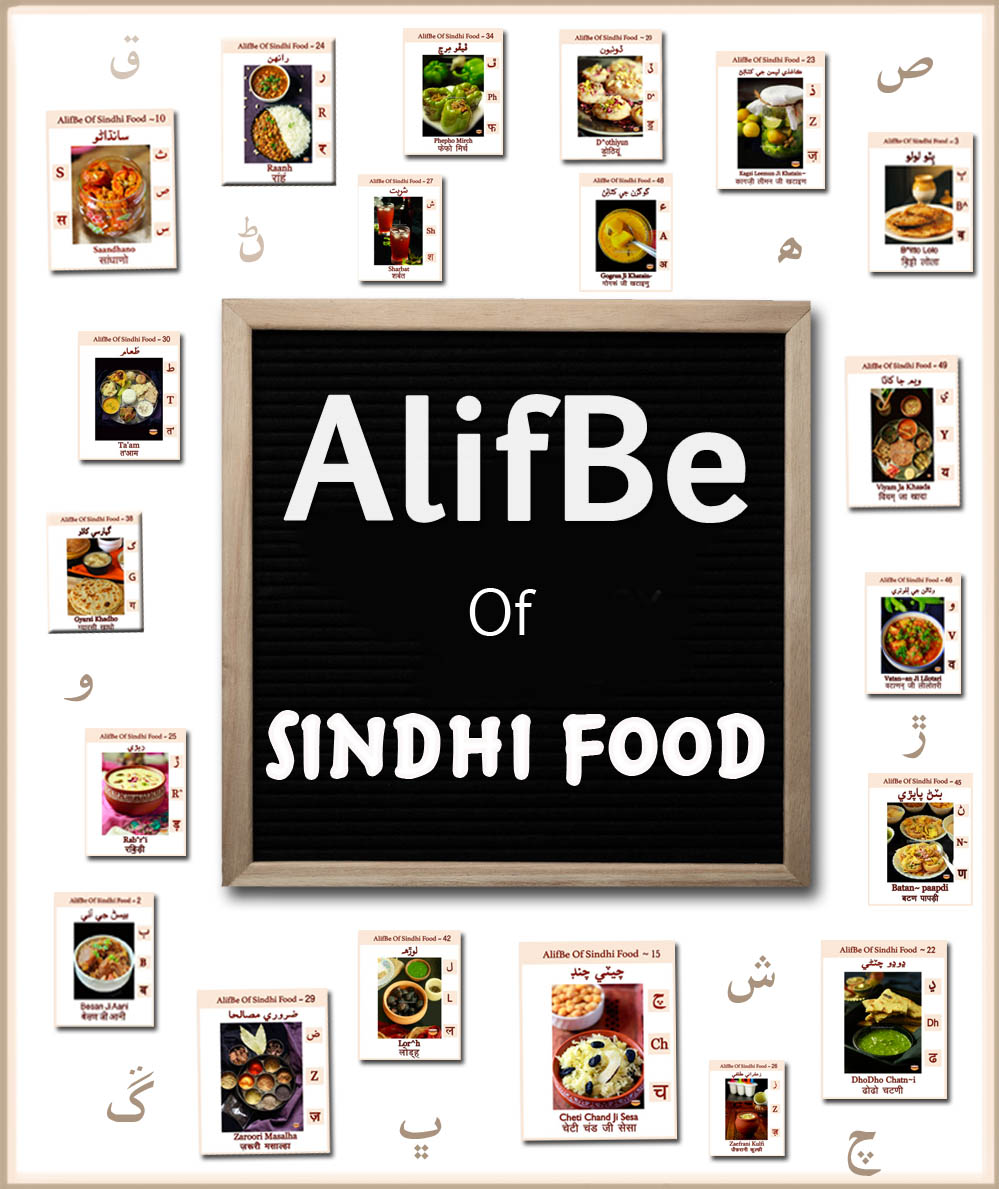
The 46th Alphabet of Sindhi AlifBe (Persio – Arabic script ) is و in Sindhi, व in Devanagari and V in Roman Sindhi.
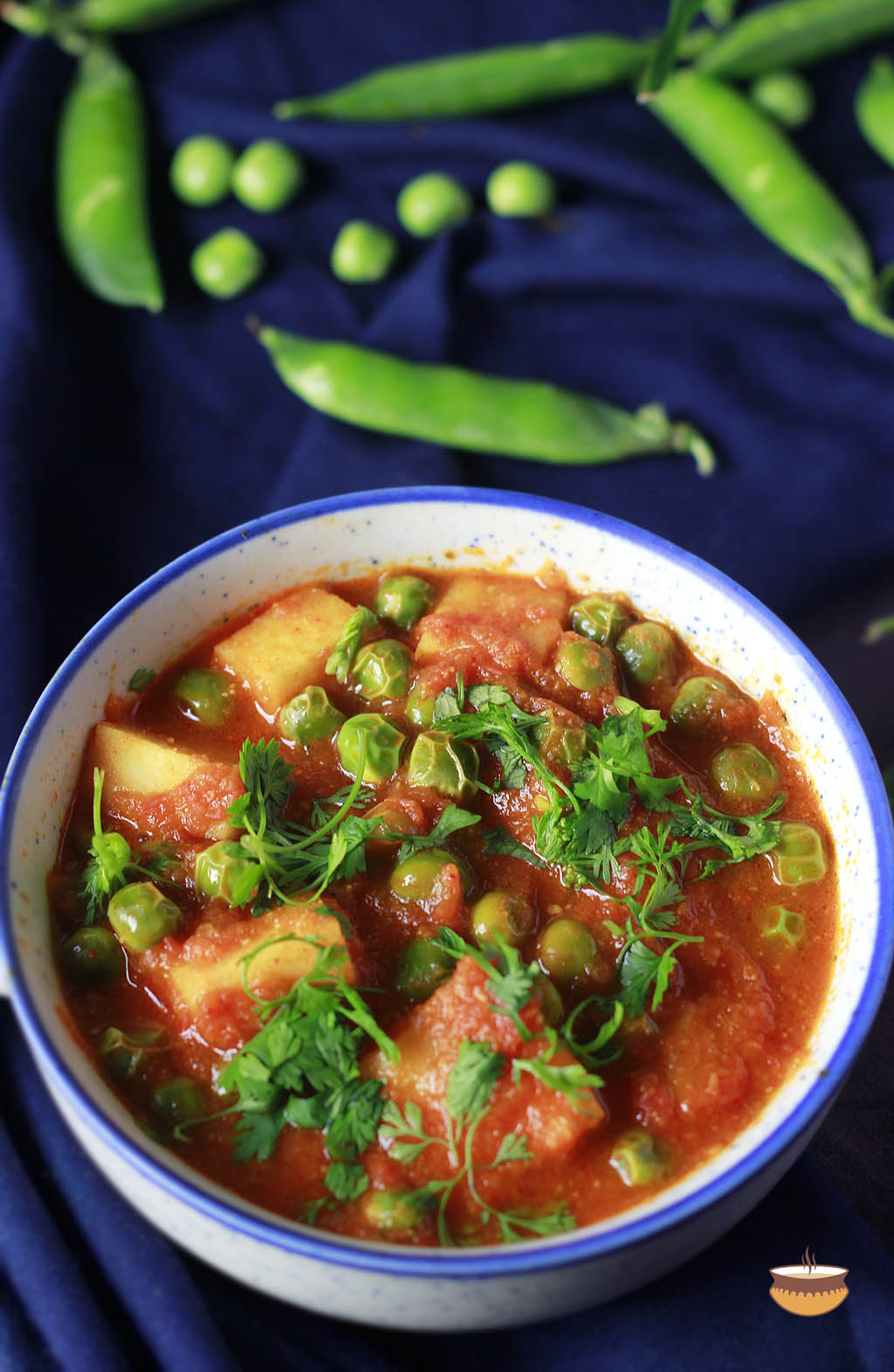
And the corresponding dish for AlifBe` 46 is Vatan~an (Vataran) Ji Lilotari !

I know many of you will wonder whether it actually is a dish from Sindhi cuisine (coz. it sounds like a Gujarati style subzi) but well, it is indeed a traditional Sindhi Brahma Khastriya style curry and many of us know it by the name ‘Peas Tamate mein’ ( peas in tomato gravy)!
Sindhi Brahma Khastriya community is yet another subset of Sindhi community and like Nassarpuri or Thathai Bhatia Sindhis Brahma Kshatris (Kshatriya) too have some unique/peculiar food rituals and food ‘nomenclature’ .
Sindhi Brahma Khastriyas:
The ancient Indian society was divided into four Varnas; Brahmins, Kshatriyas, Vaishya and Shudras.
Each Varna was dedicated to specific social functions and though the classification was meant to create a society of specialised communities, it ended up being yet another way to exploit the weak and the naive.
But to clarify the context of today’s post, I need to explain how two Varnas i.e Brahmins and Kshatriyas overlapped and how a subset of Sindhi community named Brahma Kshatriya or Brahma Khatris came into existence.
While many believe that Lord Parashuram (Lord Ram’s avatar with an axe) was a Brahma Kshatriya since he was born in the family of Rishis but possessed traits of Kshatriyas, his disciple prince Jaisen, is considered to be the one bestowed with the title of a Brahma Kshatri by Rishi Dadhichi.
History of Brahma Kshatriyas: (As learnt from Sindhi Brahma Kshatriya Panch)
In the Treta Yug, a king named Arjuna ruled the kingdom of Mahishmati near Narmada river. He got a boon of possessing thousands arms and hence was later named as Raja Sahastrarjun or Raja Sahastrabaahu (One with Thousand arms).
Once King Sahastrabahu went in a forest and visited ashram of Rishi (Sage) Jamdagini, father of Lord Parashuram. He spotted a cow, Kapila (Kamdhenu) in the ashram and insisted on taking away Kapila with him and though Rishi Jamdagini declined, the King forcibly took away Kapila.
When Parashuram came to know about the audacity of the king, he went to the king to get Kapila back. He faced the wrath of King’s soldiers and a war like situation resulted in the death of King Sahastrabaahu.
The sons of the king attacked Rishi Jamdagini’s ashram and as a result Rishi lost his life.
Parashuram vowed to destroy Kshatriya community.
A king named Raja Rattansen, in Sindh, came to know about the vow of Parashuram and when his army failed to control the wrath of Parashuram, the king, along with his wives, left the palace and took shelter in the ashram of Rishi Dadhichi. His children grew up learning Vedas and Shastras in the ashram.
Parashuram found Raja Rattansen in the forest and killed him. When he visited the ashram and saw the children, he asked Rishi Dadhichi if the kids were Kshatriya or Brahmins. The rishi tried his best to cover up the kids.
Skeptical yet curious, Parashuram took one of the child, named Jaisen, with him, assuring the Rishi that he will teach Jaisen the weaponry/archery etc.
Years later an incidence revealed the truth of Jaisen ( that he is a Kshatriya prince) and lord Parashuram became so furious that he cursed Jaisen and as a result of the curse, Jaisen forgot all the knowledge imparted by Parashuram. But when Jaisen asked for forgiveness, Parashuram told him to return to Rishi’s ashram and that if Rishi agrees to accept Jaisen back, he will regain his knowledge.
Feeling lost, he went back to Rishi Dadhichi who took him under his wings and that’s how a Kshatriya blessed with the combined knowledge of weaponry and Vedas came to be known as a Brahma Kshatriya.
Sindhi Brahma Kshatriya Food:
I first came across SBK food thanks to some posts shared by Prerna Sonejee in Sindhirasoi Facebook group.
What intrigued me was how the dishes were named differently, as compared to the regular Sindhi way. Names like ‘Dhaaran Basar Ji dal’, ‘Surti Vaalan Jo sonto’, ‘Gaare Chokhan Ji Puri‘ sounded very different and that’s when I started connecting with people from this lesser known community to understand the nuances of the cuisine.
I am learning something new everyday!

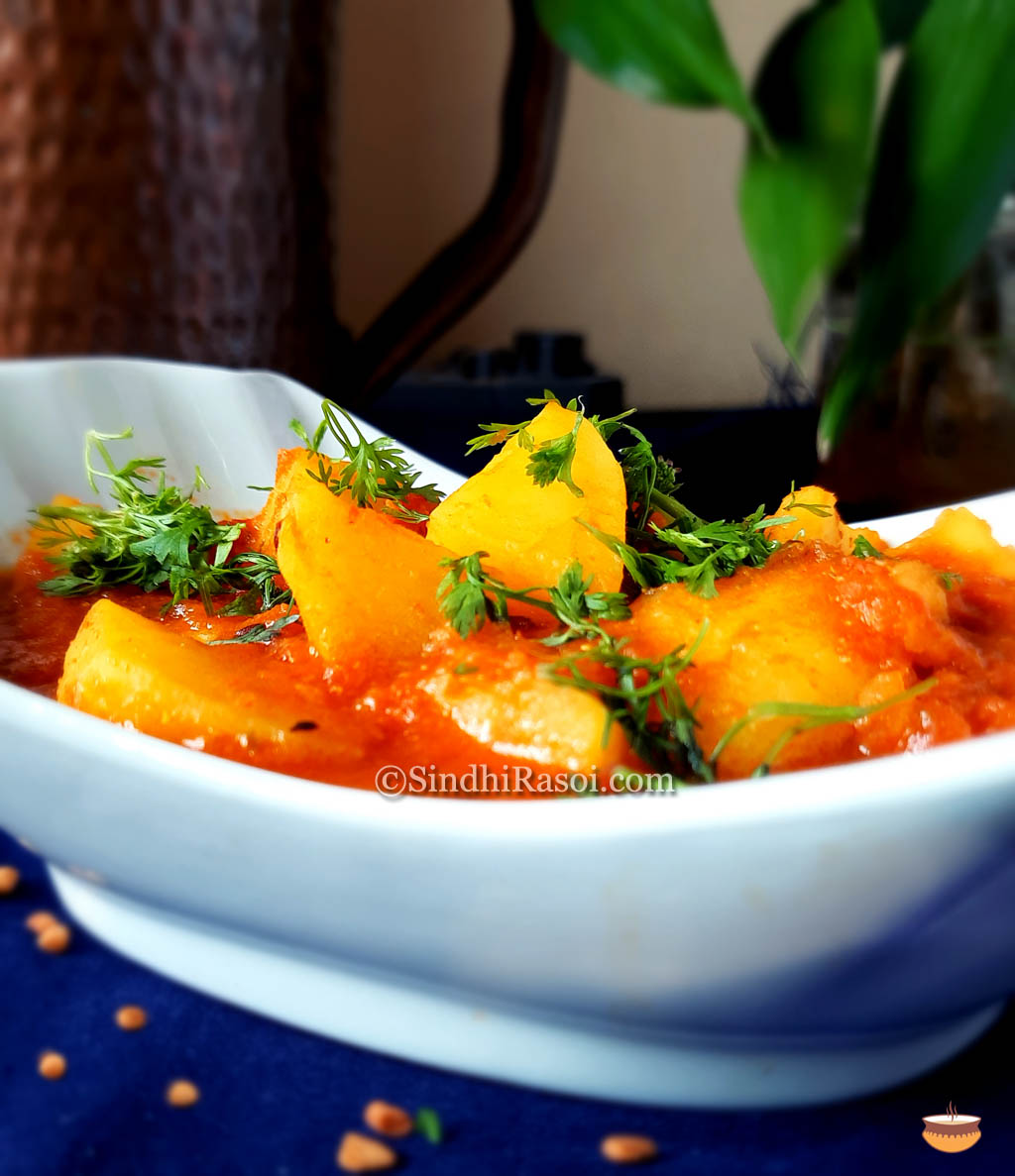
Coming to Vatan~an Ji Lilotari, it is nothing but fresh/green peas (or chawli) cooked in tomato gravy along with one or two vegetables of your choice (Potatoes, Apple gourds, Lotus stem, Yam etc).

The recipe was shared by Prerna Sonejee and I must say, it was one of the easiest dishes that I have made for the AlifBe series.
- 1 Cup shelled fresh peas
- 200 gm Suran (Elephant foot yam)
- 4 ripe tomatoes
- 1-2 green chillies
- ½ inch ginger chopped
- 2 tbsp oil/ghee
- ¼ tsp Hing (Use more if you wish)
- ½ tsp Turmeric
- 1 heaped tbsp Coriander powder (Optional)
- 1 -2 tbsp tamarind pulp
- Salt as per taste
- Fresh coriander leaves for garnish
- Blend or grate tomatoes.
- In a pressure cooker, heat oil/ghee
- Add hing, chopped green chillies and ginger.
- Saute for a minute and then add peeled and cubed suran. You can use potatoes/Apple gourds/ boiled lotus stem, bottle gourd etc. Add a little salt here.
- Gently stir yam (suran) and cook for 3-4 minutes on high heat.
- Add other vegetables, if using and then add peas and blended tomatoes.
- Add salt, turmeric and coriander powder and sir on high heat.
- Add around 1 and half cup of water and mix well.
- Close the pressure cooker with the lid and wait for 2 whistles on medium heat.
- Switch off the flame.
- Add Tamarind pulp and simmer for 2-3 minutes.Adjust the consistency of the gravy (refer the picture) and garnish with fresh coriander leaves.
- Enjoy with roti/rice or pulav.
And here is a video tutorial about how to write in Arabic Sindhi: