Firstly, wishing you all a very happy Diwali! May the light of peace, joy, prosperity and love erase the darkness of fear, sorrow, misfortune and hatred!
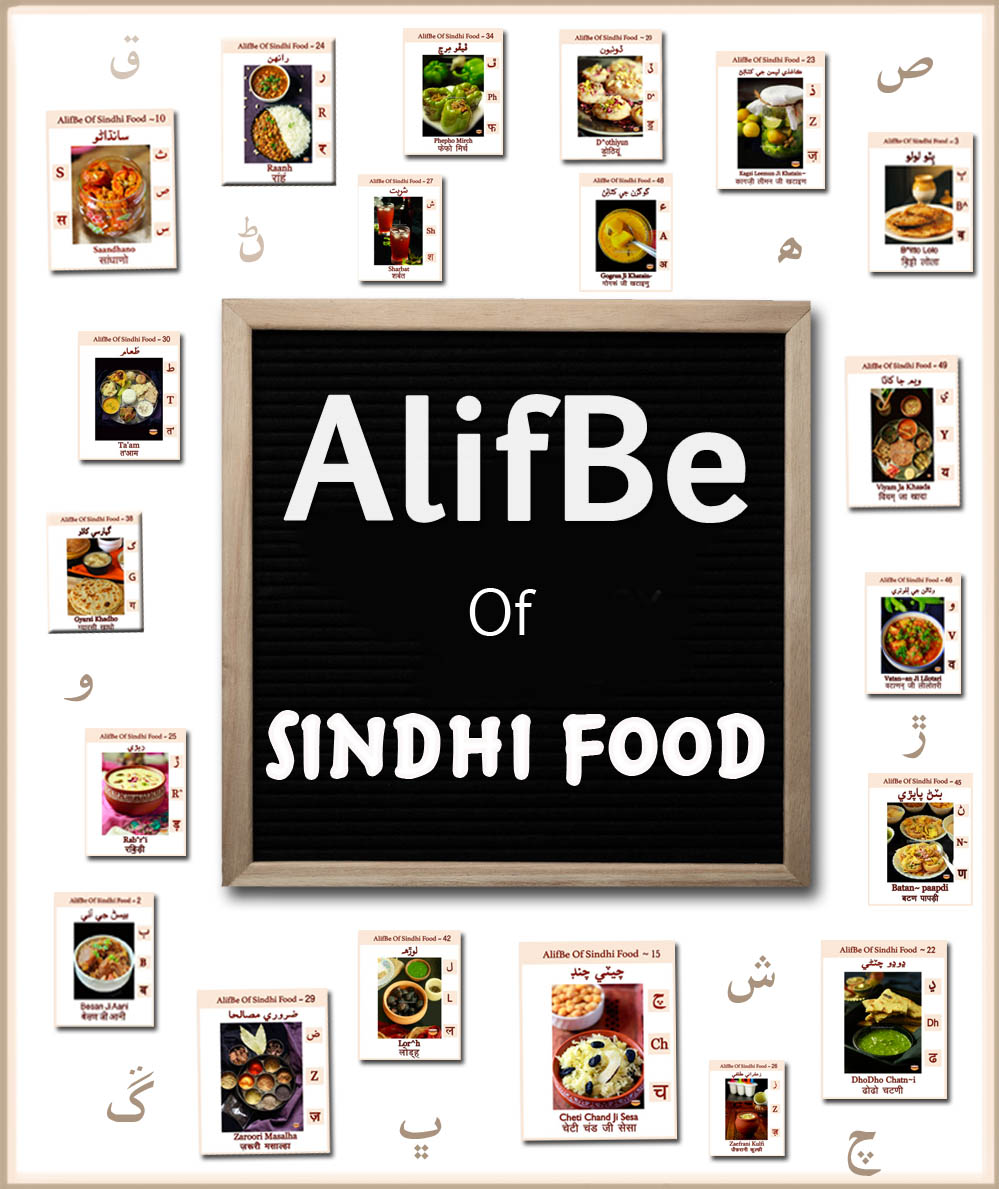
AlifBe 43:
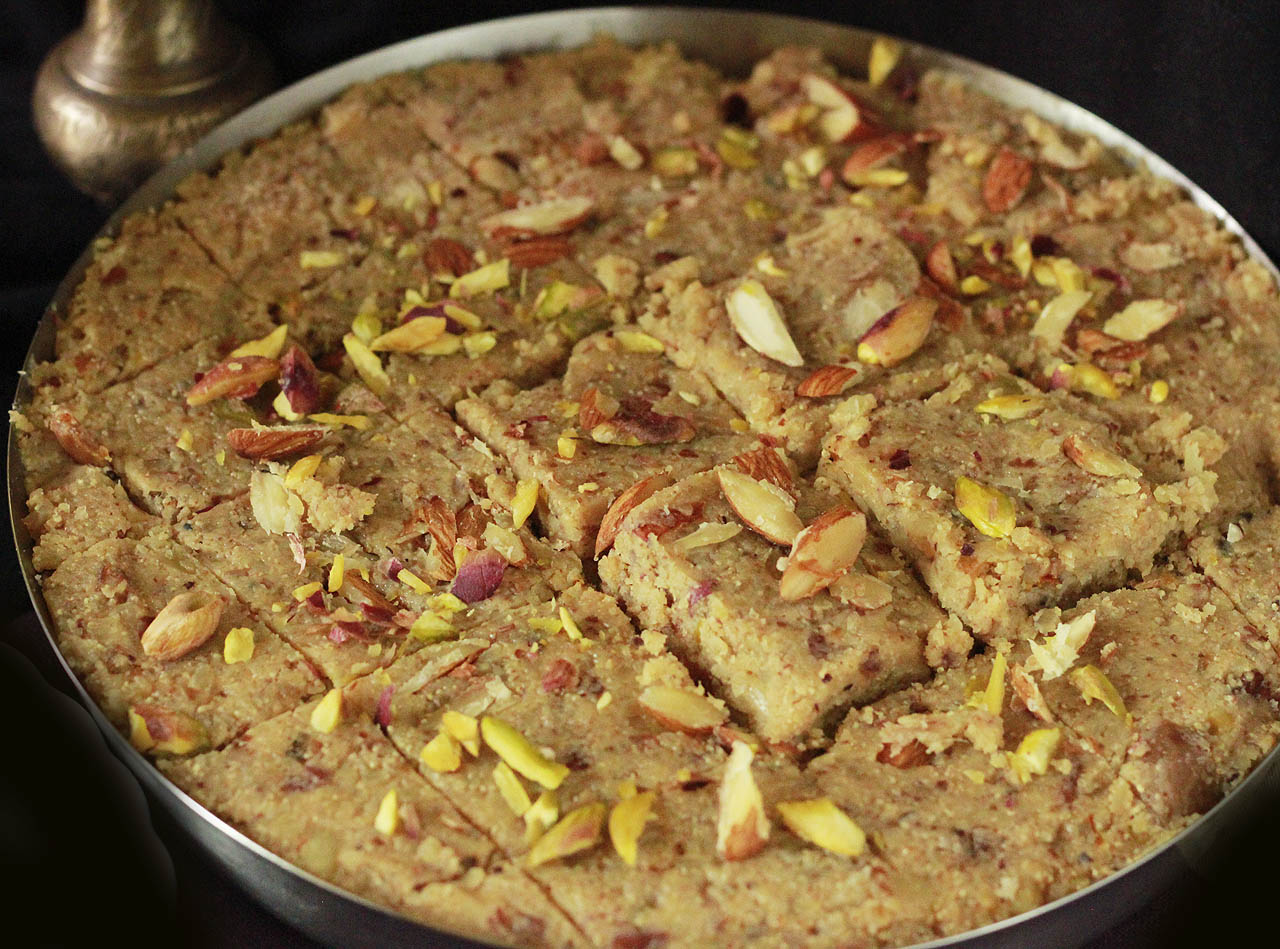
The 43rd Alphabet of AlifBe of Sindhi Food is م in Sindhi, म in Devanagari and M in Roman Sindhi. M as in Milk, Mawa or Mithai and well, the corresponding dish also is a Mithai made from milk, mawa and dried fruits/nuts.

Majoon Barfi is the dish of the day and let me clarify that it is different from the Majoon in terms of color and texture.
You can find the recipe of traditional Majoon here!
Majoon comes from Majoun, a Unani preparation used to make different variations of medicines for varying illness.
Basically a Majoun is made by a mix of Cannabis, ghee, specific medicinal herbs and honey. Poppy seeds and dried fruits and/or nuts may or may not be present in Unani Majoun.
Recipe Video of Majoon Barfi:
It could be in dry powder form or could have a jam like consistency.
Sindhi style Majoon is a similar preparation but instead of using herbs/cannabis and honey, assorted nuts and mawa (Khoya) are added to make it more like a dessert that could be relished in winters to boost the immunity and provide warmth to our body!

Though Majoon is made in various ways in homes across the community, most of the Sindhis prefer it to be a dark brown halwa like sweet that tastes bit similar to Bhuna hua mawa (khoya).
Many confuse it with Khhoraak but both are different in terms of taste, texture and ingredients used. Please do check this link to know the difference!
Actually Majoon is faint brown because mawa is not to be bhunoed till dark brown, while Khhorrak is darker in appearance because of the roasted wheat flour and sugar syrup used.
I hope now you all will know the difference between a Majoon and a Khhorak.

Traditionally Majoon is of halwa like consistency but I cooked it for prolonged time to remove most of the moisture because I wanted to make a Barfi like sweet since it is easier to distribute and consume while serving it in the get togethers during the festive season.
- 1 Cup Almonds (Or ½ cup Almonds and ½ cup Walnuts)
- ½ Cup Cashews
- ¼ Cup Pistachios
- 7-8 Dry dates
- ¼ Cup Khas-Khas
- 1 Cup Sugar
- 500 ml Milk
- 1 Cup Mawa
- ¾th Cup Grated Kopra
- 4-5 tbsp Ghee
- 7-8 Green Cardamoms
- Soak Poppy seeds (khaskhas) in water for 6 hours. Many skip the process as soaked khaskhas splutter a lot while cooking. But it is an important process as soaking removes the trace morphine from poppy seeds, if present. You can then dry khaskhas (in shade ) to avoid spluttering while cooking. I just soaked it and strained it using a tea strainer.
- Rinse well the dried fruits and nuts and spread on a kitchen towel to remove excess moisture. Soak dried dates if too hard, drain on kitchen towel, pound with a pestle, discard seeds and either chop or grind coarse. I preferred chopping dried dates as mine were not very hard.
- In a pan, dry roast almonds, cashews, pistachios (and walnuts, if using) on low flame to make the nuts moisture free.
- Cool and either pound in a mortar pestle or coarsely grind (using pulse mode of mixer grinder).
- Due to the lack of time I was unable to make mawa at home, in the traditional way. And I don't use store brought mawa. So I used cheat method and mixed around 1 cup of milk powder, 2 tbsp ghee and few spoons of milk and microwaved it for 3 minutes. Since the milk powder was sweetened, the resulting mawa was sweet. Also, since this barfi would be consumed by diabetic family members, I used only 2 and half tbsp 'added sugar ' in the barfi. Kindly adjust sugar quantity depending on whether the mawa used is sweetened or unsweetened and upon your level of sweet preferences.
- Heat a pan and add 3-4 tbsp of Ghee. Add strained poppy seeds and cook on low flame till slight brown.
- Add mawa and cook further. When the mawa is slightly cooked, add grated Kopra (dried coconut). You can use desiccated coconut too. I used a mix of both.
- Roast this mix till faint brown (10-12 minutes).
- In another pan, heat the milk. Add chopped chuhara (dried dates or Khareek) and cook the mix for 8-10 minutes so that chuhara softens a bit. Add pounded green cardamoms.
- Now add the khaskhas+khoya+kopra mix and stir well.
- Whole cooking process is to be done on low flame/heat only.
- Keep stirring and allow the mix to cook till the milk evaporates.
- You can add Moonh lalai or the edible brown food colored powder (available at pasari shops) for better color. I didn't use any.
- Add sugar and mix well. Sugar will release moisture so the mix will again look bit gloopy. Keep cooking further till the mix is dry.
- Grease a thali (flat plate with elevated edges) or a square baking dish.
- Transfer the Majoon mix on the plate and spread evenly.
- Flatten the mix and garnish with chopped nuts. Allow to set slightly.
- Mark the cuts (I forgot to do that when the mix was hot) and let the mix cool down completely.
- Cut into pieces and store in an airtight container, preferably in the refrigerator.
- Many people claim that majoon could be stored for many months. But actually it is the Khhorrak that has better shelf life and not the majoon cooked using milk and mawa. But it still stays good for a week or more in refrigerator.
Check this short tutorial about how to write alphabet ‘M’ in Sindhi.