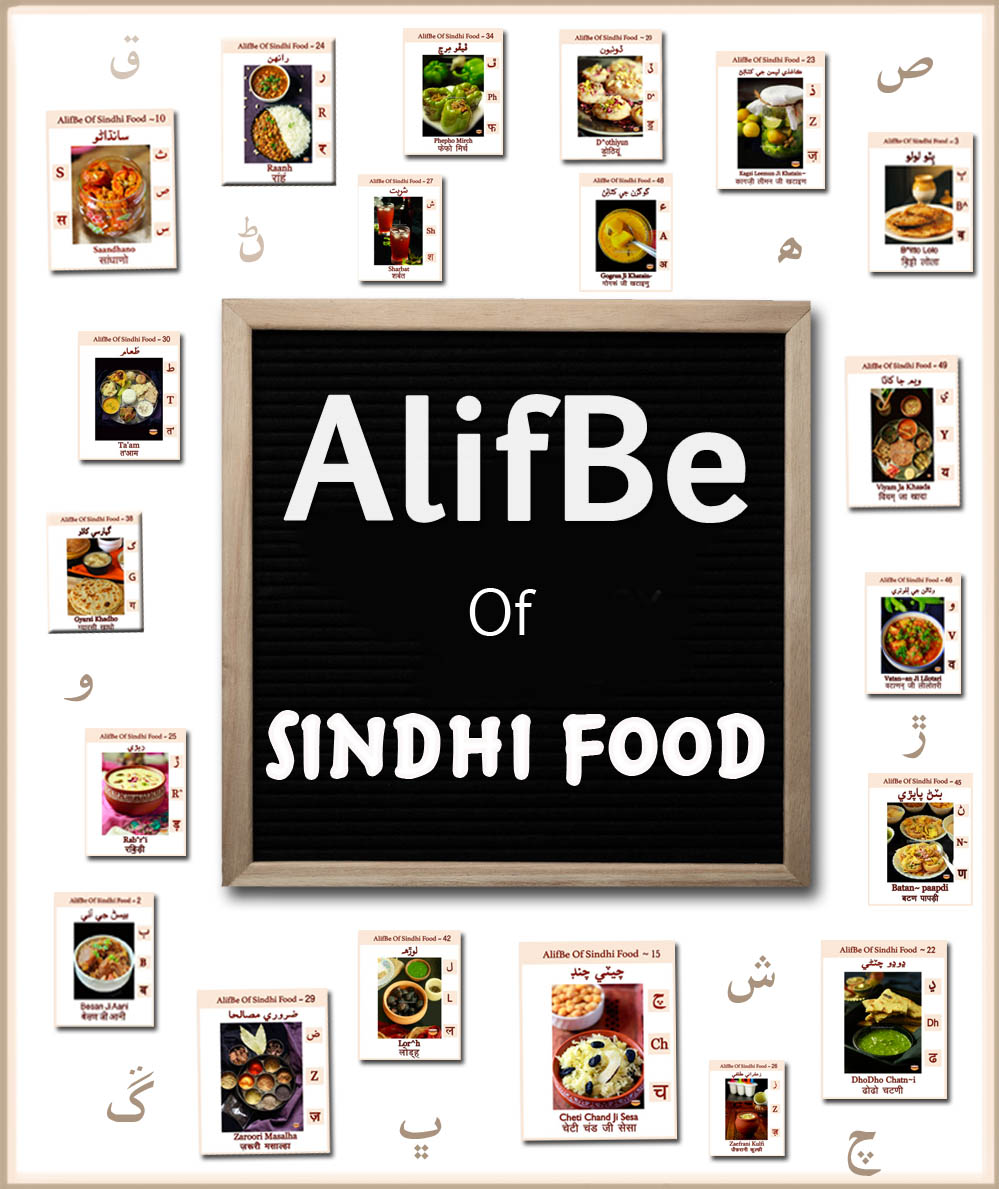
Gyarsi Khadho or the Sindhi Ekadashi food is my pick for the AlifBe of Sindhi food~ 38.
The 38th alphabet in Persio Arabic script is گ in Sindhi, ग in Devanagari and ‘G‘ as in Ganga, in Roman Sindhi.

Gyars:
Gyars (Giyaras/ Igyas) is observed on the eleventh day of Hindu Lunar month. In each lunar month two Gyars (Ekadashi) are observed.
Like many other communities, even Sindhi people observe the Ekadashi fast.
Upvas or fasting as we call it, is an essential part of any culture. There are various ways to observe a fast and there are various types of fasts. Be it Chaliha, Lent/Shrove Tuesday, Roza/Ramadan, Karva Chowth, Teej, Navratri, Paryushan or any other religious or spiritual fast, the beliefs may vary, the rituals may be poles apart but the crux remains more or less the same i.e to connect with the Supreme power and to connect with your own-self in a disciplined way.
For many Hindus, Upvas is a synonym of fasting or to abstain from food. For religious folks, Upvas or Upa (near/close)+ Vas (to stay/ live) is the time to get closer to his or her deity while for many spiritual people, upvas means to connect with their own self, to introspect, to control their desires, to stay in solitude and to become a better version of his or her self.
Of course not everyone understands the true essence of Upavas and for many it just means indulging in a different way. We tend to look for tempting recipes using pseudo grains when grains are not allowed, we feast on fancy ‘satvik’ food cooked with ingredients that our ancestors never knew about, restaurants and eateries offer ‘fasting’ meals to ‘satiate’ your taste buds, the markets are flooded with all sorts of feasts to break your fast. I feel so amused!
Well, I am not the one who believe in the moral policing and I am as much guilty as many of us would be, when it comes to feasting on a fasting day. We surely need to mend our ways!
Coming to Gyars or Ekadashi, the day is considered to be a sacred day to worship Lord Vishnu and the Sindhis abstain from consuming meat, grains, beans/pulses, cereals, table salt (sendha namak is used instead) and spices except black pepper and cumin (many even avoid cumin seeds). Leafy greens and vegetables are also avoided in the Gyarsi (Ekadashi) food, by majority of Sindhis observing the fast.
For those who observe Ekadashi, the Gyarsi breakfast generally consists of fruits or Kirng (Kin~g) i.e samo porridge. The porridge made from samo seeds could be sweet or savory (cooked with salt and black pepper). It is generally paired with shallow fried potatoes flavored with sendha namak and freshly pounded black pepper.

Lunch consists of Gyarsi Bhaji and Dhodho.
Video Recipe of Gyarsi Bhaji and Dhodho:
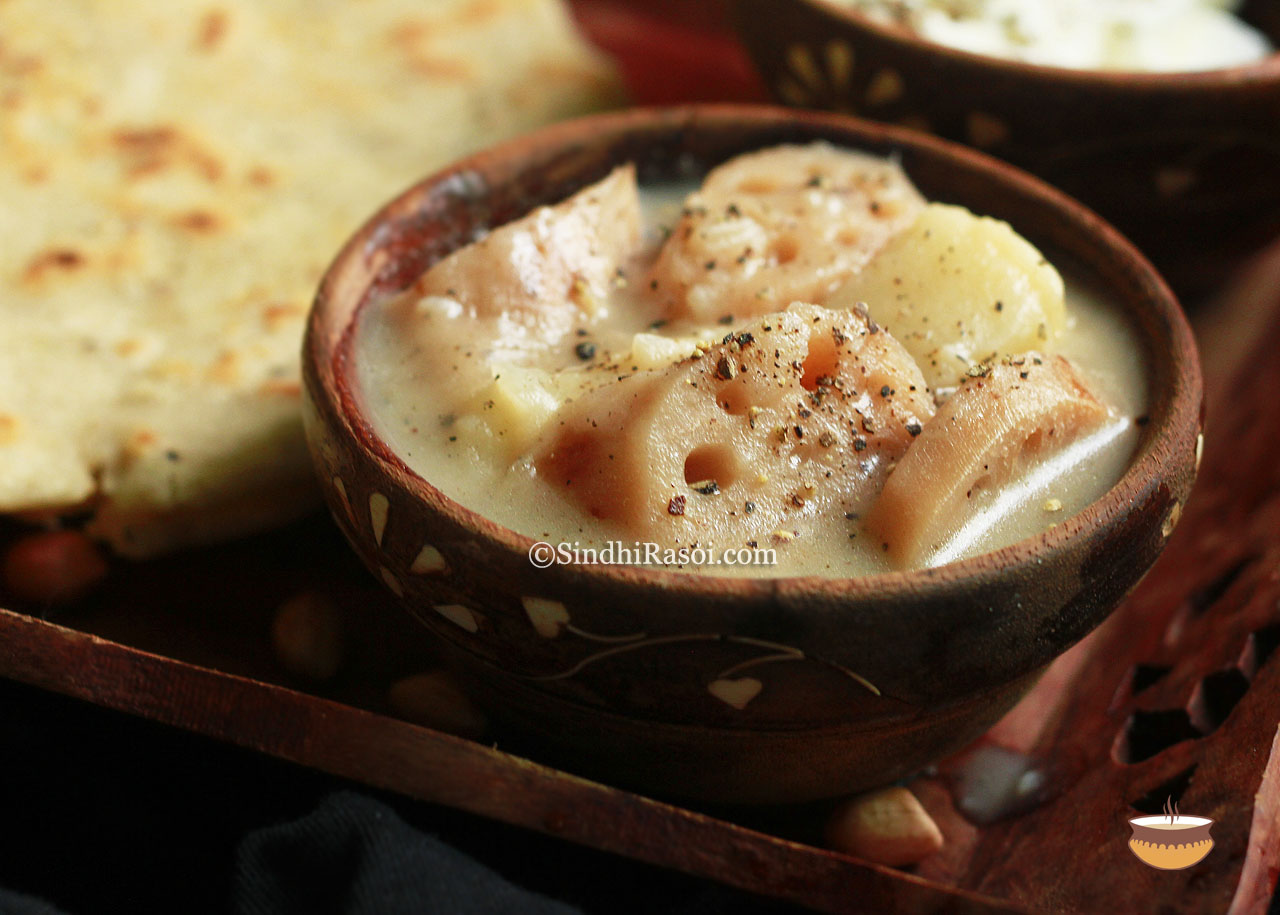
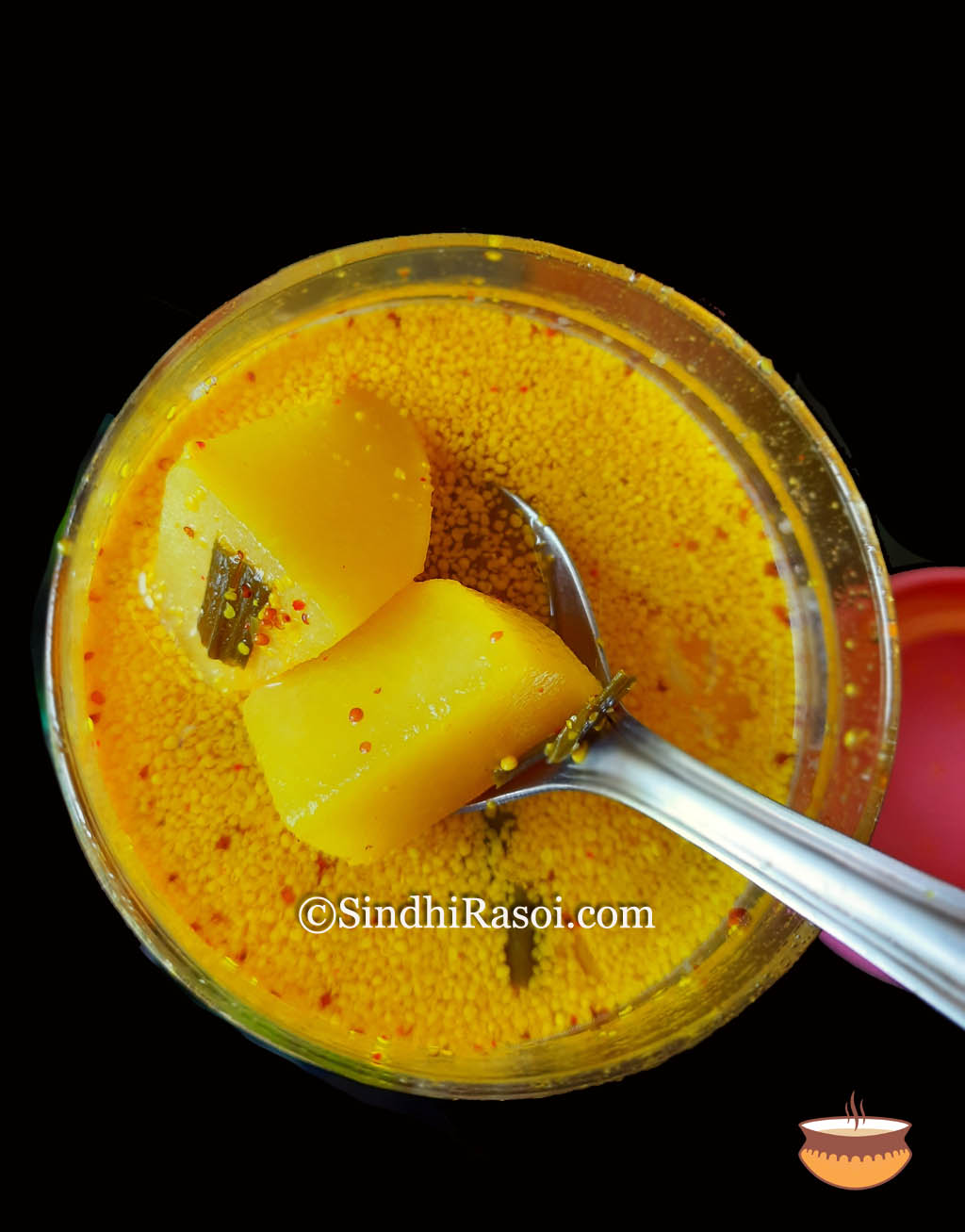
Gyarsi Bhaji: A soupy, tangy curry is cooked with roasted samo flour (Bagar/ Varai) known as Sauri (sauvri) to which potatoes and boiled lotus stem are added. The curry is flavored with salt, pepper and tamarind juice.

It is paired with Gyarsi Dhodho i.e a patted roti made from Sauri flour to which mashed boiled potatoes are added for the binding.

Scroll down for the recipe of Bhaji and Dhodho!

If in the season, Lahori Gajar i.e boiled/roasted or syrup sweetened sweet potatoes are also had on Ekadashi.

Coconut, sago wafers, dates, peanuts are consumed as snacks or many consume sabudana khichdi in the evening.

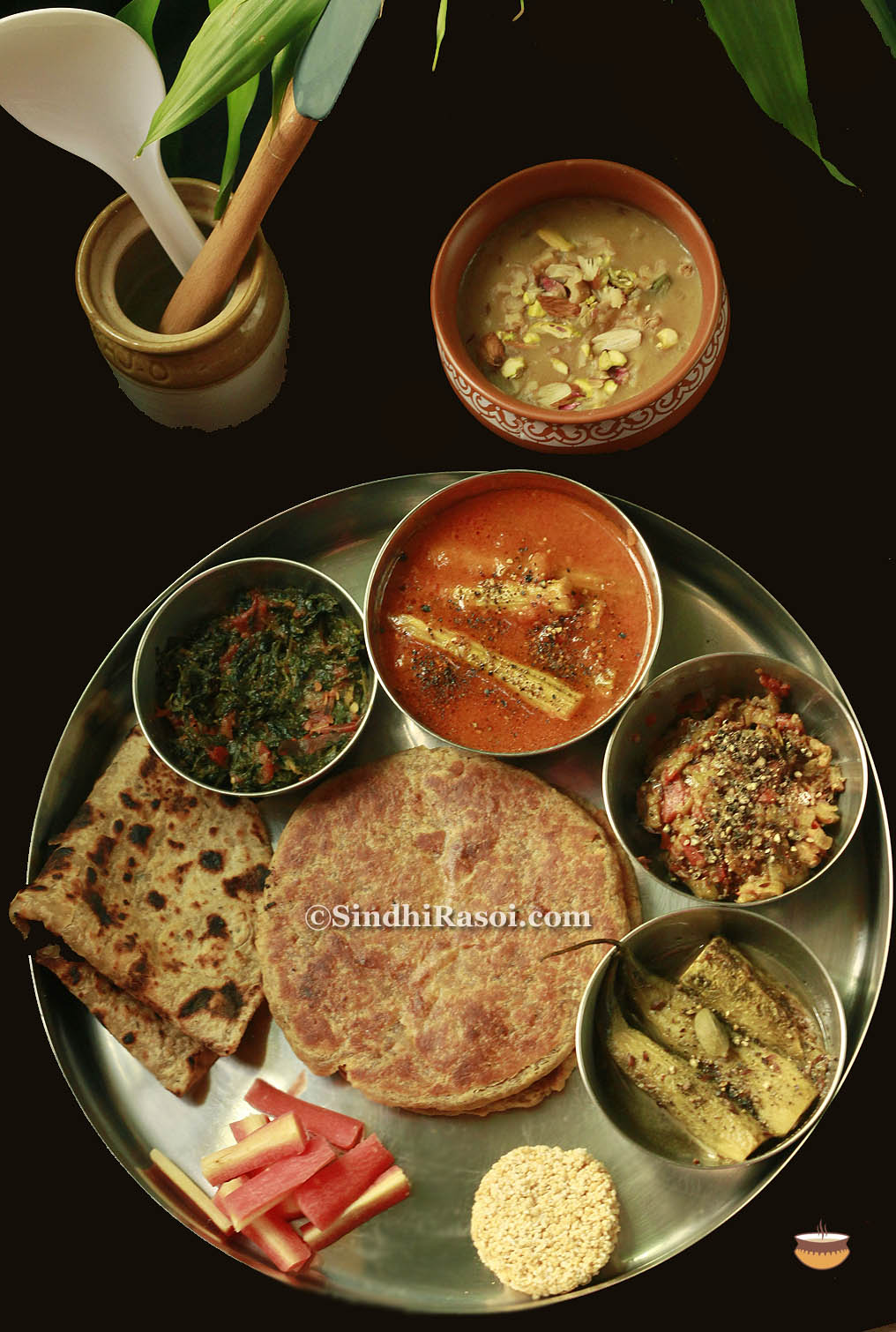
The above picture is shared by Mrs Urvashi Dama. This is Gyarsi platter and a particular dish that intrigued me was Kuttu Je Daro (dar-ey) Ja Dhokla or the Dhokla made from broken Buckwheat (groats), a traditional dish popular in some Sindhi subcastes (Do Nasarpuri Sindhis make this commonly?Please share any information you have).
In the above picture you can see steamed Kuttu Dhokla and also the fried Dhokla.
Urvashi Ji was generous enough to share the recipe of this lesser known dish. If you wish to get her recipe, just leave a comment in the comment section!
Though Rajgira and Kuttu (Amaranth) puri and pakode are also had by some but many avoid the greasy puri pakoda.
These are more popular with those who observe only one Ekadashi in whole year i.e Vadhi Gyars (Prabhodhini Ekadashi) and for many of us it is an occasion to relish Rajgiri and Kuttu (Buckwheat) puri/ pakora, the tempting Gyarsi patties and the tangy, off white colored Beeh alu curry sold in the shops and eateries in Sindhi populated areas on Vadhi Gyars.
- 3 medium sized Potatoes
- 100-150 gm Lotus stem
- ¼ cup Sauri flour
- 1 small tamarind ball
- Salt (preferably sea salt or rock salt )
- 1 tbsp Black pepper powder
- 1 Green chilli (optional)
- 2 tbsp Oil
- 2 cups Water
- 200 gms ( 2 and half cup) Sauri (Bagar.varai/Samo) Flour
- Salt as per taste
- 1 tbsp Black pepper (crushed or powdered)
- 2 tbsp Oil (optional)
- 2 Mashed boiled potatoes
- Water as much needed
- Oil and ghee to cook roti.
- Soak tamarind in 1 cup of water for about 15 min, mash it properly, and discard the fibre and seeds. We will use the tamarind water only.
- Scrap off the peel of lotus stem and cut in slants (1-2 cm thick). If the stem is very thin in diameter, you can cut it in 2 inch long pieces (not slanted).
- Clean the stem thoroughly if their is any mud inside the pores. Use running water and tooth picks to clean pores. If you buy the stem that is closed at both the ends, there wont be any mud inside.
- Boil lotus stem along with water and few drops of oil, in a pressure cooker. You can use some raw papad instead of oil to hasten the cooking process. A good quality Beeh (Lotus stem) will soften in 2-3 whistles of pressure cooker.
- When pressure subsides, open the lid of cooker and drain lotus stem. Keep aside.
- Heat a pressure cooker and add 2 tbsp oil. Add add sauri flour.
- Roast it till slight change in colour is observed.
- Add water, salt, black pepper powder and potato cubes along with boiled lotus stem, tamarind water, green chilli (if using) and mix properly. Close the lid of cooker and wait for 2 whistles.
- Later, check the consistency of gravy and adjust accordingly. This curry is supposed to be soupy. It tends to thicken with time.
- This Sindhi Gyarsi (Ekadashi) Beeh patata are relished with gyarsi dhodha
- Take 200 gm of sauri flour , and mix salt, pepper, mashed potatoes and 2 tbsp oil (optional)
- Please Note: Adding oil will make Dhodho crisp while skipping oil will make Dhodho softer.
- Potatoes are added for the binding. So do not skip potatoes. Instead of using boiled potatoes you can use few chunks of potatoes from the Gyarsi Subzi.
- Mix everything well. Adding little water at a time, knead a soft dough.
- Grease your palms with little oil, take a portion of the dough and pat it between your palms (refer the recipe) video to flatten the dough ball as much as possible.
- Now grease a hot griddle (tawa) and gently pat the flattened dough rolling in circular motion with palm of your hand, till a thickness of paratha is achieved (since this is bit tricky, an easy way out is to take a clean polythene bag or butter paper and lay on kitchen platform. Now sprinkle some flour on this polythene sheet and place the dough, and then gently pat it in circular motion till a thick roti is formed and carefully pick it up and place on greased and hot griddle)
- Pour a little of oil and let the Dhodho cook on medium flame till small brown patches appear. Toss and cook on other side too. Repeat for the remaining dough.
- Enjoy it hot with gyarsi bhaji or with dahi
- The dough tends to get loose and difficult to handle with time. Hence make sure to cook the flatbread as soon as you knead the dough.
And if you wish to learn how to read and write Arabic Sindhi, then you can watch these short videos that I make for letter formation!


Peace for you Madam
My nme is Engr Syed ‘Haziq Ali’ Shah belonging Shikarpur Pakistan. I would like to suggest if this also contains the material in Sindhi script. It would be great for those who understand english a lesser. And it will be a promotin for Sindhi script while using whether perso-Arabic or Devanagri if you have sufficient time and priority.
Thanks,
Thank you for the suggestion. I am learning Sindhi script and it may take some months before I am confident enough to write Sindhi language properly.