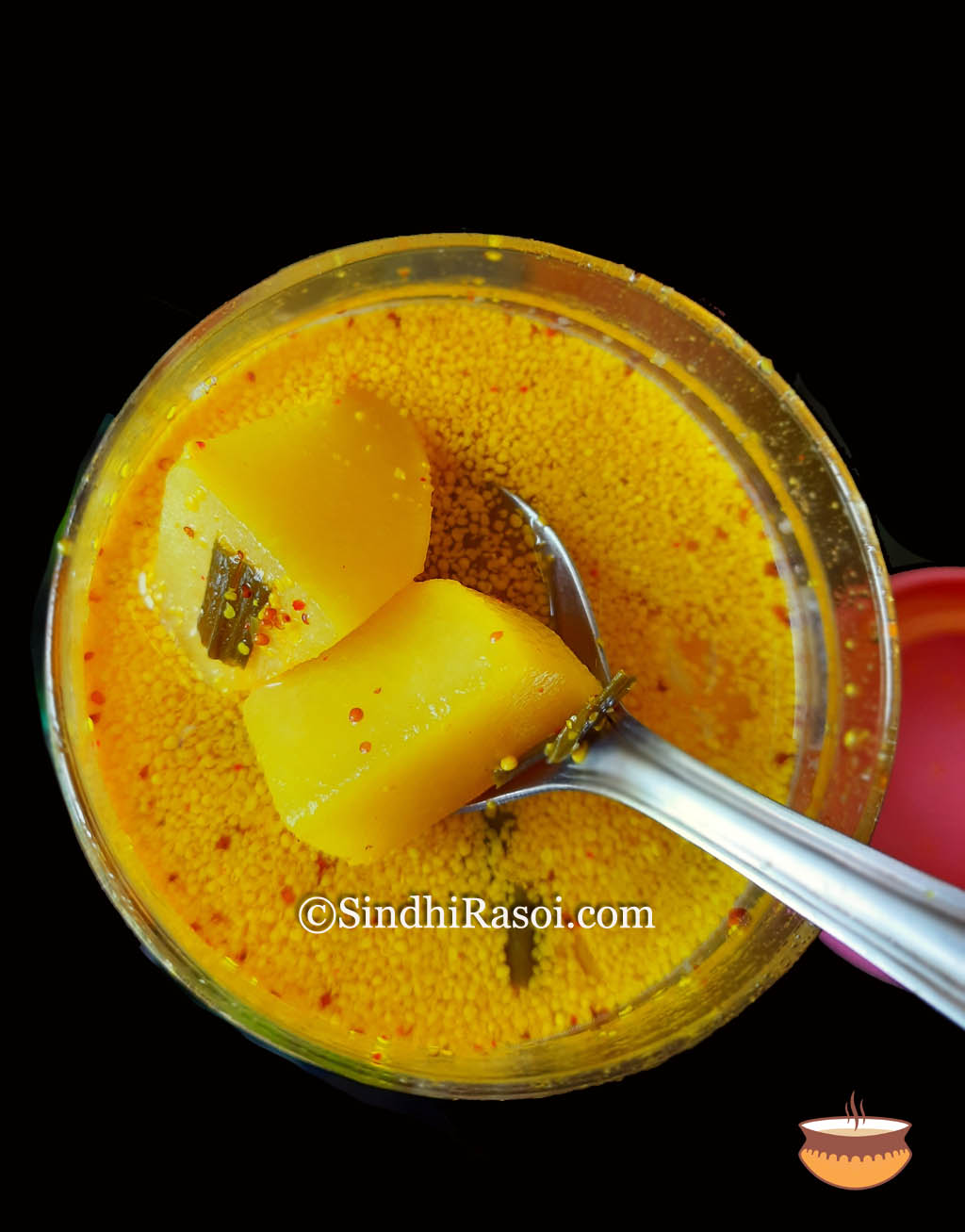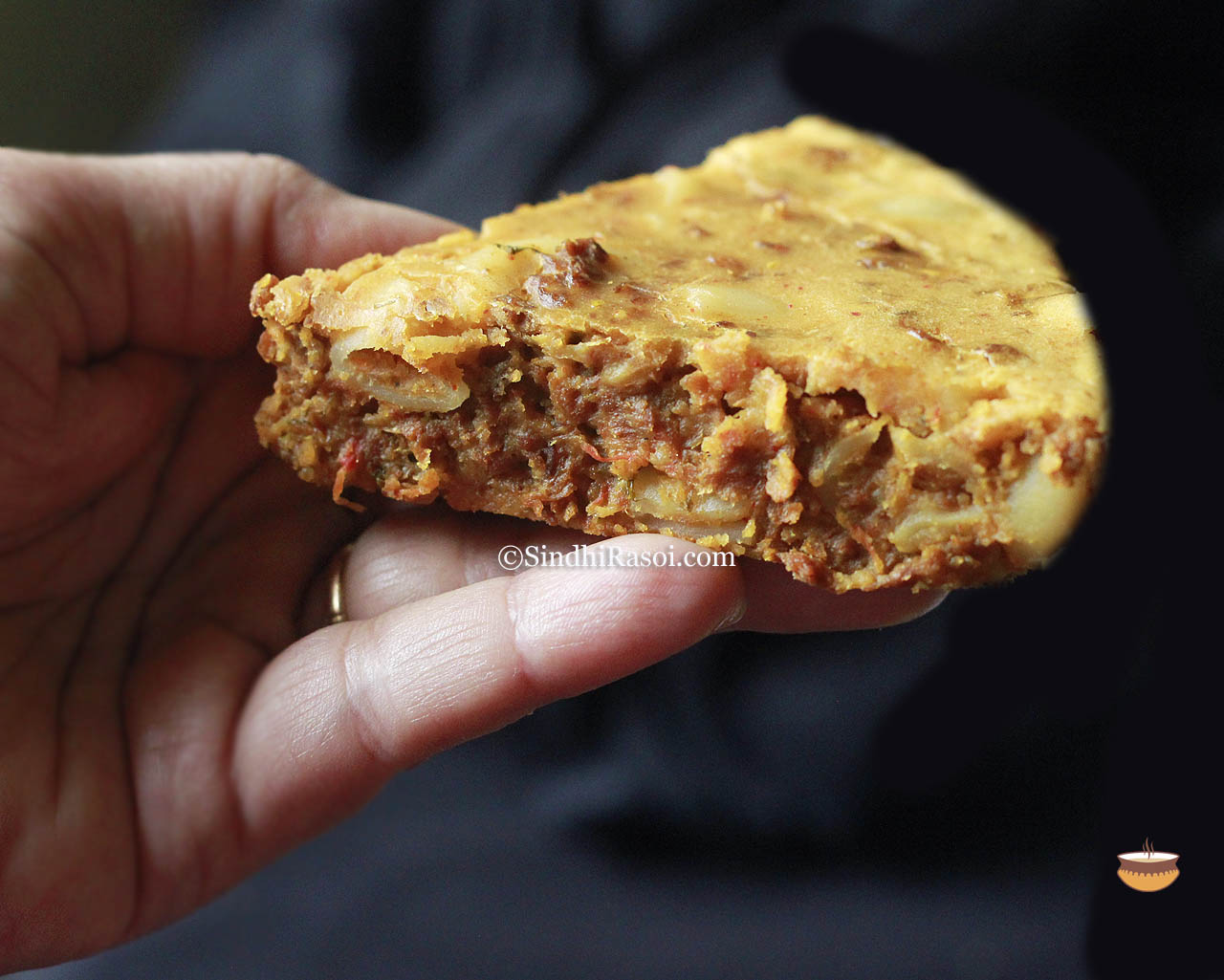
The name of the dish i.e Qeeme Jo Lolo, is very misleading. Let me break down the details in a simpler way!
The Name (s)!
Qeeme Jo Lolo is also known as Qeema Macaroni cake, Qeema Macaroni pudding and TalleBadhi
The Dish
A mix of cooked minced meat and macrolyun (macaroni/elbow pasta) binded with beaten eggs, steamed/baked/tawa cooked is called Qeeme Jo Lolo.

The confusions
1) The jaggery sweetened Lolo that is made for Puja rituals is called Lolo/Mitho Lolo. I always wondered why some call it Mitho (sweet) Lolo as Lolo is always sweet. But now I know the reason. A lolo in Sindhi to English dictionary is defined as a ‘cake’, something that is baked, not necessarily in an oven.
Even a Phulka in Sindhi dictionary is defined as a thin cake.
This meat and pasta bake is called Qeeme Jo Lolo because it is a baked dish/savory cake.
2) Another name for this dish is Tallebadhi, which again, is actually a name of Sindhi sweet dish (mithai) made from besan and syrup. I am not sure if it is about the way the contents of both the dishes ‘set’ after cooking.
3) While it is very easy to replace minced meat with soya granules to make a vegetarian version of this dish, it was a challenge to figure out the substitute of eggs in this dish.
Honestly speaking I was totally clueless when someone asked me about the Keema Macaroni cake, around 5 years ago. Though the person claimed it to be a traditional dish cooked by his grand-mom and aunts as well, I was not convinced.
Then around 2-3 years ago, more and more discussions about this dish started happening in my FB group; SindhiRasoi and thanks to Sundri Hingorani, Surender Nandwani, Shobha Keshwani and many others, I got to understand basics of this dish and came to know that it is indeed being made by many elderly in Sindhi community since the era when many Indian communities were not aware of the pasta.
Sindhi community is business oriented. We believe that our ancestors travelled across the seas even during Indus Valley Civilisation (Thanks to the excavation of Mohen jo Dharo).
Sindhis tend to get influenced, very easily from their surroundings, where ever they shift their base or travel to, be it the local food, culture, mannerisms, faith and beliefs, spiritual leaders, language etc and seamlessly integrate it in their own culture. Many a times it results into the dilution of their own culture, in weakening of their own roots, but then it is what it is!

So the Sindhi travellers perhaps brought the Macaroni (Was it from US or UK or HongKong? Not sure!) with them and the ever accommodating Sindhis added the firangi pasta to the traditional tomato gravies/onion tomato based gravies, pairing it with potatoes/peas/Makhana and turning it into a very desi Macrolyun Phoolpatasha curry.
You can check its recipe here !
It is a traditional recipe, being cooked since the pre partition era and our grandmothers too used to relish it. I kid you not!

So perhaps some Sindhis (I am told that the credit goes to Bhaiband Sindhis) got inspired by the Meat loaf/ Casserole recipes from the West and came up with this ‘Qeeme Jo Lolo’!
How did they make it when there were no conventional ovens in homes, then?

Well, they either took the preparation to the local bakery (a practise still followed in some rural areas) and got it baked or they steamed it at home, like the Dhokla. Later many Sindhis used to bake stuff in that Round Oven that was popular in early eighties in India.
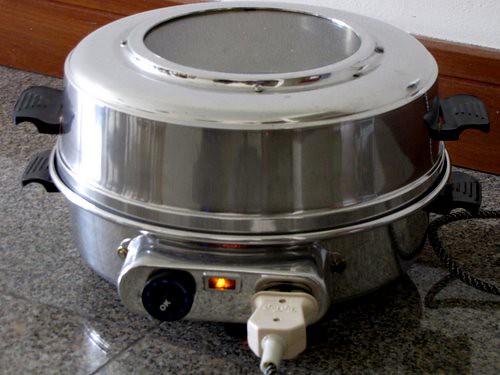
The above picture is from Nag’s blog; Edible Garden, shared here with due permission!
The steamed Qeeme Jo lolo is often cut and shallow fried or toasted on Tawa again for an extra oomph though not everyone does that.
Video Recipe of Qeeme Jo Lolo (Veg)
As mentioned above I got to learn basic guidelines of the dish from the group members and we even figured out the meatless version but what was challenging was to find a substitute of eggs here. Since many Sindhis don’t consume even the eggs.
Normally 6-8 eggs are used for around half a kg of minced meat. I tried to replace it with bread crumbs along with cornflour slurry but was not happy with the flavors and texture.
I discussed it with many people, including Aparna of MyDiverseKithchen fame who often bake eggless/egg free dishes and she suggested trying a mix of cornflour, besan, mashed potatoes, chickpeas etc for eggless binding. After many trials I had the Eureka moment.
Well, gramflour and maida batter is often used to make veg Omelette (Cheela/Chilra/Pancake) as a street food and I first came across such a recipe a few years ago courtesy @CookingShooking, a popular youtube channel!
The besan and maida mix along with bread crumbs worked really well in this recipe. Of course the texture and flavours wouldn’t match with the meat and eggs version of Qeeme Jo Lolo but this one was good enough to bake when you want to eat this dish but need to avoid meat/eggs.

And why did I pick a non vegetarian recipe for the 35th alphabet in AlifBe series only to make a vegetarian version of it?

Well, I had to pick this particular recipe because the 35th letter in Arabic Sindhi alphabet is ق i.e क़ in Devanagari and Q/K in Roman Sindhi.
And since this alphabet is used for words of non Sindhi origin only, there is no Sindhi Veg dish starting with this alphabet. Hence Qeeme Jo lolo, the vegetarian version, it is!
- 1 Cup Soya Granules
- 2 Onions
- 3 Tomatoes
- 2 Green Chillies
- 3-5 Garlic cloves
- 1 " Ginger
- ½ tbsp Turmeric
- ½ tbsp Red chilli Powder
- 2 tsp Coriander Powder
- 1 tbsp Cumin seeds
- 3 tbsp Oil
- 2 Bay Leaves
- 1 Black cardamom
- Salt to Taste
- ½ cup Elbow pasta
- ½ tbsp Salt
- Water to boil the pasta
- ½ cup Gram flour
- ¼ cup Maida
- 2 pinches Baking soda
- ½ tsp Red chilli powder
- ¼ tsp Turmeric (optional)
- 150 ml Water (a little more or less)
- Salt As per taste
- Soak Soya granules in hot water for 20 minutes. Squeeze, drain, rinse, squeeze, drain and repeat a few times. Finally squeeze the granules well and keep aside.
- In a pressure cooker, heat 3 tbsp oil and add cumin seeds, black cardamom and bay leaves. Add pounded ginger garlic and cook till faint brown.
- Add chopped onions and continue to cook on the medium flame, stirring frequently.
- When onions turn brown, add red chilli powder, grated tomatoes, chopped chillies, little of salt (we will add some salt again, later) and mix well.
- Cook tomatoes for 2 minutes and then add soya granules (squeezed well). Add some more salt and coriander powder and mix well.
- Close the pressure cooker with the lid.
- Wait for two whistles.
- When the pressure subsides, continue cooking the soya curry on high flame, bhunoing it well, till oil separates out.
- Garnish with coriander leaves. You can use a tsp. of garam masala powder too for enhanced flavors. Soya granules' curry is ready. Keep aside till further use.
- Boil Macaroni with salt in sufficient water till soft. Drain and keep aside. Can season it with some black pepper powder.
- To make the binding (egg substitute), mix besan with maida, add baking soda (can use baking powder), salt, red chilli powder and some turmeric (optional but recommended. I didn't use any and hence the color was paler).
- Gradually add water (may need around 140-150 ml) to make a free flowing lump free batter. The batter is thinner than that used for pakore or pancake.
- In a large mixing bowl, mix Soya curry, macaroni and half of the batter and mix well.
- Pour the contents in a greased baking pan (if baking) or in a greased thali (Plate with rim) if you plan to steam the dish.
- Flatten the mix well to make the surface as even as possible.
- Pour the remaining batter over it.
- If baking, then bake it in a preheated oven at 180 degree Celsius for 20 minutes or till the batter is well cooked.
- You can steam the way Dhokla is steamed, using a steamer/Idli maker. The time require may vary from 20-30 minutes.
- When done, slice the Qeeme Jo lolo and serve it with mint coriander chutney or with ketchup/sauce of your choice.
- Many like to toast the steamed Qeeme Jo Lolo. For that, once the QJL is steamed well, cut it into square/diamond shape and cook on a heated tawa with little oil/ghee, till nice brown.
And in case you are interested to learn how to read and write in Arabic Sindhi, you can check my Youtube channel