Watch the video about how to make Faluda Sev at home. It is my first video recipe:
If you assume that making Faluda sev at home is difficult, then please do check today’s recipe!
Hello everyone, hope you all are doing good!
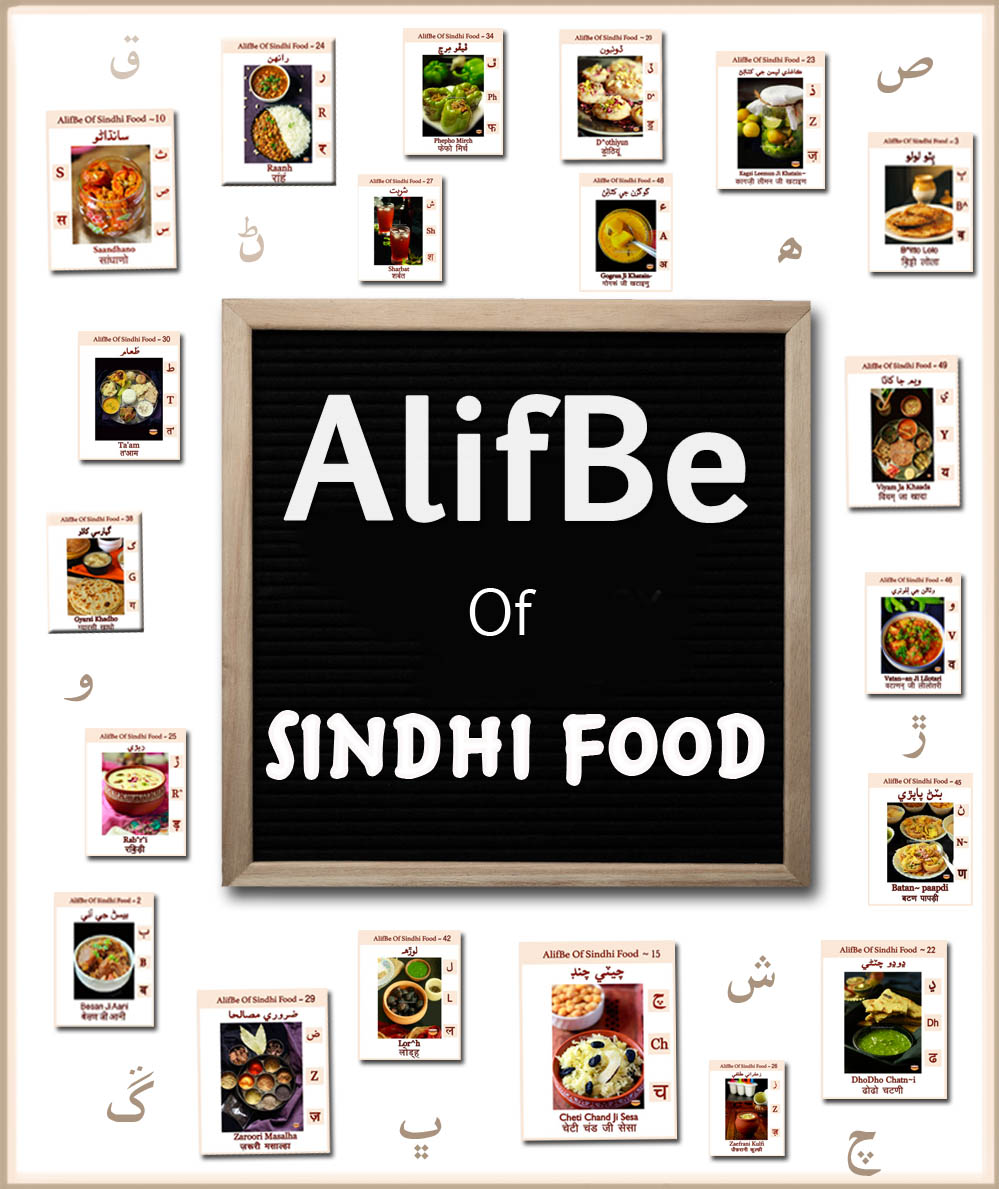
I am here today to share a very simple recipe of Faluda sev. It barely takes 15-20 minutes to make it at home. But before I hop on to the recipe, let’s talk about today’s alphabet i.e ف in Arabic Sindhi, फ़ in Devanagari and ‘F‘ in Roman.

There ain’t any Sindhi Dish starting with this alphabet except ‘Faludo/Faluso’, since this alphabet is used for words of non Sindhi origin.
Faluso or Faluda comes from the Faludeh; a traditional Persian dessert made with vermicelli, lemon and rose syrup (or ‘flavored’ ice) granita scrapped and served with lime wedges.
Apparently Moghul Emperor Jahangir was fond of Falooda. Perhaps the Nisashta was used to make the dessert.
In olden days Nishashta was made by soaking whole wheat in water in huge drums. The drums were kept in the sun and the water was changed regularly. The process was repeated for weeks and finally the fermented wheat was crushed and sieved through muslin cloth, several times. The starchy water was then allowed to set, mixed with fruit juices/syrups.
The same Nishasta, but in hardened form, was used by ancient Armenians. They would dissolve the chalky Nishashta in water and then brew it with sugar and fat (butter) and they consumed it as a nourishing food or even as a medicine.
Faluda sev is generally thin noodle like made from either Tapioca starch or Arrowroot and even using cornstarch/cornflour. But I prefer the thicker noodles, the way I remember, made by Gupta ji who used to sell the refreshing Faluda near Satramdas Hospital in Ulhasnagar 4, in summers (In winters you would get hot and spicy Chola Pav at his cart).
That ‘Faluda’ would be just grated (crushed) ice mix with some more ice chunks, thick rose syrup and faluda sev. If asked, he would add some milk powder too. We used to carry Milton ice boxes to his cart to buy ‘Faluda’ and would run back towards home so as to enjoy glass full of the refreshing treat in the scorching summer afternoons.
The commercially available faluda sev is thinner but you can choose how thick and thin you want the faluda sev to be, by picking a sev jali (of the Chakli press or Murukku Maker) of desired thickness.

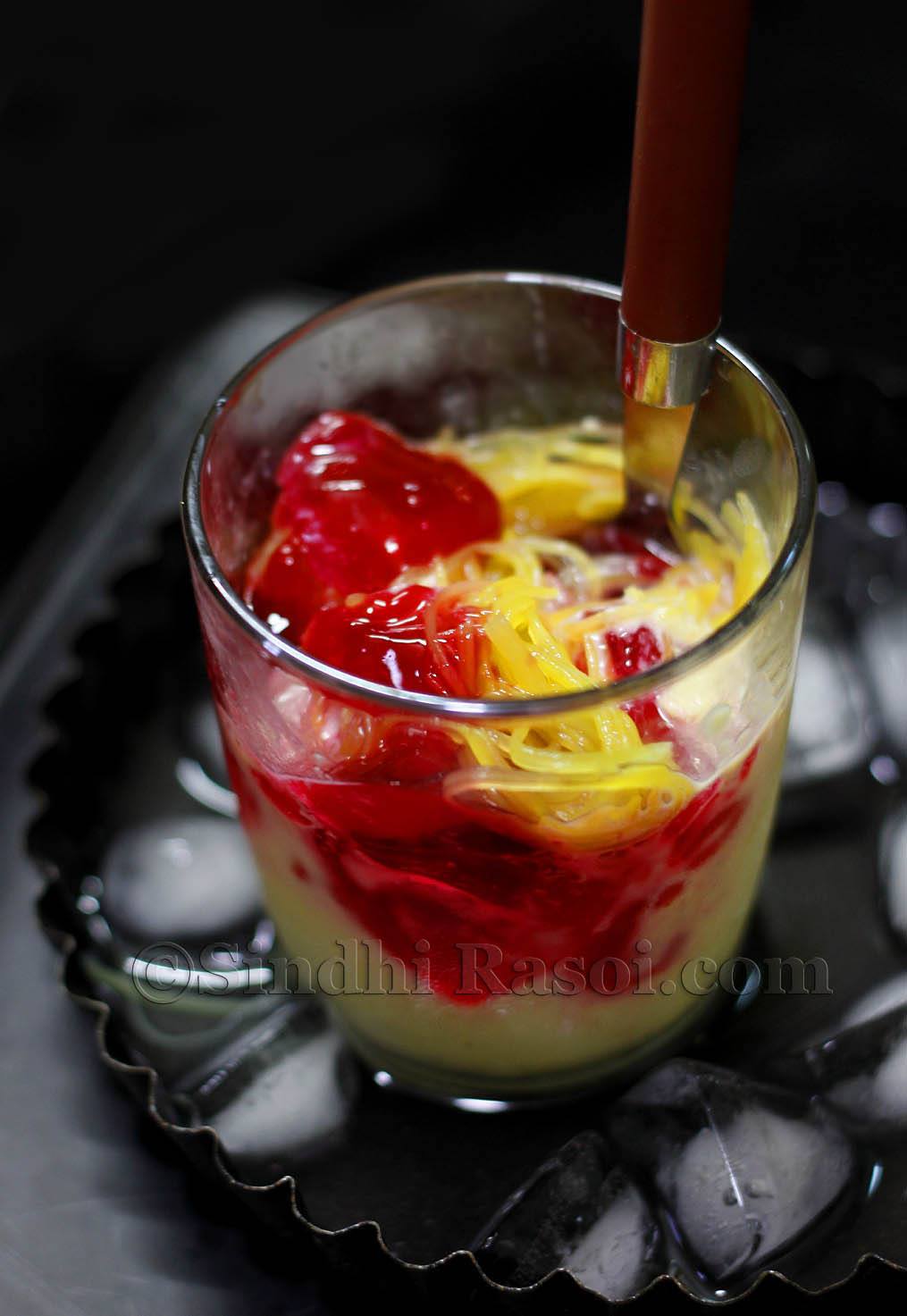
Sindhi Style faluda is mostly sans Sabja seeds. It is a mix of Kulfi, rabri, faluda sev, rose syrup, tutti frutti and nuts.

I have tried making a recipe video about ‘how to make Faluda sev at home’. Please do watch the video and if you don’t like it, tell me, but if you do like it, then tell it to others. Also do Like the video, drop in a comment (so that I know you were there) and please do subscribe to my Youtube Channel!
- Faluda Sev:
- ¾ cup Cornflour
- 1 and ¾th cups water
- 2 tbsp Sugar (Optional)
- Chakli Press with Sev Jali
- A large bowl filled with water and ice
- Take a large bowl and pour water in it. Add plenty of ice cubes. Do not fill it up to the brim.
- Keep this bowl in refrigerator till further use.
- Grease the chakli press from inside, and the Sev Jali too, with ghee or oil and keep aside.
- Ideally the falooda makers first heat the water till lukewarm and add arrowroot/cornstarch to the warm water. You can first mix the flour and water and then heat it. This way there is lesser risk of lump formation.
- Mix cornstarch/cornflour with water and add sugar (optional). Stir well.
- Cook this mixture in a pan, on medium flame, stirring continuously.
- Within 5-8 minutes, the mix would change from milky white to glossy, translucent dough.
- Switch off the flame. Keep the bowl of ice and water handy.
- Immediately transfer the dough in Chakli press and start making sev (noodles) by dropping the sev in the bowl of ice and water.
- Repeat for the rest of the dough, if any. You have to be very quick as the dough tends to harden pretty quick. So everything from transferring the dough in Chakli press to making sev is to be done pretty quickly.
- Allow the sev to set in ice cold water in refrigerator for few hours.
- While serving, mix Kulfi, rabri, sev, syrup, jelly, nuts etc and enjoy!
Recipe to make Halwai style Danedar Rabri is shared here

Recipe to make Kesar (Zaeffrani) Kulfi is shared here

Recipe to make Rose Sherbet from Rose petals is shared here:

And last but not the least, here is a small video about how to write ف in Arabic Sindhi!