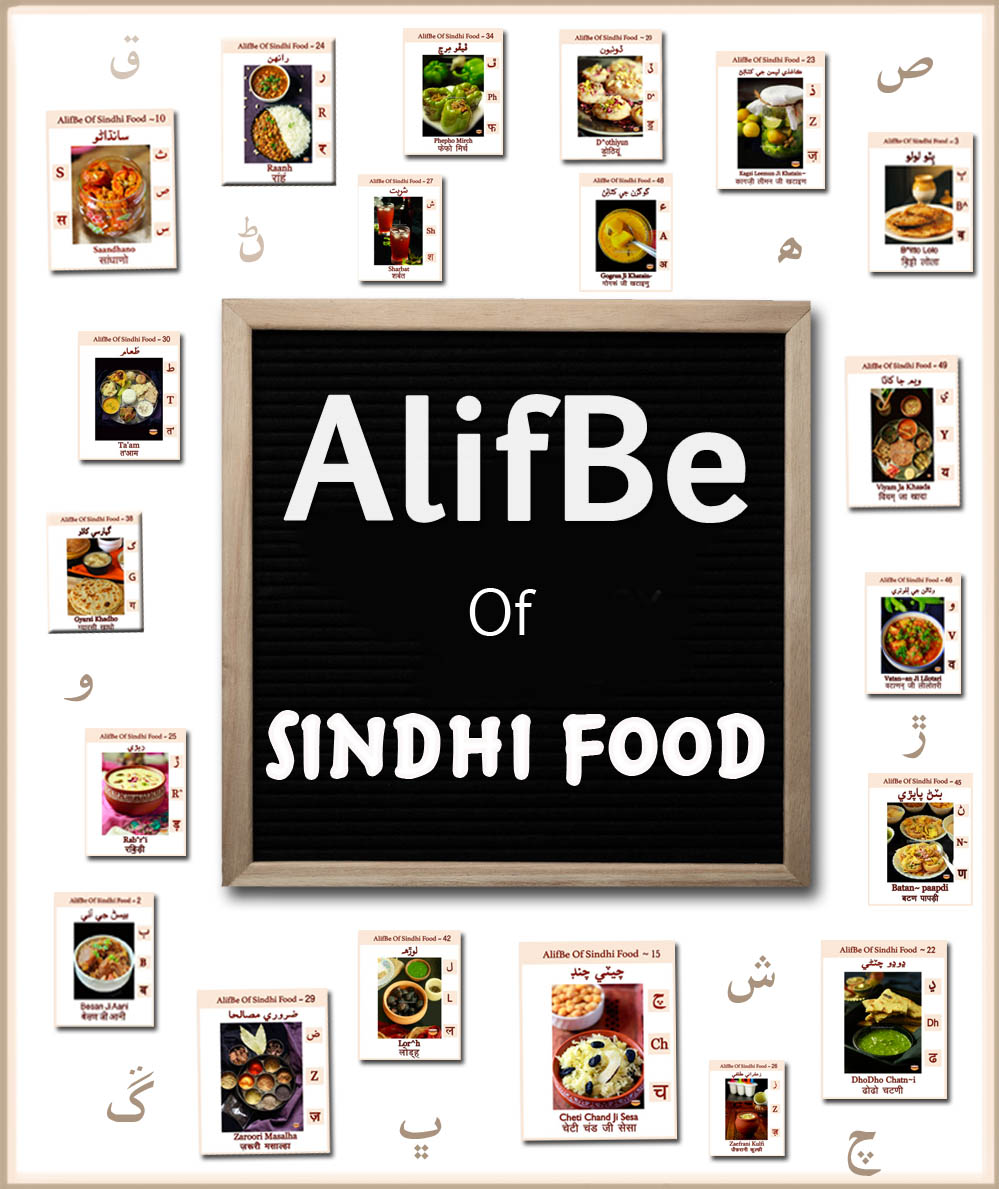
There are only two consonants in the sixth shape group of Sindhi AlifBe; س (s/स) and ش (Sh/श)!
Actually the 27th consonant in Sindhi AlifBe is س but it is already covered in the 10th Post in AlifBe series. And hence we will consider the next consonant as the 27th one which is ش in Arabic Sindhi, श in Devanagari and in Roman Sindhi it is ‘Sh‘ as in Shimla!
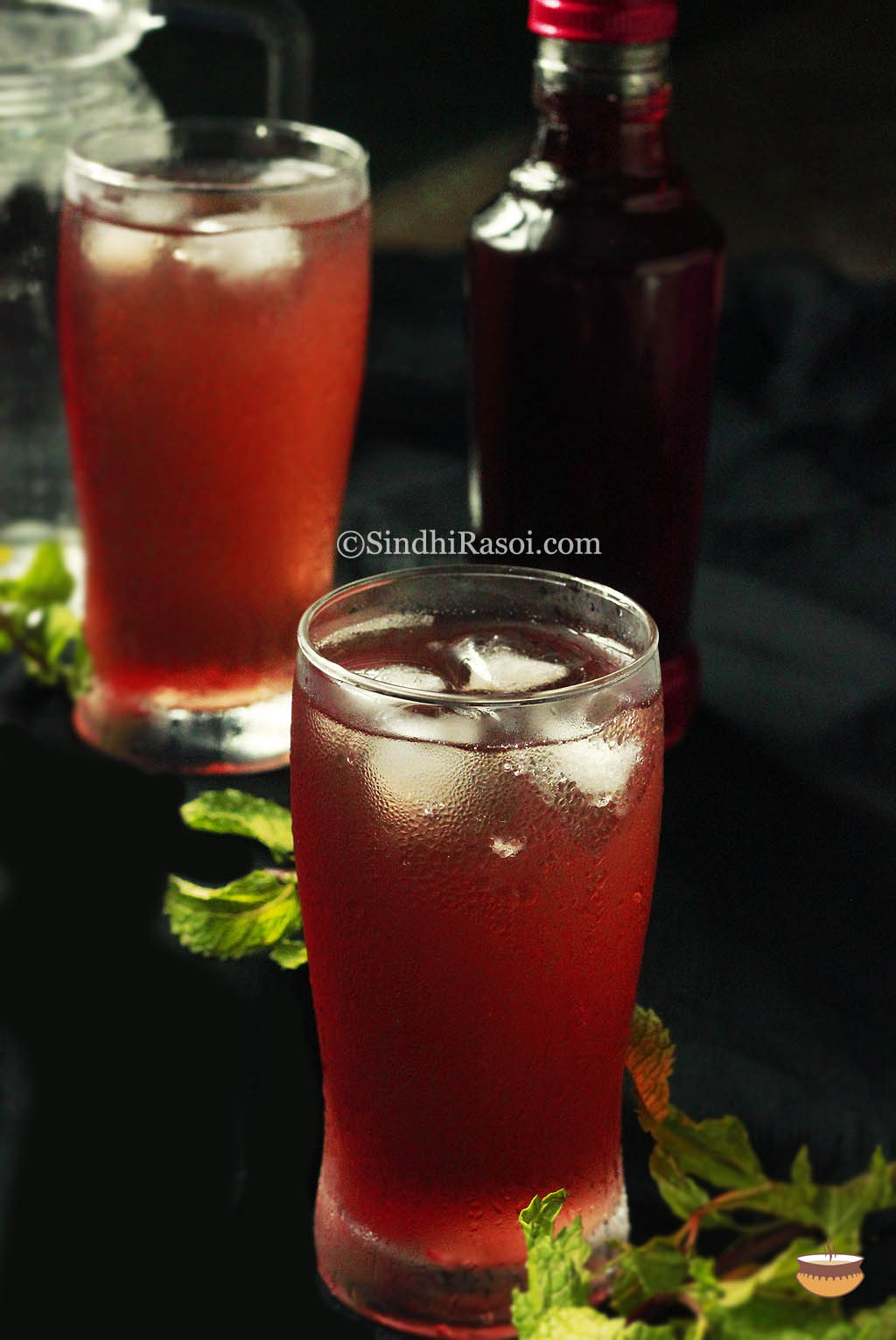
And the corresponding dish is Sharbat!

In Sindhi language, Sharbat could mean both; the syrup as well as the Cordial (non alcoholic beverage)!
Sharbat
The word Sharbat comes from the Arabic word ‘Shariba’ which is a verb for ‘Drink’
Believed to be originated in Iran in 11th century, Sharbat became a favorite beverage of Turks and later the Italian adapted it as ‘Sorbetto’!
The Turk style sharbat, to be precise, the Rose Sherbet is generally made by crumbling (or massaging) rose petals along with sugar and letting it sit for few hours, after which it is mixed with sugar syrup, water and ice to make Sharbat.
The process of mixing rose petals with sugar was used by ancient people and the sweetened crumbled rose petals (conserve) were used as a base for mixing medicines or healing herbs for treating various health disorders.
Cuneiform texts written in Mesopotamia (Modern day-Iraq) in the second millennium BC suggest that roses were boiled in water to produce aromatic water as distillation process was unknown to ancient people. And though the Alchemists of Alexendria (50 BCE) are credited for introducing Distillation process, remnants of distillation apparatus (pots) made from terra-cota were found in Harrapa excavations. ((Source: here!). Those were similar to the traditional Deg Bhapka ‘apparatus’ being used for hydro distillation of flowers to produce Attar (Ittr or Perfume) in Kannauj (Uttar Pradesh), consisting of Deg (cauldron), Bhapka (copper receiver),the Chonga (condenser made from bamboo), a bhatti (furnace), a Gachchi (cooling water tank) and a Kuppi (bottle). So maybe making attar was a common phenomenon in the Harrapan era.
Sharbat is believed to reach India through Moghuls in around 16th century!

Though Sharbat could be made from various flowers and fruits too, the one we are talking about is ‘Gulab jo Sharbat’ or Rose Sharbat.
Interestingly the term Gulab in Urdu (and in Hindi) means Rose flower but in Persian Gulab or Golab word is actually a combination of two nouns; Gol/Gul meaning flower and ‘aab’ meaning ‘water’. So Golab in Persian means ‘water of a flower’ or a distillate of a flower, not necessarily ‘of the Rose flower’.

Coming to the Sharbat, one can make it in various ways. Most of the commercially available sherbet (syrups) are made by flavoring concentrated sugar syrup or it could be a blend
sugar, dextrose or liquid glucose, with artificial flavors /essence and artificial colors to make the syrup an eye appealing one.
Sharing here, some different ways to make Rose Sherbet including the traditional methods!
Regular Syrup:
Mix 5 cups water with 6 and half cups of granulated sugar and bring it to a boil. Add a tbsp of lemon juice and let the syrup boil further till thick syrup is obtained (anywhere from 15 -20 minutes on medium flame). Switch off the gas and add few drops of food color and appropriate essence, for example, red color and Rose essence, Yellow color and Pineapple essence, Green color and Khus Essence etc. You can also use Emulsions instead of food color and essence.
Syrup using Rose Petals:
Boil ½ kg rose petals with 2 cups of water and 1.5 kg of granulated sugar till 1 thread consistency is achieved. Strain and discard the pulp. Store the syrup in glass bottles or jars.
Sharbat using Petal extract
Add 1 and half cup of granulated sugar to half cup of rose petals in a bowl and rub well. Can add a tbsp of citric acid or lemon juice too. Add around 4-5 cups of water. Cover and allow it to stand for minimum 2-3 days. For making sharbat, add few tsp of this extract to few tsp of sugar syrup (unflavored) and iced water.

Till two decades back, making Rose Sharbat (Syrup) was an annual affair at our home. My parents would make plenty of Syrup bottles to send in as food gifts for summer festivals to married aunts/sisters. I have distinct memories of my father measuring out sugar and water portions, pounding green cardamoms, cleaning flowers, rinsing well and cleaning up tall glass bottles etc while my mom would cook the syrup in batches. Each batch was then strained by my father and the sweetened pulp was given to us to relish. That would be our instant ‘Gulkand’. The syrup would be poured in the bottle, few drops of red food color and rose essence were added along with silver varq and each bottle was given a good shake. The bottles were loosely capped and kept in a large parat filled with water, for cooling. That would not only facilitate cooling of the syrup but would also ensure that no ants contaminate the syrup. Once cooled, the bottles were capped tightly and stored in cool and dry places (The Cupboard with the net in olden days while later, in the refrigerator).
We used to buy ice from the local juice corners or the ice vendors on the cycle to make Sharbat , before the refrigerator became a part of our lives.

While I distinctly remember the whole Sharbat making process and those Gulkand treats, I was not sure of the variety of roses used for the same. Many moons ago, in an ongoing discussion about Gulkand, Sangeeta Khanna, a food and nutrition consultant and one of my favorite food bloggers, pointed out that Damascus rose (Rosa damascena) is one the preferred rose varieties for the concoction or for making Gulkand. Many home makers who make Sharbat at home suggest to use Indian desi Gulab or musk rose (Rosa moschata), a variety closely related to the Persian Hybrid; Damascus for the syrup.

- 1 Cup dried rose petals (or 125 gm of fresh petals)
- 2 +2 cups Sugar
- 2+1 cup of water
- 5-6 Green Cardamoms
- Juice of 1 lemon/lime
- ¼ -1/2 tsp of Red color (Optional)
- Few drops of Rose Essence
- Check and discard any twigs or wilted petals from dried/fresh petals.
- Wash with water for 1-2 times and spread on a kitchen towel to remove excess water.
- In a large bowl, mix petals and three cups of sugar and rub the mix well.
- Allow the mix to stand (covered) for 3-4 hours. This process (mixing sugar and petals and allowing it to stand) is optional. You can directly jump to the next step.
- Boil 2 cups of water add it to petals and sugar mixture. Leave covered for another 4-5 hours.
- Now pour the mix in a pan/vessel and bring it to a boil. Add juice of a lemon/lime and crushed cardamoms.
- Once the mix starts boiling, lower the flame and allow it to simmer for 30-35 minutes.
- In another vessel, heat 1 cup of water and pour it in the simmering syrup. Add the remaining 1 cup of sugar and continue to thicken the syrup till one thread consistency is reached.
- Switch off the flame and strain the syrup. Add food color (optional) and rose essence and once cool, transfer the syrup in a glass jar or bottle. Store in refrigerator.
- Note: Once you boil the mix for 30-40 minutes, you can switch off the gas and add 1 cup of powdered sugar instead of hot water and sugar granules and mix till no lumps remain in the syrup. I don't prefer this method but the method is commonly used by many.
- I got around 405 ml of syrup from the above mentioned quantities.
Please note: Though the Sharbat in the bottle looks deep red without added color, when you mix the syrup with iced water the color of the drink fades and may appear orange to brownish (as seen in one of the images) and hence I added 1/4th tsp of red color to the syrup. You may need more color for deeper shades or if the flower petals yield paler syrup.
And finally, a small video about writing the alphabets in Sindhi!