Long post alert:
If you are interested only in the recipe then kindly scroll down to reach the recipe!
If you are curious to know about saffron, its varieties and some interesting theories about Kulfi, then please read on!
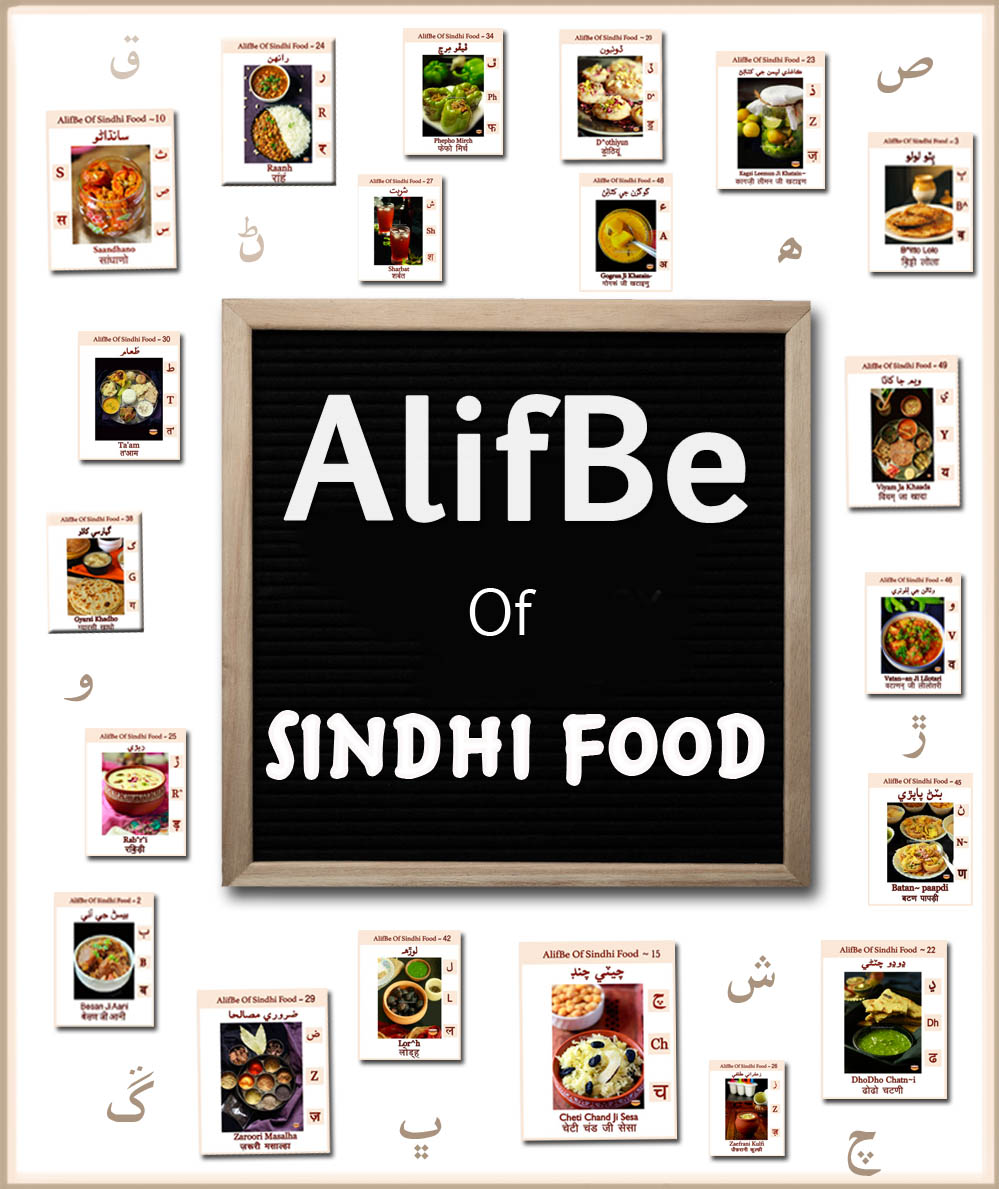
The 26th Consonant in Sindhi AlifBe is ز i.e Z in Roman Sindhi and ज़ in Devanagari. As mentioned in the earlier post, there are 4 different types of ‘Z’ used in Sindhi AlifBe.
ذ as in Zaro (Little ), (ज़/Z)
ز as in Zanzeer (Chain/shackles) (ज़/Z)
ض as in Zaeef (Feeble) (ज़/Z)
ظ as in Zalim (cruel/merciless) (ज़/Z)
Kindly note that all the above mentioned consonants are represented by ‘ ज़ ‘in Devanagari and by ‘Z’ in Roman Sindhi but will vary in Arabic Sindhi.
For example if you need to write the word Zaheen (an Urdu word ) you will have to use ذ and if you need to write Zameen (a Hindi/Sindhi) in Sindhi you will use ز
I am yet to figure out how to use ض and ظ appropriately!
ذ as in Zaro is covered already and you can check it here!
Today we are focusing on ز as in Zanzeer. Please note that though ذ and ز look similar but they both are different.

And the dish of the day is Zaefrani Kulfi!
In Sindhi Saffron is known as Kesar as well as Zaefran (also spelt as Zaeffran or Zaefaran)!
Zaeffan or Saffron: Crocus sativus L. is a perennial herb and the plant yields purple colored flowers which are valued for their stigmas; one of the most expensive herbs sold in markets, commonly known as Saffron, Zaafran, Zaeffran, Kesar etc.
The word Saffron comes from the Arabic word Zaefraan which in turn is supposed to be derived from the Persian word Zarparan where Zar means gold or valuables and Paran/faran refers to petals. Thus Zaefran means a flower with Gold petals or maybe ‘petals as valuable as gold’.
The oldest documents about the use of saffron as a spice or herb are recorded in the court of the Persian Achaemenid dynasty (550-330 BC).
Some sources suggest that under the Persian rule, Saffron was first cultivated in Kashmir from where it travelled to the Indian subcontinent. Some believe that the saffron originated in Greece. Many Kashmiri locals believe that Saffron came to India through two Sufi saints ; Khwaja Masood Wali and Hazrat Sheikh Shariffudin, who during their travel fell ill and were taken care of by the tribal chieftain. As a gesture of gratitude they gave bulbs of saffron plant to him and that’s how the cultivation of saffron began in Kashmir (Pampore).
Spain was introduced to Saffron by the Arabs who invaded the place and from Spain it travelled to other European countries.
Why so costly?

Saffron strands are the stigmas of Saffron flowers. Each flower has three stigmas (thread-like structures). The flowers stay only for a few days and need to be plucked before the sun or wind affects the quality of the saffron strands. Once bloomed, the flowers are to be harvested before sunrise and before they start opening (or soon after). Once harvested, the stigmas are separated immediately. The strands are then dried to get rid of excess moisture. Post drying the color changes to dark red. Traditionally the process may take around a week as baskets of stigmas are hung on the ceiling and are left to dry away from harsh sunlight.
From around 150 flowers, only a gram (1 gm) of Saffron threads is obtained. Saffron is valued for its medicinal properties and is a good source of vitamin C, potassium, manganese, Iron, vitamin B6 etc.

As mentioned above, Saffron are the stigma of the flowers. Each stigma is 2-3 cm long.The deep red or maroon colored stigmas are attached to the flower by pale orange/yellow colored filaments called styles.
In India, Kashmiri Saffron is marketed as Lacha, mongra and gucchha/Gucchi.
Mongra Saffron: The pale style is separated and only the deep red colored stigma is used.
Lachha : The red color stigma with a little of the yellow style (tail-like) attached, sold along with floral waste is called Lachha.
Guchi (Guchha) saffron is the one where the yellow style is not separated from red stigma. The bunch of these are tied at the ends. This type of saffron is known as Dasteh in Iran.
In Iran the top of the Saffron strands are categorised as Sargol, the saffron with the silky red stigma are called Super Negin/Negin while the one with red stigma along with yellow style are called Pushali. Obviously Pushali is cheaper than the other types of Saffron.
Then there is a type called Zard (White or Konj) with only pale parts of stigma present. The ‘colorless’ saffron is commonly used for medicinal purposes as well as in tobacco industries.
The Spanish Saffron could be categorised into Coupe, LaMancha, Rio and Sierra.
Coupe:
The best of all, with only red stigma and no pale styles. Comparable to the Persian Sargol.
La Mancha: A less potent but very expensive Saffron, La Mancha is cultivated in a small region of Spain and its origin is protected. This kind of Saffron imparts faint smokey flavors as instead of traditional sun-drying, it is toast dried before packaging
Rio: Of lesser grade than Coupe and Rio!
Sierra : Mostly consists of pale orange/yellow styles and is cheapest of all!
Kulfi:
A Kulfi is a frozen dairy product made by freezing sweetened and flavored reduced milk. It is not churned and hence it is not as airy as an ice cream.
I was intrigued by the word Kulfi and would often discuss it with the people related to making or selling Kulfi; be it the Faluda sellers, ice cream makers, halwais and even the street vendors .
Google says that the word Kulfi was derived from the Persian ‘Qufli’ meaning ‘covered up’ and since the reduced milk is set in cones covered with a lid, hence the name Kulfi!

Another theory suggests that the cones are kept inside a matka which is covered with a cloth and that is the reason the dessert is called Kulfi.
Baba, the elderly uncle in our old neighbourhood (some of his recipes have graced my blog) believed that the word Kulfi came from Arabic Qufl or may be from the Turki (I guess he meant Uzbek) Qulf a synonym of Qurf /Qarf in Sindhi, all being the local names for ‘padlock’!

According to Baba if you observe the Kulfi waala/waali, you would notice that he/she inserts a stick in the centre of the frozen kulfi inside the cone and twists the stick the way we use the key to open the lock, to un mould the kulfi. I don’t know if I can consider it to be a valid reason or whether I should assume it to be a case of an elderly person cooking up interesting stories. I wouldn’t know because he is no more with us.

When I discussed this ‘Lock’ theory with some Kulfi vendors, few of them agreed to it. While some said that maybe the kulfi is set in cones that are locked/sealed and hence it is called kulfi.

The Recipe:
Traditionally Kulfi is made by reducing full cream milk to half or 1/3rd of its volume. It is then sweetened and flavored with varying ingredients like cardamoms, Saffron, mango, berries, chocolate etc thereby creating a range of delectable flavors.
- 500 ml Milk ( full cream)
- 200 ml sweetened condensed milk
- 1 tsp cornflour dissolved in 2 tbsp of milk
- 6-7 saffron strands soaked in 2 tsp of milk
- 3 green cardamoms (only seeds)
- 12-15 unsalted pistachios
- Boil the milk, along with condensed milk, stirring frequently to avoid scalding of milk.
- In the meantime, powder the pistachios and cardamom seeds together, using a grinder. We need coarse mix and not a fine powder.
- Add this powder to the milk and let it simmer for a while.
- Add the cornflour dissolved in milk. Stir well. Add the soaked saffron and simmer further till the milk reduces to half of its original volume.
- Let the reduced milk cool down a touch. Pour in moulds (Aluminum or plastic), or in earthen pots (Kullhar). Always soak the earthen ware in cold water for at least 30-60 minutes before using them. Once the milk mix cools down to room temperature and secure the lids of the cones or cover the mouth of matka/kullhar with aluminum foil.
- Transfer the moulds to the freezer and let the Kulfi set for minimum 5-6 hours.
- For un-moulding, just place the moulds (with secured lids) under running water for few seconds or 'rub' them between your palms and then insert a clean ice cream stick or toothpick and pull out the Kulfi.
- Serve immediately.
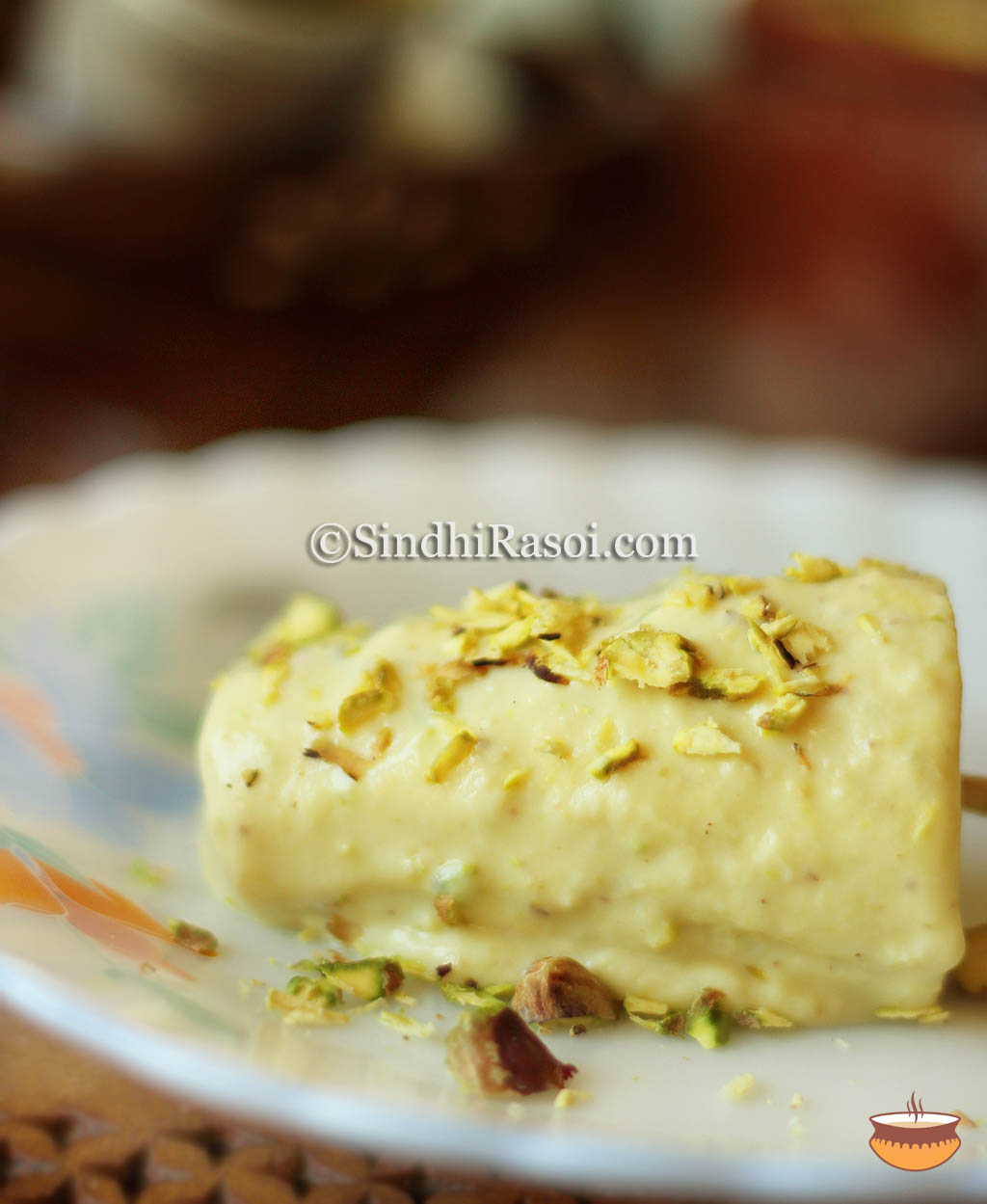
I recently made Rabri and reserved some to make the Kulfi. I soaked some saffron (courtesy my Brother in law, SK) and powdered green cardamom seeds in few tbsp of milk and mixed it with the rabri. Poured it in the aluminium cones and left in the freezer for 8 hours. It was served with a splash of rose syrup!
The weather was so hot that the Kulfi melted before I could click some decent pictures!
The below picture is of the Kulfi prepared from Rabri.

And here is the video about how to write ز in Sindhi script!