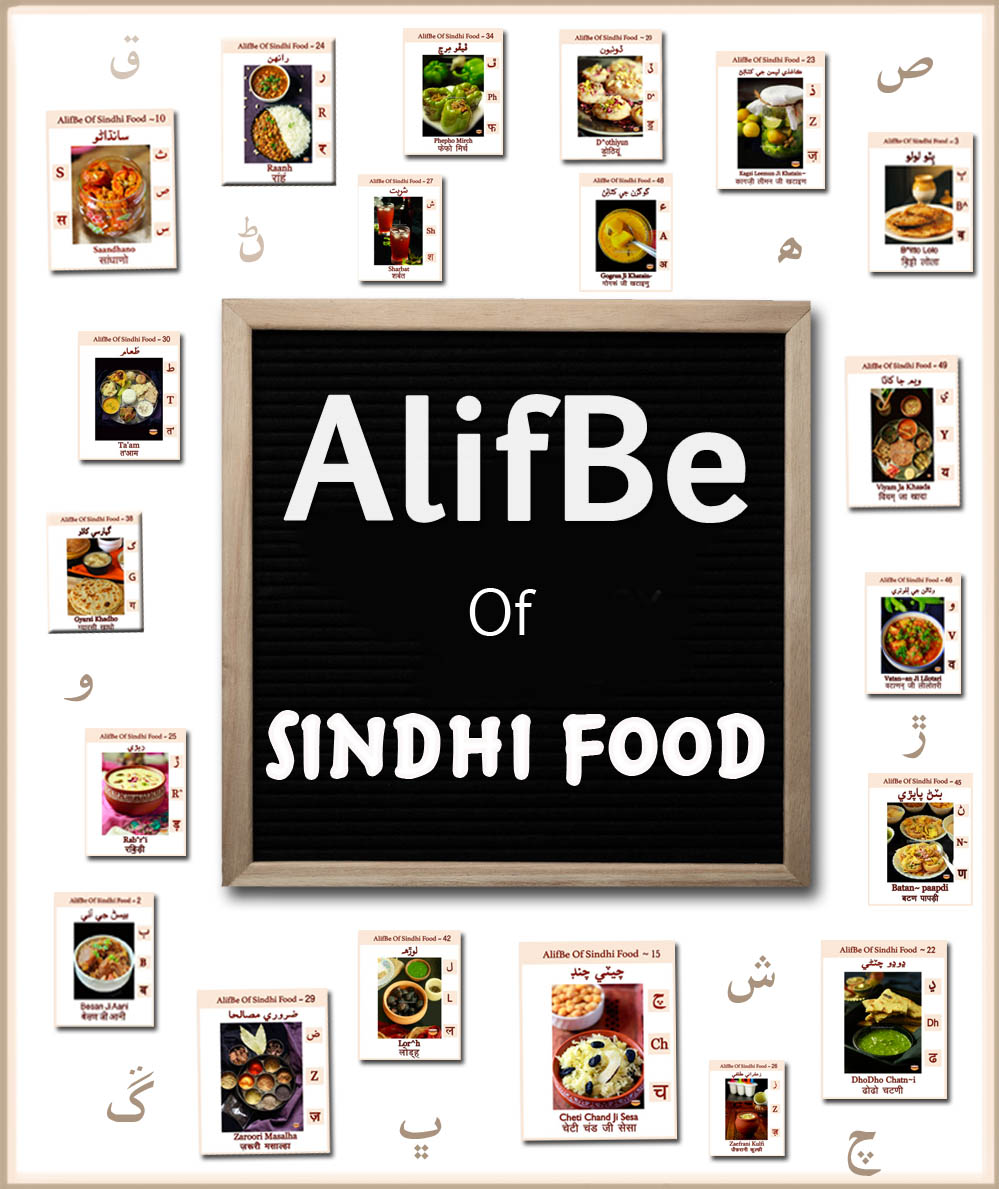
As mentioned many times in the AlifBe series, the 52 letters of Sindhi Alphabet are divisible into 16 shape groups and so far four shape groups are done and dusted! For the recap of the alphabets covered so far, please check this list!
In the 5th shape group there are three letters and the first one in this group isر in Arabic Sindhi, र in Devanagari, while in Roman Sindhi it is R as in Ratnagiri/Rajasthan etc.
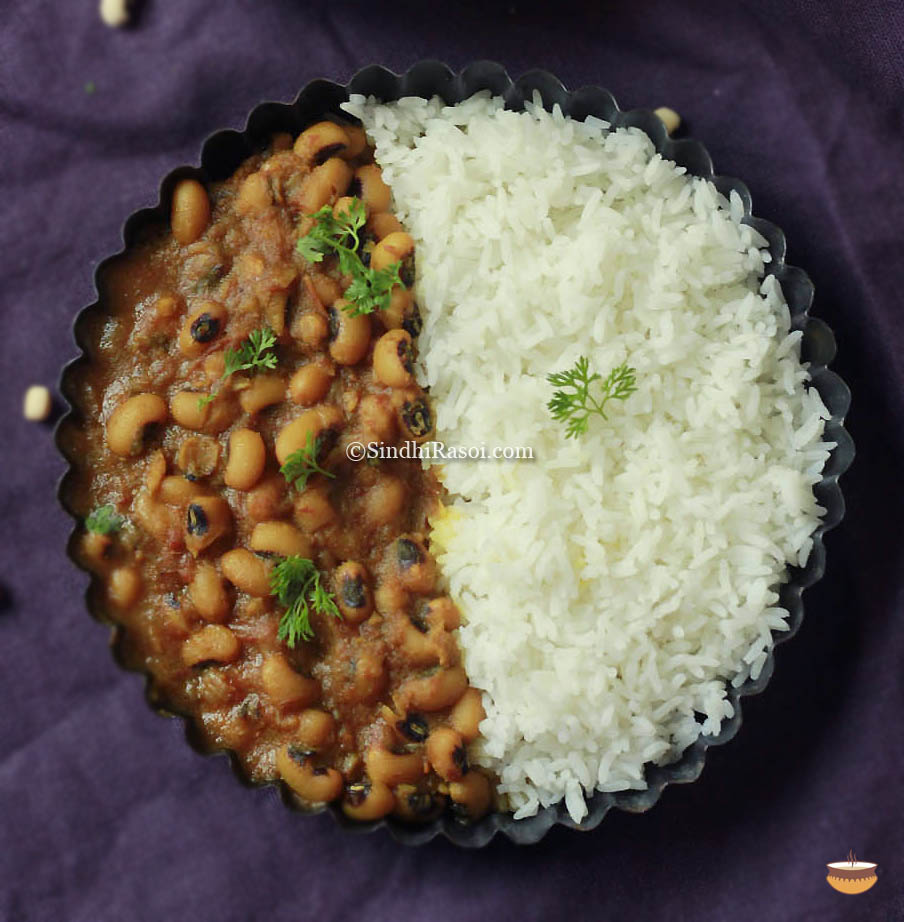
And the corresponding Sindhi dish is Raanh, also called Chauran and Chawli for AlifBe of Sindhi Food #24
Raanh or Black eyed beans are often a part of Prasad in Sindhi temples. Simply boiled with salt and water till soft, Raanh are distributed with Kanau (Karao or Kada Prasad) or with Suji jo seero (Semolina halwa).
In many Sindhi homes, Raanh are made in tomato gravy and you can find its recipe here!

But personally I like these beans cooked in the typical Sindhi style Onion Tomato gravy, with no other overpowering ingredients like garlic or garam masala powder.

I am often asked about how to make a homogenous ‘daag^ waari ras‘ (gravy) without using a blender. ‘Daag^‘ here means a brown coloured gravy that Sindhis use as a base to cook many Sindhi style curries and let me demystify the ‘daag^‘ today!

To cook a perfect ‘Daag^ waari ras‘:
1) Make sure that you are using sufficient fat(ghee/oil)…not too much, but just sufficient enough to help proper sautéing of onions. If you use very little oil the onions will stick to the bottom of the pan/cooker and may get burnt or turn crisp. We want perfectly browned but yet soft onions. If you use more than needed fat, the oil will float in the curry and may not to be acceptable to health conscious people.
Here is a tip: Add sufficient oil initially, cook onions till brown and then drain out the oil. Re-use it in a day or so to cook another onion based curry.
2) Never allow onions to turn crisp. Crispier onions affect the texture of the final dish as the gravy would look chunkier and not smooth.
Make sure that onions are not burnt. Even few burnt bits can turn gravy bitter.
3) Do not blend the gravy using a blender. Always whisk it with a wooden whisker if you want the typical Sindhi flavors of the dish.
4) Once onions and tomatoes are cooked well, add vegetables/meat/chickpeas/Soya chunks etc and bhuno it well till oil separates out (no need to bhuno black eyed beans). Keep sprinkling some water if the contents start sticking to the bottom of the vessel.
5) Add some water to make the gravy and cook vegetables/meat/beans etc first on high flame and then always simmer the curry on low flame, preferably under pressure (Mostly pressure cooker is used to make Daag^ waari ras i.e gravy).
6) You can add Akha garam masala at the beginning or can add some garam masala powder while bhunoing and some, towards the end of cooking process.
Hope this helps!

If you have any doubts or troubles while cooking any Sindhi food, do let me know via comments and I will make sure to discuss it with you!
Here is the recipe:
- Raanh (Black Eyed Beans) 1 cup
- Onions 2
- Tomatoes 2
- Green chillies 2-3 (As per taste)
- Ginger 1 inch piece
- Salt
- Turmeric powder ½ tsp
- Coriander Powder 1 tbsp
- Oil 2 tbsp
- Pick, rinse several times with water and soak Raanh in water for 6-8 hours.
- Later discard the water if it is frothy and rinse 1-2 times again.
- In a pressure cooker heat 2 tbsp of oil, add chopped onions and ginger.
- Cook onions on medium to low flame, till brown.
- Add chopped tomatoes, green chillies, turmeric powder and little salt to facilitate softening of tomatoes.
- Mix well and allow tomatoes to turn mushy. Add about 1 cup of water and close the lid of pressure cooker and wait for 3 whistles.
- Put off the flame and let the pressure subside!
- Open the lid, whisk the mixture properly with a wooden whisk (Mandhiyaro).
- Add soaked beans and some salt along with a tbsp of coriander powder and mix properly. Add some water (about 2 cups) and again close the lid and wait for a whistle of cooker. Put the flame on lowest and allow beans to cook under pressure for 10 minutes. Comparatively fresh beans that are soaked well, tend to soften by then. Else cook a little longer.
- Once cooked, adjust the consistency of gravy, if needed and serve it garnished with coriander leaves.
- Goes well with white steamed or boiled rice and/or rotis!
Signing off with this short video about how to write in Arabic Sindhi!