In olden days, a wedding in a Sindhi home would mean a buzzing neighbourhood. The male clan would deal with the logistics of a wedding, distributing wedding cards, booking tickets for relatives traveling from far and wide, making arrangements for their stay, booking Maharaj or cook/s to cater to family/relatives, friends etc.
The female clan (from the family as well as from the neighborhood) on the other hand would take charge of stocking spices, grains, pulses etc. Almost a fortnight before marriage eve, ladies in the family and around would wind up the daily chores and come together to make papad, kheecha (rice papad/fryum), potato chips etc to serve to guests as well as to pack those to give away as a parting gift or a return gift.
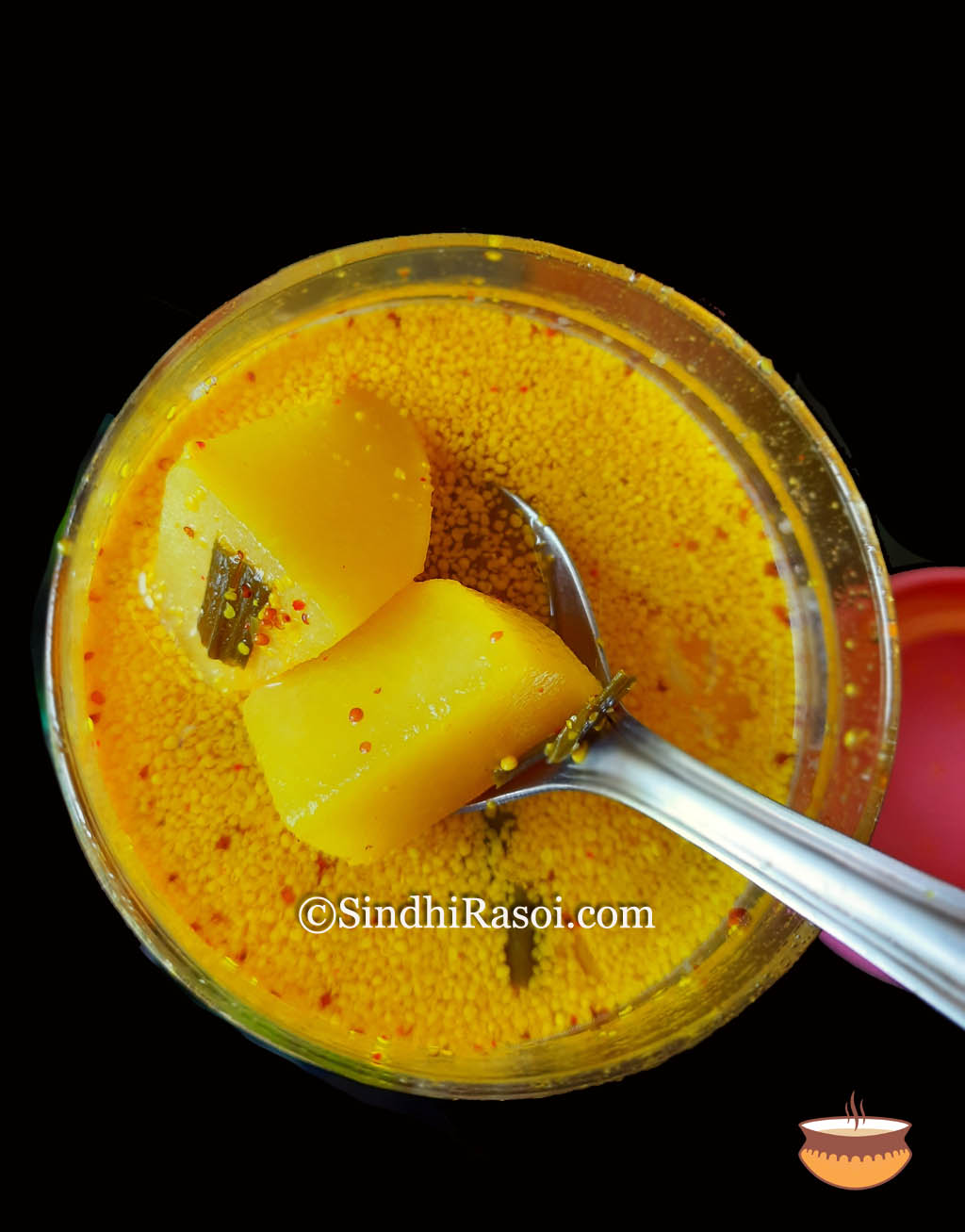
Mango pickles were made for summer weddings, well in advance while for winter weddings mostly onion, carrot, cauliflower and turnip pickles were made. Quilts, bedsheets, pillows, mattresses were taken out and kept out to soak up sun-rays. Borrowing these from neighbours was not a taboo. Chairs, steel plates or cutlery too, if needed, were borrowed from neighbors, relatives and friends (one of the reasons for having utensils/cutlery engraved with names was to make sure that there was no mix-up).
Marriages in 1970’s:
My childhood memories of marriages in family or around, revolve around pitching in for making papad, chips (kids were given the job of safeguarding papad kept in verandah or passages, from birds or strays), of banging spoon on a thali while the ladies sang laadas (wedding folk songs), watching raandha (male cooks) burning logs in open areas (outdoors) to cook food in huge degh or Cauldron or watching lady helpers as they chopped bulk of vegetables for salad etc.
Till 70’s a marriage ceremony was more about following the rituals than following ‘trends’. People attending a wedding or a reception were offered Sherbet/Cold drinks or an ice cream if the bride’s family was rich. There was no buffet system for Wedding/Reception but close relatives, friends and neighbors of the bride side family as well as the groom’s family were treated with a feast cooked at their respective homes.
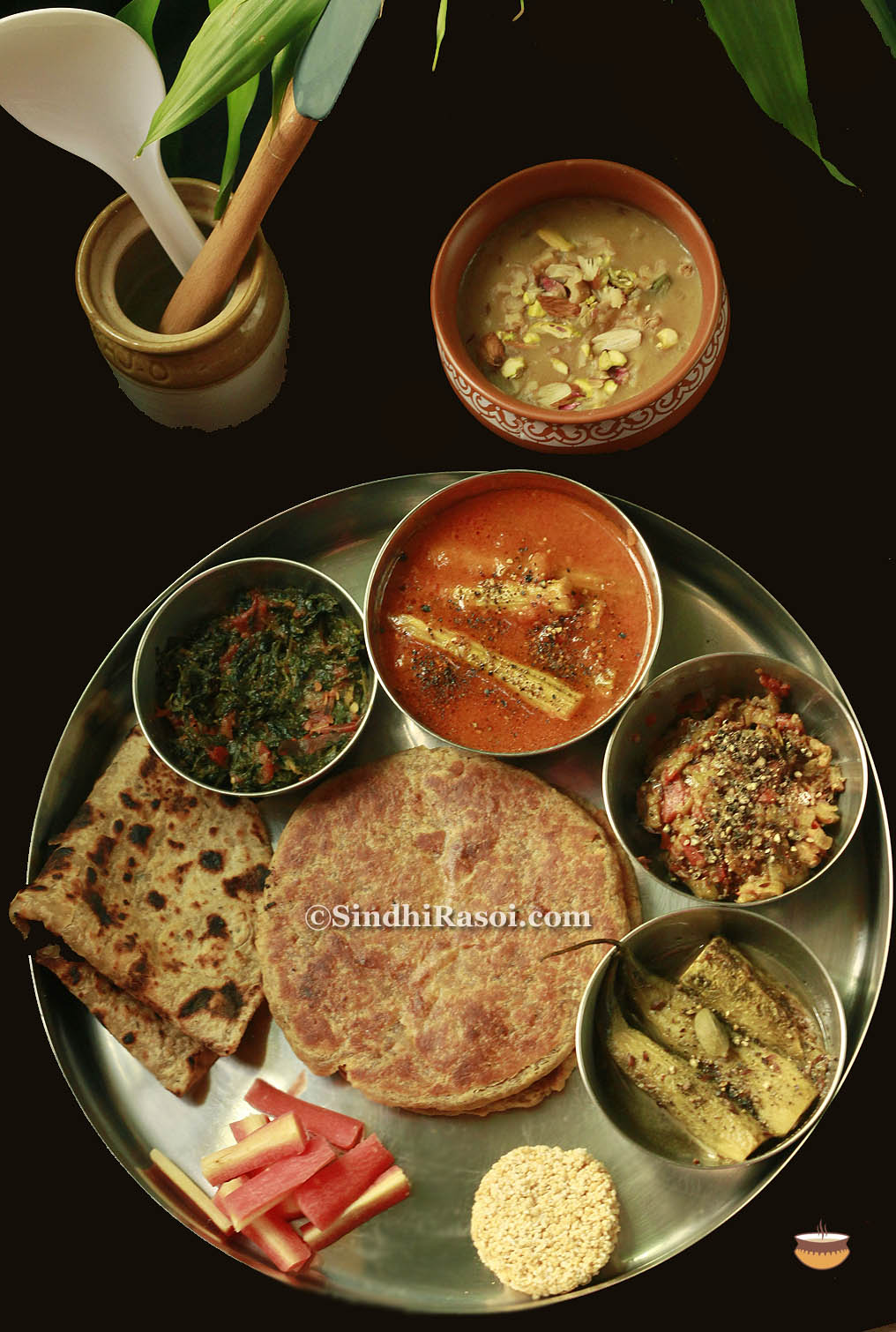
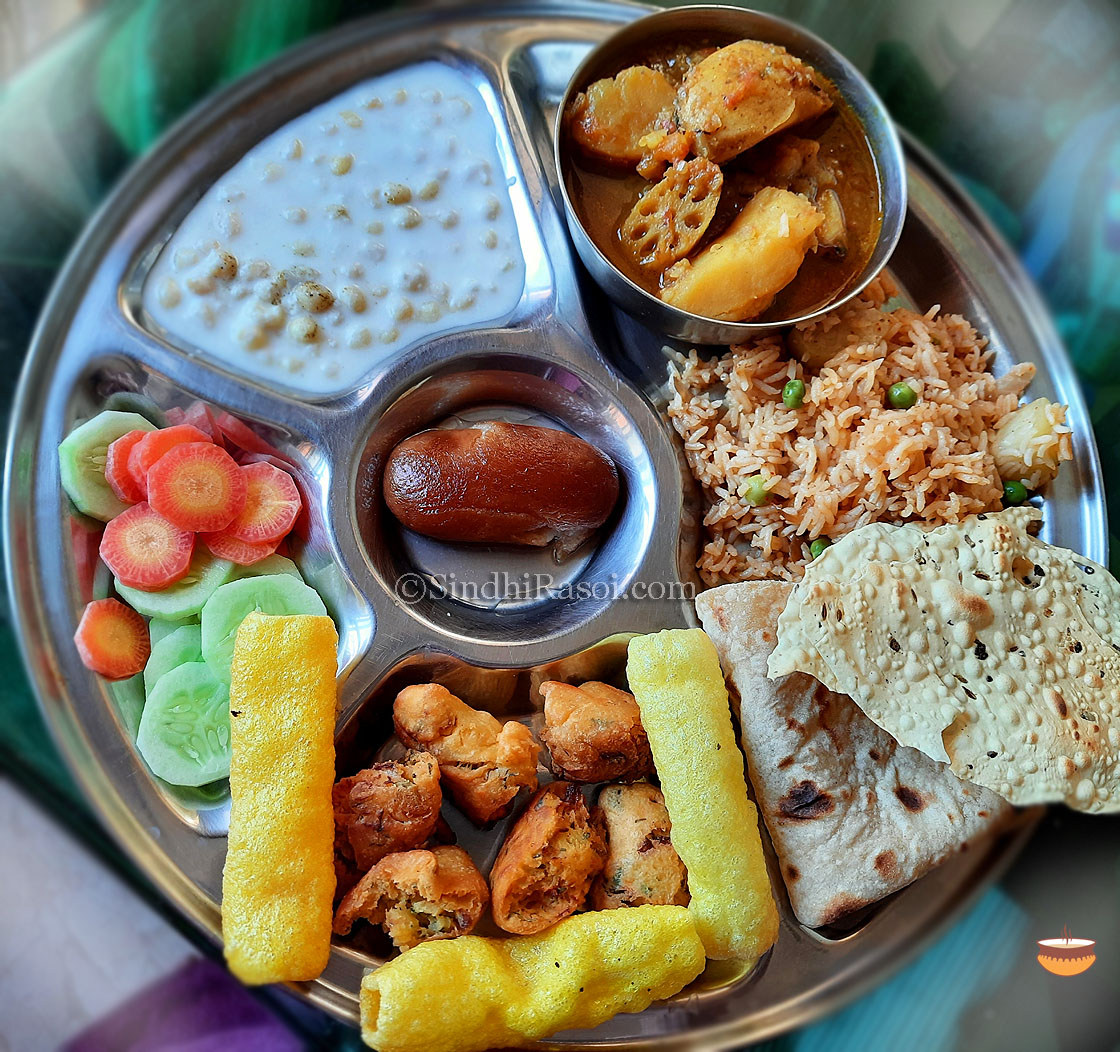
Traditional feast

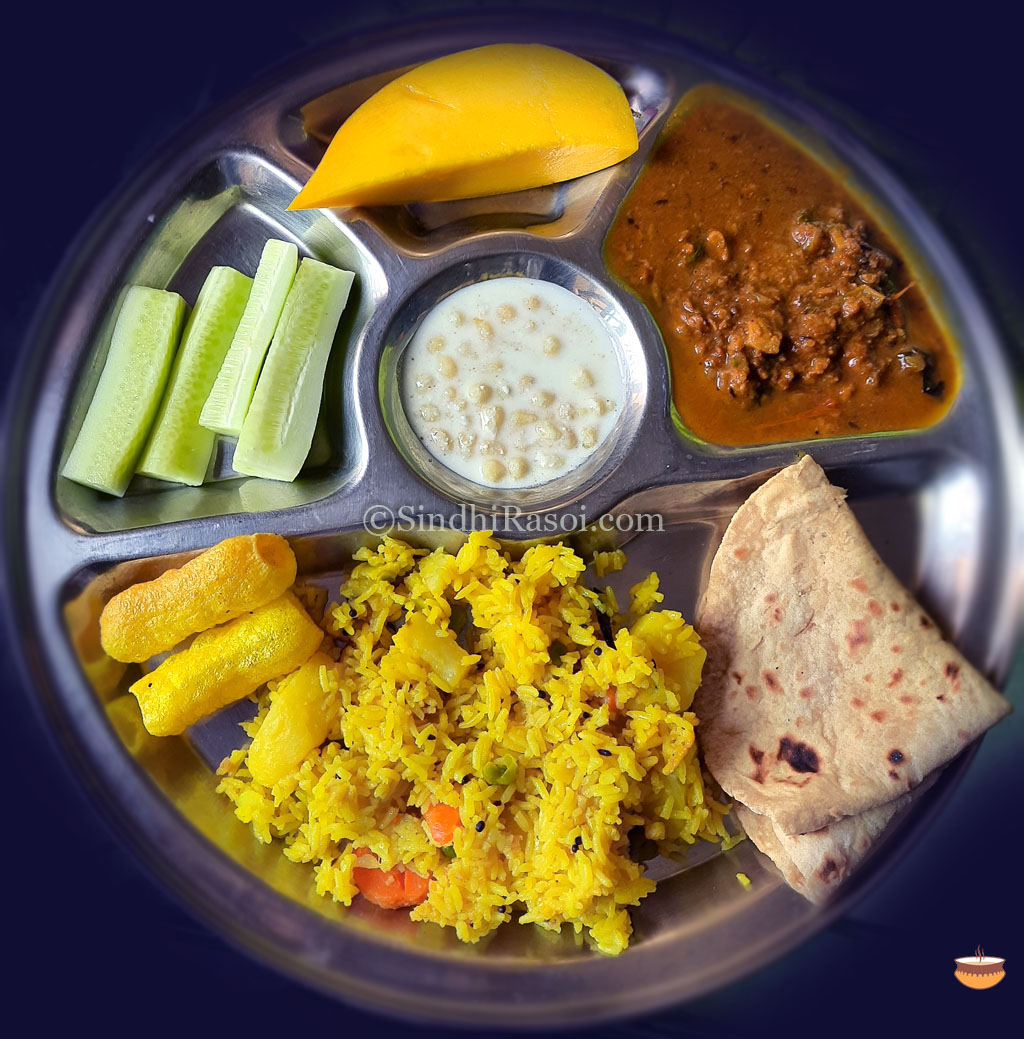
Food on the plate: Bhuga chaawra, Beeh Patata (recipe shared in this post), Phulko (chapati), Sindhi Papad, Sanna Pakoda, Nalli Kebab (fryums), salad, boondi raita and Gulabjamun!
The traditional Sindhi ceremonial food cooked on wedding days used to be different from what it is, now!
A typical meal before wedding would be garam masala flavored rice, an onion tomato based subzi of lotus stems and potatoes ( with skin on) heavily flavored with garam masala. Rotis were made by a bunch of helpers of the Raandho (head cook) while some would fry fresh crisp pakode. Some would cut fresh salad vegetables while others would fry fryums, roast papad etc. The chaos would be overwhelming then but still the smoky flavors of the food being cooked, served and relished would make my heart sing.
Beeh patata ( lotus stem with potatoes) curry was commonly made as a marriage ceremonial meal, back then, though some still follow the tradition.
Many a times if the subzi is to be offered to bhambhan or Brahmin, it is made without onions and garlic (as a Brahmin is offered only satvik food) and by using a base of spinach and brinjal but when it is made for the family, friends, neighbors and relatives, it could be made with onions as the base.
Beeh Patata made for the marriage feast had distinct flavours. Cooking brinjal with or without onions to make the base of the curry, would not only give a body to the curry but would also make the gravy homogenous when bhunoed. Potatoes were used with skin on (not peeled) and the freshly ground garam masala along with whole spices were generously used for pronounced flavors and spicy kick. Above all, cooking on logs would make the curry smoky and delectable.
The Beeh Patata curry was usually served with degh waara chaanwran, generally, the rice cooked with whole spices….a match made in heaven!
In Sindhi language a baaraat (Procession) is called J^anj`a or जञ and (I may be wrong here) the baaraatis or folks attending the ceremony are called J^aanj~ee while the marriage feast is called J^uJ~u.
Since there is a lack of proper information in new dictionaries about these traditional words, I cannot confirm if these are the proper terms. But in general a baaraat could mean a procession as well as the people gathered for the procession. And the feast of Beeh Patata and rice served to them was casually called as J^aj~a Ji roti ( roti here means a meal and not the pulka/flatbread).
And the 14th letter/consonant in AlifBe series (A-Z of Sindhi Food) is ڃ in Arabic Sindhi, J~ in Roman Sindhi and ञ in Devanagari.

This letter is not used in the beginning of any Sindhi word. A perfect example of its use in Sindhi language is the word जञ and hence I have picked जञ जी रोटी for the 14th letter of Sindhi AlifBe.

- 1 and ½ cup basmati rice or any other variety
- 1" piece of Cinnamon
- 3-4 cloves
- 1 whole black cardamom (vadho photo or black elaichi)
- 4-5 black pepper corns
- 2 Bayleaves(or tejpatta)
- 2 tsp of oil
- Water to cook rice (mostly double the quantity of rice)
- Few drops of orange food colour (optional)
- Salt as per taste
- 2 Potatoes -Do not peel the skin.
- Lotus stem (roots) or Beeh.-100-150 gm
- 2 Onions
- 2 Tomatoes (small )
- 1 small Brinjal
- Shelled green peas, a handful
- Ginger about 1"
- Green chillies 2-3 depending upon your taste
- 1 /4 tsp Garam Masala powder
- ½ tsp Turmeric powder
- 1 heaped tsp Coriander Powder
- ½ tsp Jeera powder
- Salt to Taste
- 2-4 tsp Oil
- Fresh coriander leaves for garnishing
- Pick and rinse rice few times with water, till water runs clear.
- Let the rice soak in water for about half hour (or 15 minutes if using Basmati)
- In a heavy bottom pan, add 2 tsp of oil and put all the whole spices and stir fry for few seconds.
- Add rice and salt and mix gently.
- Add water (almost double the quantity of rice) and few drops of orange colour (optional). Mix well, allow it to boil and then simmer. Once the water is absorbed, cover it with a lid and cook on low flame till done.
- Serve hot with Beeh patata curry.
- Clean and cut Beeh into slanting slices and pressure cook them with some salt and water till done (2-4 whistles of pressure cooker, depending on quality of Beeh). A knife or fork should smoothly slide in Beeh.
- Drain and keep aside.
- Clean the potatoes and cut each into large chunks. Rinse with water, drain and add salt. Soak in water if potatoes start to oxidise. You can peel potato skin but it tastes better with skin on.
- In a pressure cooker, add 2 -4 tsp of oil and add chopped onions.
- When onions turn pinkish, add chopped brinjal (with skin) and cook till the mixture is light brown in colour.
- Add chopped tomatoes, some salt, chopped green chillies, ginger and turmeric. Add half cup of water and close the lid, and pressure cook the mix for 2-3 whistles.
- When pressure subsides, open the lid, mash the gravy with wooden churner and put it back on flame.
- Add potatoes, boiled beeh, coriander powder and some salt, if needed and cook on high heat. Add few spoons of water if the mixture tends to stick to the bottom of cooker.
- Keep cooking on high flame, sprinkling water if needed, till the gravy looks homegenized. Add hot water and shelled peas.The water should be just above the level of Beeh and potatoes. Add garam masala powder and some coriander leaves.
- Close the lid of cooker and wait for one whistle and then cook on lowest flame, under pressure for 2-5 min. Put off the flame.
- When the pressure subsides, open the lid and check for the seasoning and consistency of gravy and adjust according to your taste.
- Garnish with fresh coriander leaves and enjoy it with piping hot rice.
And as usual, here is a short video to help you in understanding formation of the letter ڃ !