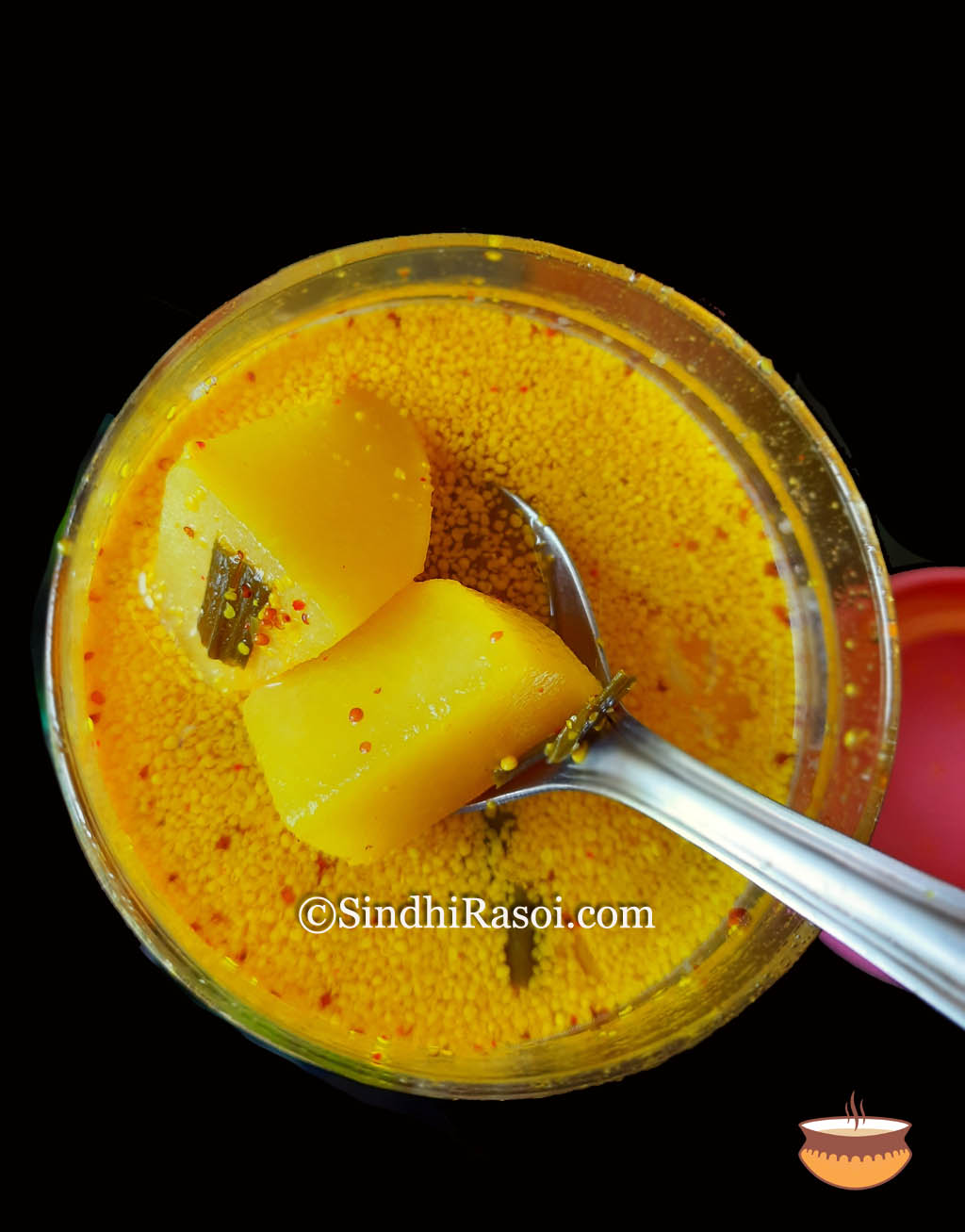
The 12th consonant in Sindhi Alif Be is ڄ, a unique one, because it is used in very few languages, one of it being Sindhi (Saraiki is another language where this is used). In Roman Sindhi it is written as J^ and as ॼ in Devanagari.
ڄ is a Voiced (vocal chords vibrate when you utter this) Palatal (middle of the tongue touches hard palate) Implosive ( you breathe in instead of breathing out while uttering this). You can check this link to know how ڄ is pronounced!
There are limited number of Sindhi words starting with this alphabet. Some examples are j^aari (the net), j^ibh (tongue) and j^ethu.
J^ethu is the third month in Lunar calendar, also known as Jeth or Jyeshtha.
There are barely any Sindhi dishes that start with the letter ڄ.
So I thought to share a food ritual related to a lesser known festival of Sindhis, called J^eth Ji Sesa !

Sesa festival is observed on J^eth ji Ummas i.e Amavasya (No moon day) in Jyeshtha month as per lunar calendar . The festival is known as J^eth Ji Ummas or Khumbh or simply Sesa!
Some Sindhis do observe it on the next day of Ummas which is a New moon day (Chand)!
Some festivals or rituals stay close to your heart and you derive from it a certain warmth, some comfort and a feeling of being loved and cared for. Scientifically this ritual may not have any valid point but if you believe that faith can move mountains and calm the wild seas then you do believe in rituals like Sesa too.
The festival reminds me of my school days, when the new academic year would start around this festival and so would rains, mostly! The thrill of reuniting with school friends after summer vacations, the pre monsoon showers bringing temporary respite from sultry summer heat and the feeling of happiness in the chaos of festivities were some of the things that would make the Sesa a special day, then, and the memories of those lovely moments still warm the cockles of my heart!
Khumbh or Sesa or J^ethu Umaas/J^eth Puja, is, kind of, a patriarchal ritual followed by (generally) Sindhi ladies for the well being of male family members, in olden days. Now the ritual is either not observed at all or many Sindhis do observe it even for the girl child in the family.
In olden days the male clan would often travel overseas for business purposes and the family would be worried about their safety, particularly if they happen to travel during the times when the turbulence in sea or rivers would pose a threat to the human lives.
At the beginning of J^eth month a vow was taken to offer a sweet dish to the Sea/river and prayers were done for the safety of the family member/s and on the Amavasya of the J^eth month Sesa ritual was done.
Elderly ladies in the family would dedicate a sweet dish to each male member and that same sweet was/is to be added to Sesa every year.
I find it amusing as how our feelings and thought processes change with time. While as a kid I loved the Sesa ritual, as a headstrong teenager I disliked the aura of patriarchy this festival was surrounded by! Years later we started including sweets or dryfruits/ nuts for girl child too and that’s when I started observing it again!
I remember how my mother would get busy since early morning to make the feast for J^eth Pooja and then we would accompany her for the pooja rituals in the neighbourhood. Ladies would gather and chit chat while preparing for the rituals and kids would anxiously wait to hog on the puris and pakora, mangoes and sweets.
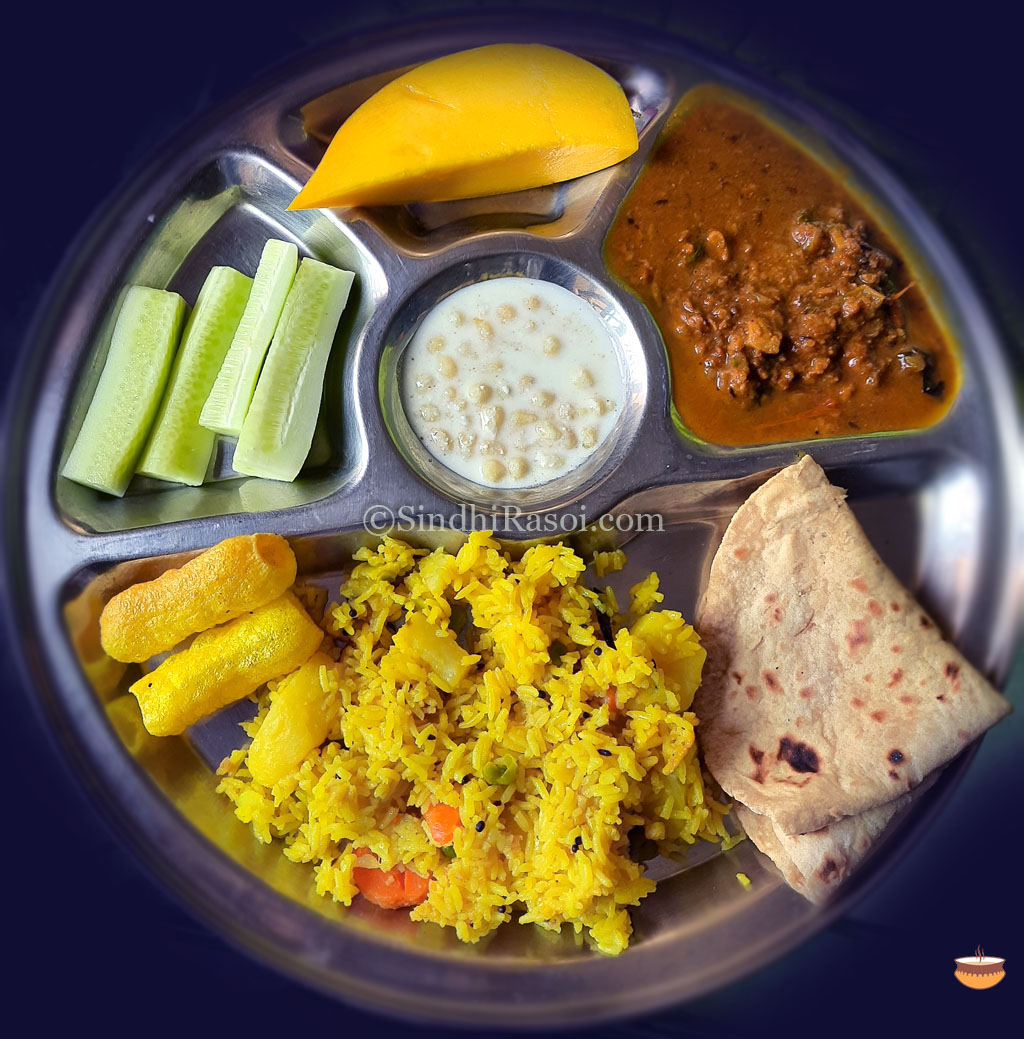
Lunch on this day, in most of the Sindhi homes would be Chola chaanwar. After reserving some boiled chole for prasad, the rest of it would be cooked in an onion tomato gravy and was had with turmeric laced rice…such a bliss!

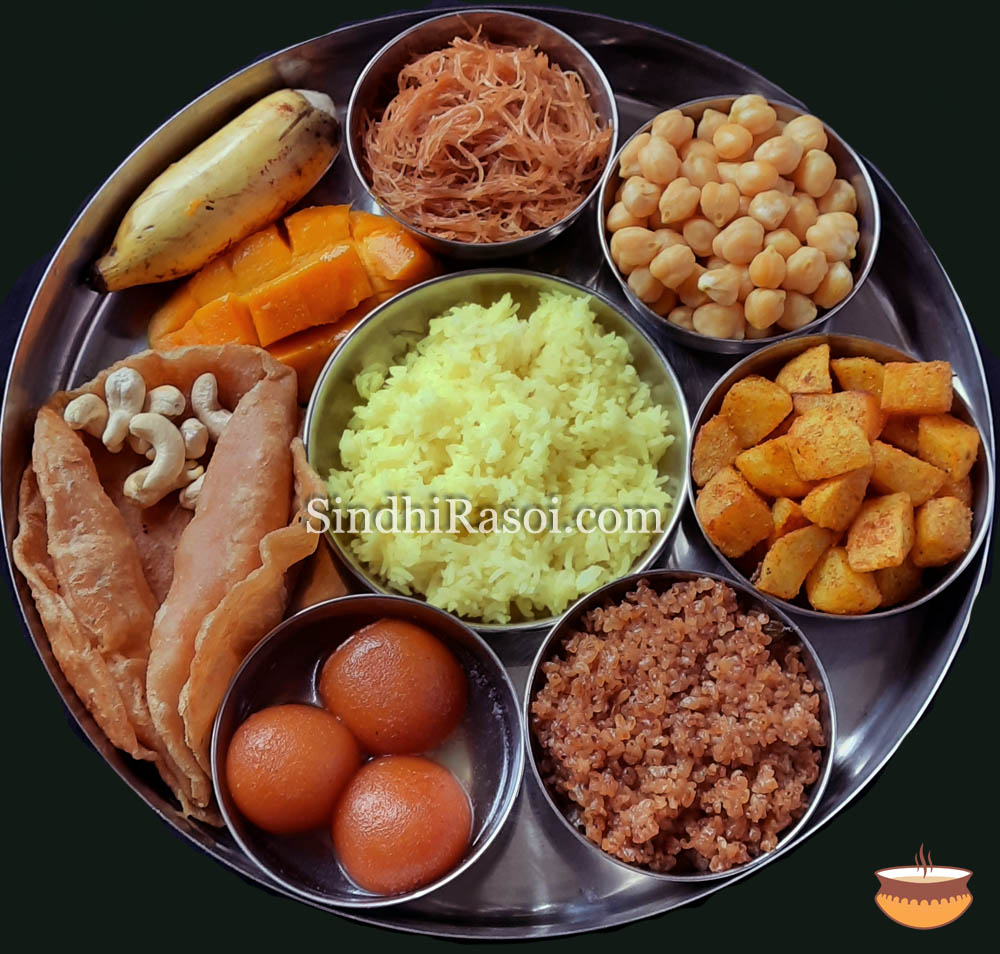
In the Thali : Whole wheatflour Puri, shallow fried potatoes, Gulabjamun (home made), Seyun, B^aat Jo seero (Broken wheat halwa), mangoes and turmeric laced rice.
Ps: Updating the blog posts with fresh pics from J^eth Ji Sesa – 2021

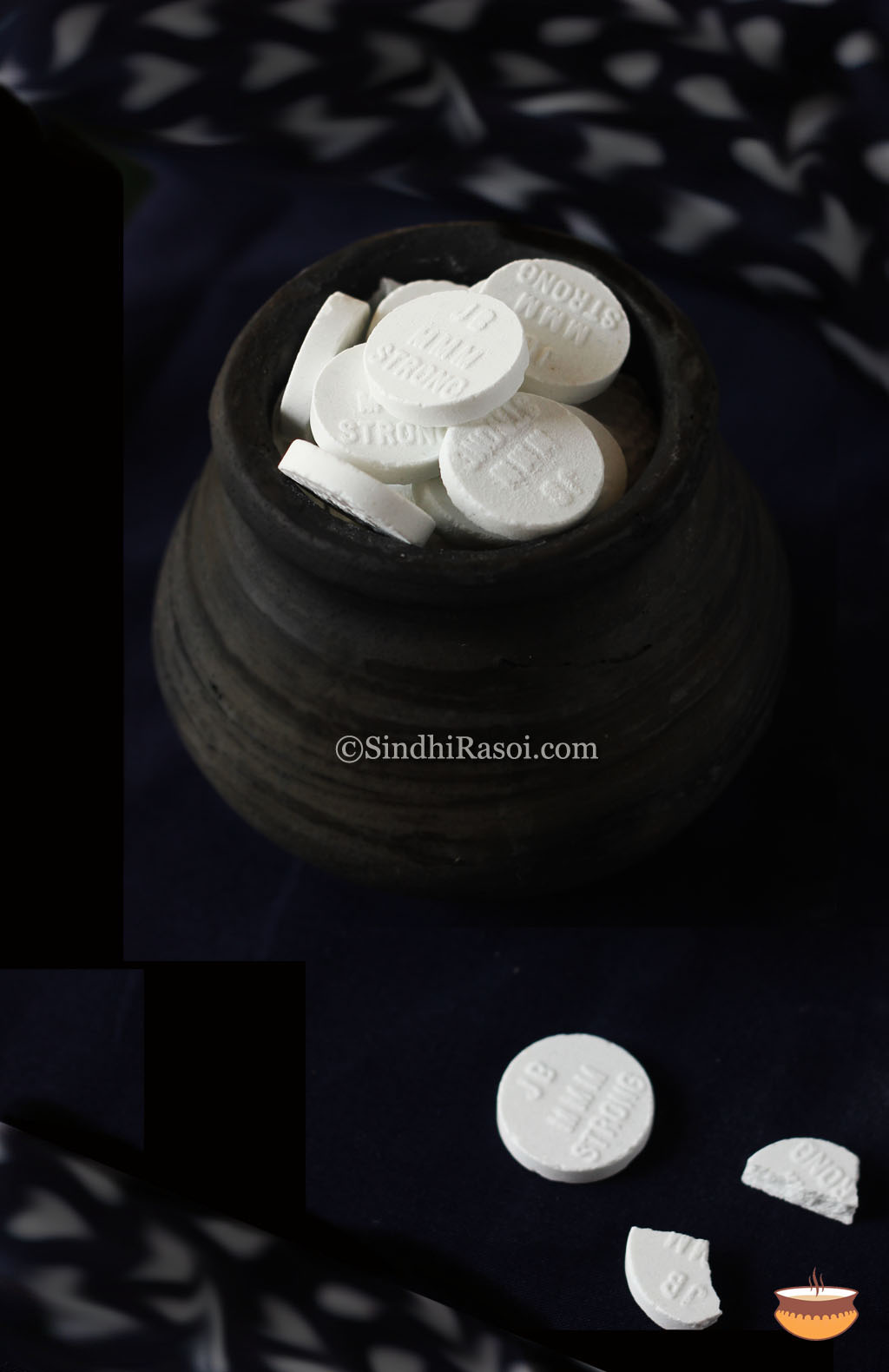
We generally add Mesu (Mysore Pak) too but couldn’t find it in the shops around.


A Sesa i.e a prasad/offering of boiled kabuli chola ( Garbanzo beans) and peela chaanwra ( Turmeric laced rice) along with seyun (sweetened vermicelli), fried potatoes or pakora, Puri, Mesu (Mysore pak), Gulab Jamun and dedicated sweets, is plated in a Thali.
The ladies gather at the water bodies. Though traditionally the ritual was done near a river or sea, nowadays the urban ladies perform the ritual around taps in the home or a temple and then the food offerings are either fed to birds/cows or collected by volunteers and immersed in a lake/pond or river nearby.
Sesa or J^eth ji Ummas’ Ritual:
Some grass is collected and mounds are prepared of grass and some
Puri, shallow fried potatoes, pakora, seyun ( sweet vermicelli) along with the respective dedicated sweet/s, coconut etc are taken from Thali and are placed on the mound .
A portion of the mound is then taken and tapped with other had and a small prayer is recited:

“Aamra Leemra ( aamro leemro) khayi bharyosein paet,
Jiyan muhinja Putra, potra, dhotra, jin rakhaayo J^ethu.
J^eth seyun khaaraye, J^eth mesu khaaraye…( Include all the names of sweets offered)..
J^eth maal khaaraye ”
Roughly translates as:
(had) Mangoes/ lemons (or does it mean ‘lim’ i.e neem?) and filled our tummies,
Long live my sons and grandsons who made me observe J^ethu rituals.
J^eth feeds seyun (sweet vermicelli), J^eth feeds Mesu (a sweet),
J^eth feeds us a feast.
Please note: I may have erred while translating this so if you know it better, please leave a comment on this post and I will rectify!
The mounds are then collected and fed to birds/cows or as done in olden days, immersed into a water body.

The rest of the food brought by ladies is collected, mixed and then distributed or shared with neighbours.

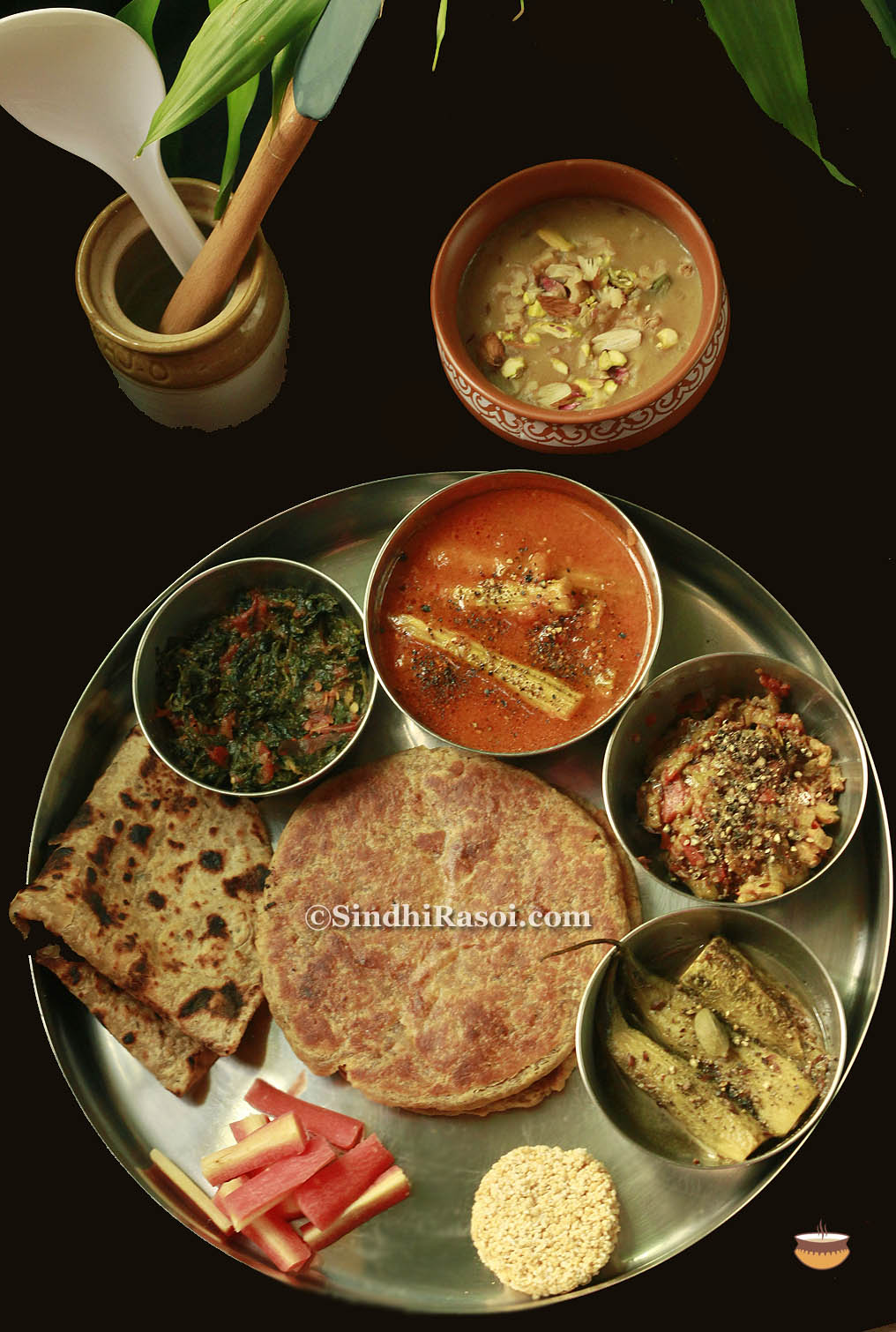
Another Sesa Thali, with Mesu (Mysore Pak)!
At our home we pray for all the family members and particularly for Sesa ritual a sweet/dry fruits/nuts are dedicated for children irrespective of gender.
Please check the following links if you seek the recipe!
Seyun and Patata
Gulabjamun
B^aat Jo seero
Atta Puri
Ps: Adding this small video that I made on Sesa (2021)!
And finally check this video to known or learn the formation of Sindhi letter ڄ!