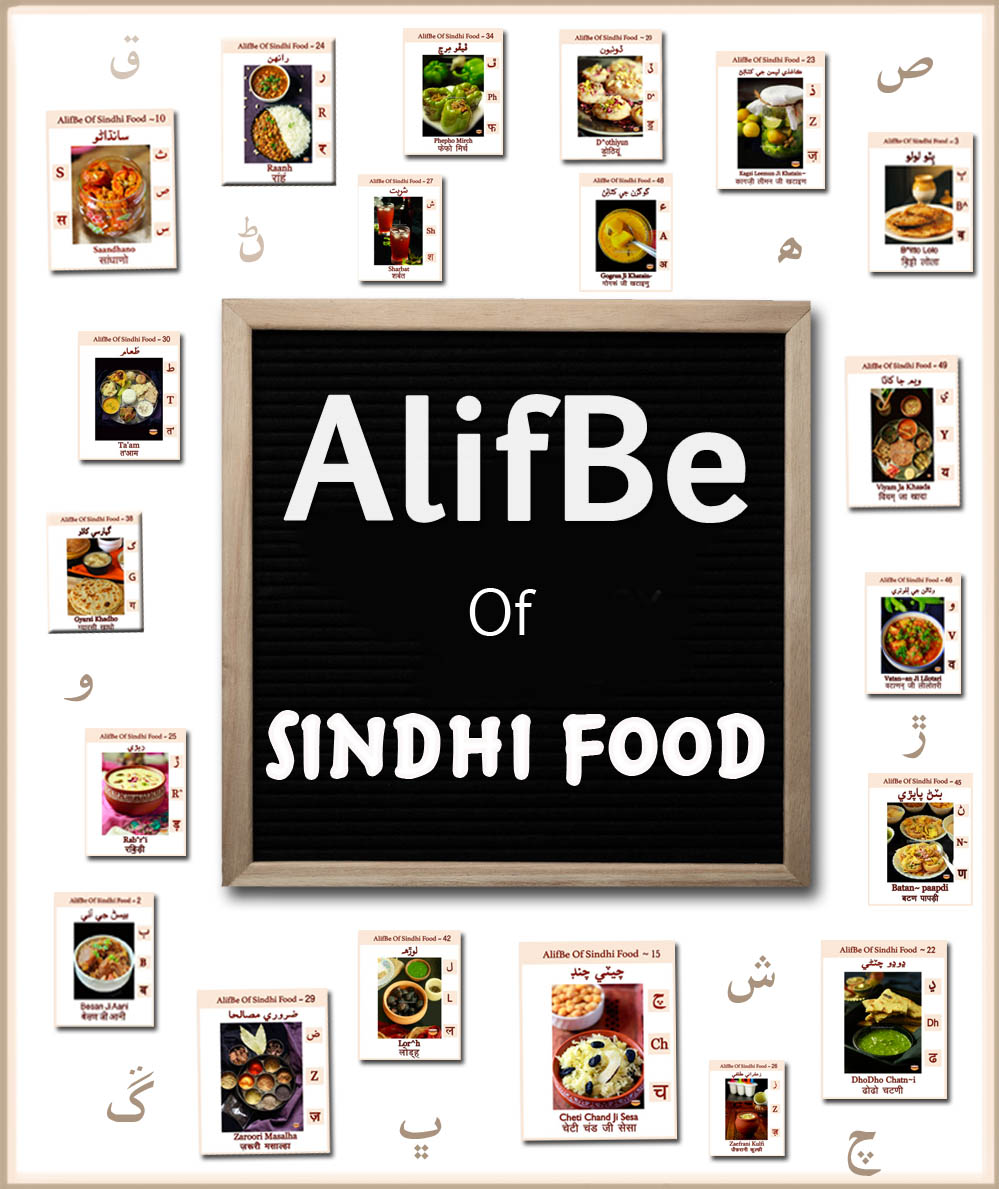
In my first post of AlifBe series I have mentioned that the 52 letters of Sindhi Alphabet, known as AlifBe or Alaph Ambhu, could be divided into sixteen basic shape groups.
A short recap:
ا (अ/A) is the only alphabet in first shape group!
ا as in ‘Attack’ or ا as in Atte Ja Ladoon
The following 9 alphabets come under the second basic shape group characterised by a boat shaped base with varying numbers and positions of dots. Also kindly note that different literary authorities follow a slightly different sequence of these alphabets.
ب (ब/B) as in Baby or as in Besan Ji Aani
ٻ (B^) as in B^aaru (child) or as in B^itto Lolo
پ (प/P) as in Parrot or P as in Pali
ڀ (भ/Bh) as in Bharat or as in Bheendi Khatti
ت (त/T~) as in Taiwan or as in Tosha
ٿ (थ/Th~) as in Thirsty or as in Thumaro
ٽ (ट/Tt) as in Towel or as in Tamate Ji Chutney
ٺ (ठ/Th) as in Thakur or as in Thab^ak Vadiyun
ث (स/S or C) as in Simple or Circle or as in???
Well, we will cover that in a while!
In Arabic Sindhi there are 3 letters for the sound S/C as in Cylinder. These are ث , ص, س . Out of these three, two alphabets i.e ث and ص are used only while writing Arabic or Urdu words in Sindhi script while س is used to write words of Sindhi origin. In Roman Sindhi and in Devanagari, these 3 alphabets are denoted with letter S and स (respectively) only.
So we will cover the three ‘S’ i.e ث,ص and س in a single post by picking this س, which is commonly used for words of Sindhi origin. And the dish for ث ,ص and س is Saandhano or सांधाणो which in Sindhi means Pickle/s!
 In Sindhi, generally sour pickles are known as Khatain/Saandhano/Aathano while the syrup/sugar based (preserves) are called Murba or even, Chutney!

So basically Saandhano is a pickle i.e a vegetable or fruit preserved in either vinegar or mustard oil or even in brine.

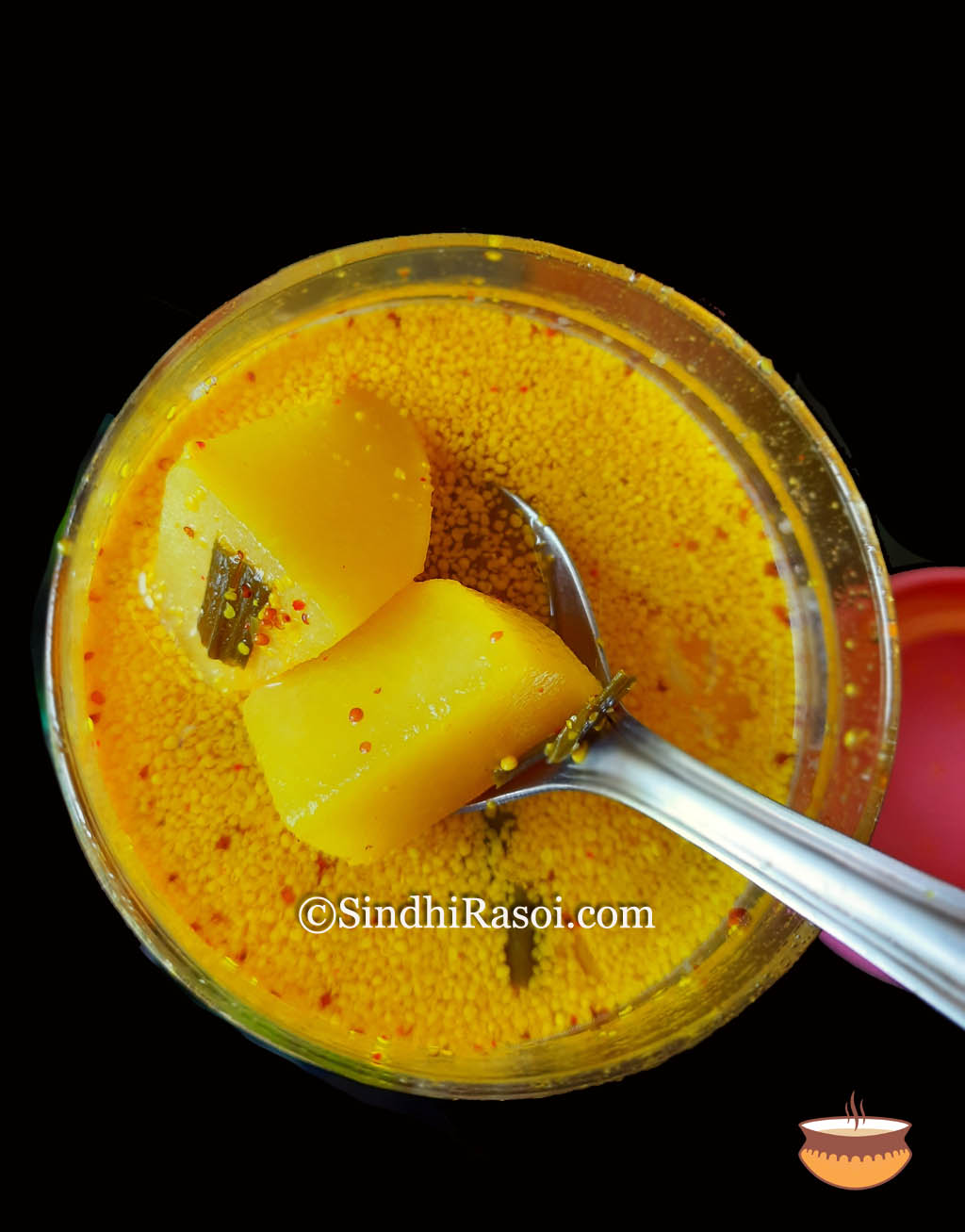
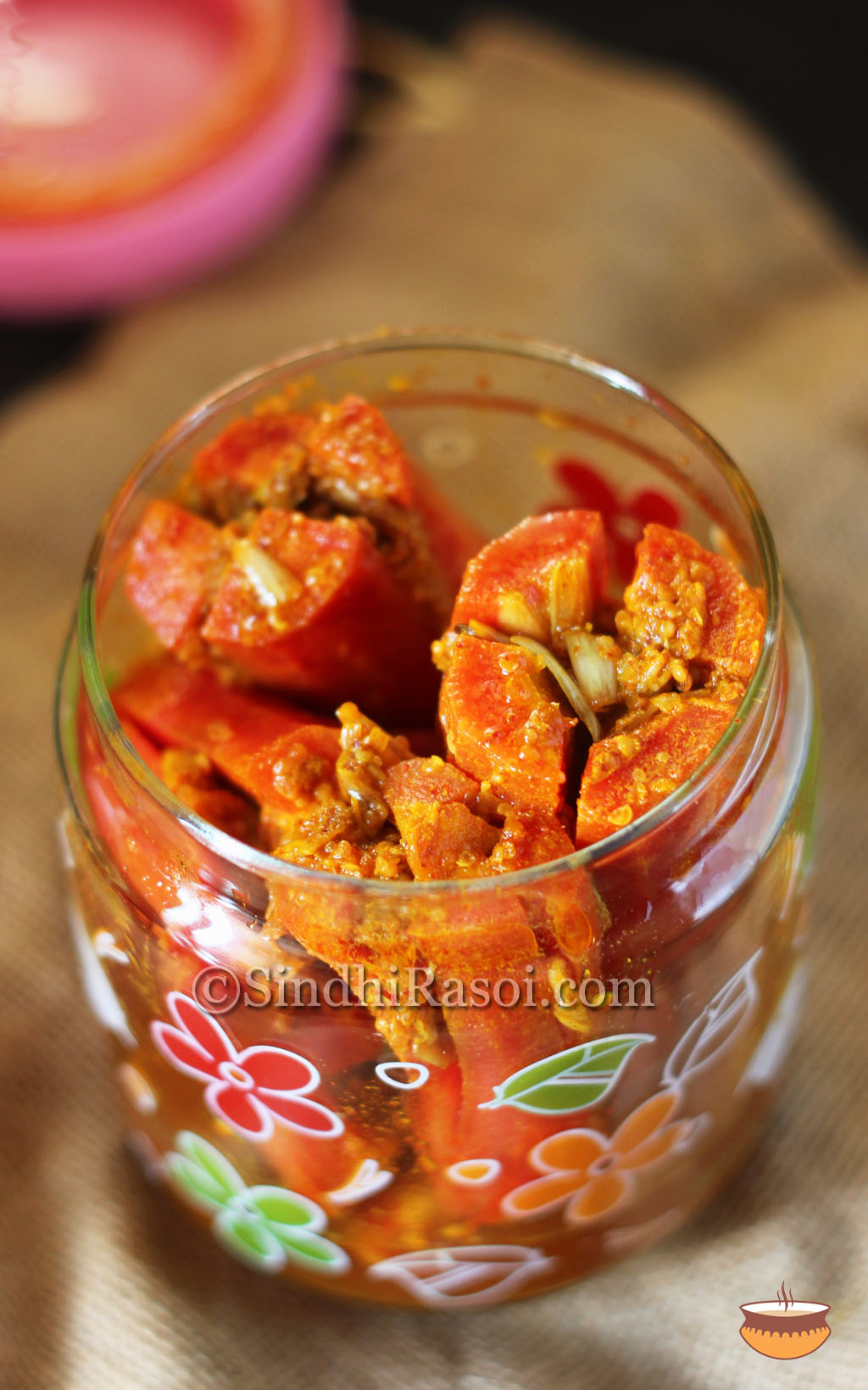
And the Saandhano that I am sharing today is a simple Saandhano; carrot pickle, popularly known as Gajrun ji Khatain (Gajrun= carrots) or Saandhyala Gajroon as Saandhyal in Sindhi means something that is preserved or protected.
- Red carrots 400 gms ( 2 plump carrots)
- Rai dal * 1 tbsp
- Turmeric powder ½ tbsp
- Red chilli powder ½ tbsp
- Salt as per taste
- Mustard Oil ¾ cup
- Fresh green garlic 3- 4 stalks with bulbs
- Heat mustard oil till smoking hot and allow it to cool completely.
- Rai dal* is easily available in kirana shops but if you wish, you can simply pound mustard seeds or grind coarsely, using a spice jar.
- Rinse well and pat dry fresh green garlic, remove any yellow or wilted stalks and chop roughly. Pound the chopped bulbs and stalks in a mortar pestle till coarse. Collect in a clean, dry bowl.
- Use 4-5 garlic cloves, minced well, if fresh garlic is not available.
- Rinse carrots with water and pat dry using a fresh kitchen towel.
- Top and tail and peel carrots.
- You can cut carrots in cubes, batons or wedges or can cut each into 2 inch piece and give a criss cross cut all the way till ¾ th of each piece. The idea is to make a space to stuff spices inside each piece of the carrot.
- Take the bowl with pounded garlic and add salt, chilli-powder, turmeric and mix it well.
- Take 2 tsp of mustard oil from the ¾ cup of oil that was heated and cooled and mix it in the garlic-spices mix.
- Now take a little of this spice mix and stuff each piece of carrot.
- Place all the stuffed carrots in a clean and dry glass jar and pour remaining of mustard oil.
- Unlike mango pickle, you need not cover whole carrots with oil. But on the flip side, the shelf life of this pickle is lesser than the pickles that are submerged in oil.
- Shake the jar well, few times a day, for 3-5 days.
- In a hot and humid weather the pickle is ready to eat in 4-5 days. The shelf life is 2-3 months, provided it is stored well.
- To increase shelf life you can add more oil to cover the carrots or can add some vinegar but it does alters the flavors and texture of this pickle, to a certain extent. So it is better to make this pickle in small batches.
To help those who wish to learn Sindhi Language, I am trying to create small animated videos to facilitate understanding of formation of Sindhi alphabets. Do watch, like, share and subscribe to the Channel.