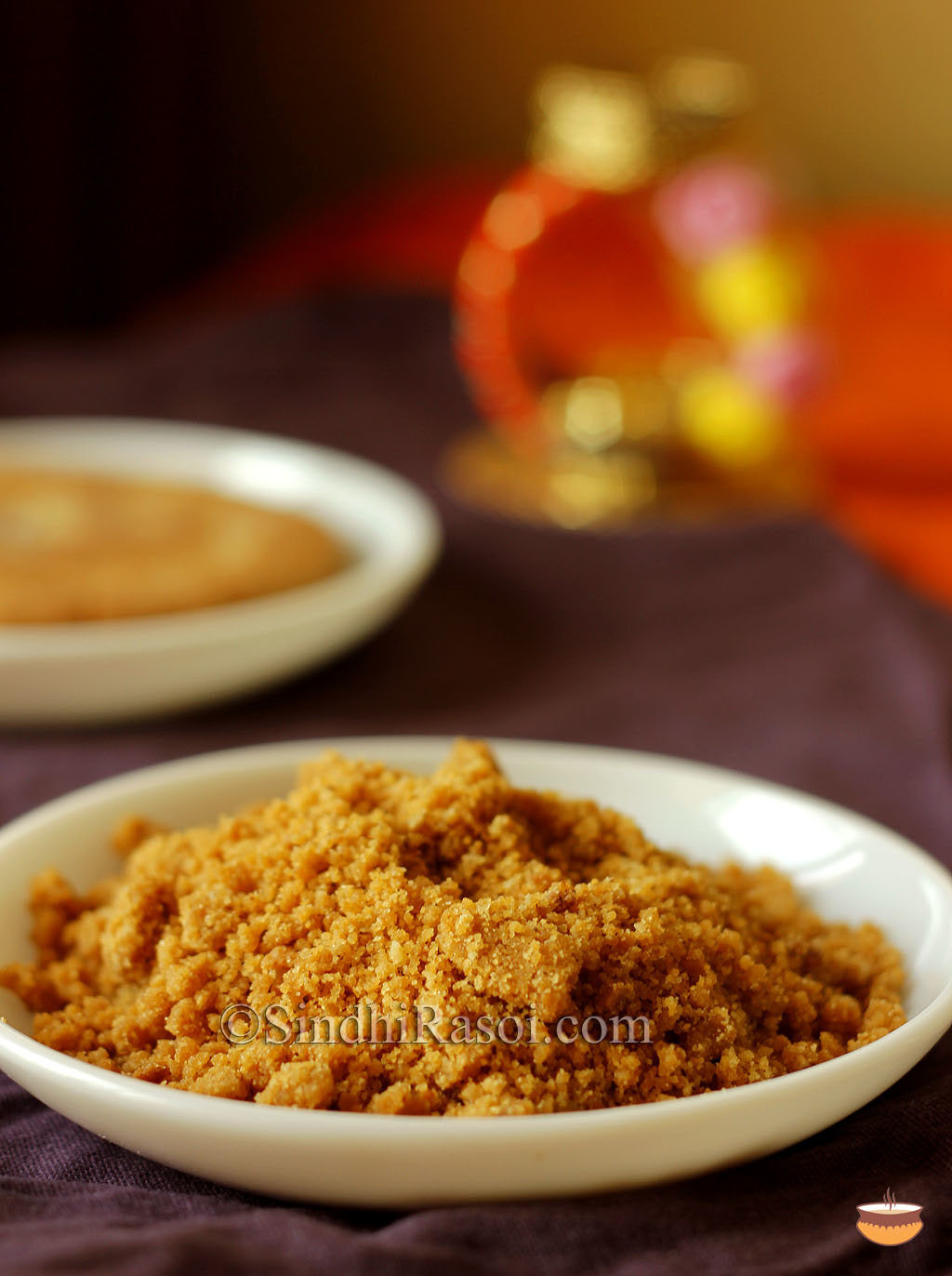
 Sagre ji Kutti
Sagro, refers to the sacred thread as well as a ritual/ceremony popular in Sindhi community. It is a way of expressing your gratitude to Lord Shiva, particularly after important events of life like marriage, child birth or any other significant milestone achieved.
Please note that Mahalakshmi Sagra ritual is different from Mahadev Ja Sagra or Aash (Wish) ja Sagra!
There are different theories about the sagro ceremony. One of them is that in olden times when the family would be worried about a parent/spouse/child travelling across the seas for business or any other purpose, a sankalp (vow) was taken by concerned family member by tying a ‘sagro’ (sacred thread, somewhat like a Mauli thread) for a safe journey/safe return of the family member/s. It was untied when the wish was fulfilled and Sagro ceremony was held, inviting friends, relatives and neighbors to join them for celebrations. Gradually the rituals changed and the sankalp (vow) to organize a sagro ceremony became more like a verbal pledge and the sacred thread is now tied just before the Sagro ceremony and untied, after the rituals are over.
One can choose any Monday during Shukla paksh (Waxing Moon), between Diwali and Maha Shivratri, to perform this ritual.
For each Sagra that is to be untied (for every wish that is fulfilled) 6 and 1/4th kg of Jowar flour (5 and 1/4 kg plus a kg of flour, for prosperity, known as ganja jo atto) needs to be cooked in the form of Kutti (crumble), Mitho Dhodho (sweet patted roti) and salted Dhodho. The quantity of flour to be used is fixed (though the ‘fixed’ quantities varies from family to family) but the proportions of Kutti, dhodha can be adjusted as preferred. Generally the quantity of crumble made is less than that of patted roti, as leftover Kutti is forbidden from being kept at home, after sunset, whereas dhodha can be stored and consumed on the next day.
 Broken pieces of Jowar doda
The Rituals:
Generally a priest is invited to perform puja and the person performing the puja observes a fast on that day, consuming only the food cooked as prasad after rituals are over. A sacred thread i.e sagro is tied on the wrist of the devotee performing the puja and then the priest invokes the supreme power and seek blessings of Lord Ganesha, Mahadev and Gauri mata.
A loti (Pooja Lota/Kalash) is filled with water and 5 betel leaves are placed vertically around the rim and a coconut is placed on leaves.

A thaal/thali is taken and a swastik is drawn using kumkum and symbolic ‘Navgrah’ i.e Nine planets in form of dots are drawn or betel leaves are used to represent planets.
Earthen lamp or a Diya is lit along with Dhoop sticks. Jowar, flowers and fruits are offered to deities along with prasad (Kutti, Dhodho etc).
The priest invokes the God and planets, one by one, beginning with the Vighnaharta i.e Lord Ganesha and places a betel leaf in the pooja thali, placing Supari on each, followed by some Jowar grains, flowers, direct the fragrant smoke of Dhoop, then places a fruit, a little of prasad made for the occasion and sprinkles some water. The whole process is repeated for different deities and Navgrah. Arti is performed and devotees sing Bhajans as well.
The devotees attending the pooja are then given some prasad along with whole fruits and then the meal of Kutti, Dhodho, saibhaji, radish etc. is consumed by everyone present at the venue.
 Radish is mandatory to be offered as prasad

Saibhaji (Without onions and garlic)
Two types of Jowar Doda are made for the occasion; Savory and sweet.
To make Sweet Dhodho, jowar flour is mixed with ghee/oil and jaggery syrup is added to make a dough. Small thick discs are made by either patting a portion of dough or rolling each. Each Dhodho is cooked on griddle using copious amount of ghee/oil. Generally the Dhodho is broken into bite sized pieces as it not only helps people to pick small quantities instead of taking a whole Dhodho, but also ensures that no wastage of prasad happens.
For the savory kind, the jowar flour is kneaded with ghee/oil and just salt and water or some also spice it up by adding greens and chilies to it. Again, small but thick rotis are made and cooked on tawa applying good amount of ghee/oil.
For Kutti, a dough is kneaded using jowar flour, ghee and water and muthiya or ladoo or flattened discs, whatever preferred, are made and fried till crisp brown. Once cool, the fried dough is powdered (generally using a mixer grinder) and then mixed with jaggery syrup.
The proportion of flour, ghee and syrup varies according to the portion of flour used to make Kutti and Dhodho. It depends on the family to decide how much of Kutti would be made and how much of remaining flour would be used to make sweet and savory dhodha.
Recipe:
For Kutti (Crumble):
For every kilo of Jowar flour approximately 500-600 gm of jaggery and approximately 250 to 300 gm of ghee is used.
Soak pounded jaggery in some water and keep it aside. Knead a firm dough of jowar flour and ghee/oil using water as needed. Take small portions of this kneaded dough and make muthiya (or ball shape). Deep fry muthiya in hot oil, over medium flame till nicely browned. Cool well and grind each in a mixie (or you can get it done from any mill around). Spread the powdered muthiya in suitable container and pour jaggery syrup. Mix well and break lumps, if any.

Recipe:
For Sweet Dhodho:
For each kilo of Jowar flour, 750- 800 gm of jaggery and around 200-300 gm/ml of ghee is needed.
Soak jaggery in water overnight. Next morning mix jowar flour and ghee and check if the mix is crumbly or not. Add some more ghee/oil if needed. Add jaggery syrup and knead a firm dough. Use plain water if needed, to make the dough. Now divide the dough into small portions and make thick (about quarter of an inch) but small dhodha (patted/rolled rotis). Cook each Dhodho on hot tawa on medium to low flame, smearing ghee/oil as you cook, till brown specks appear on the surface.
For Saibhaji recipe please refer this post! Please note that for Sagre Ji Saibhaji, onion and garlic is not used.
The images shared here are from the Sagro Puja held at my Uncle’s place.



Useful information specially for those who don’t have elders at home