Lor^h!! Lotus corms
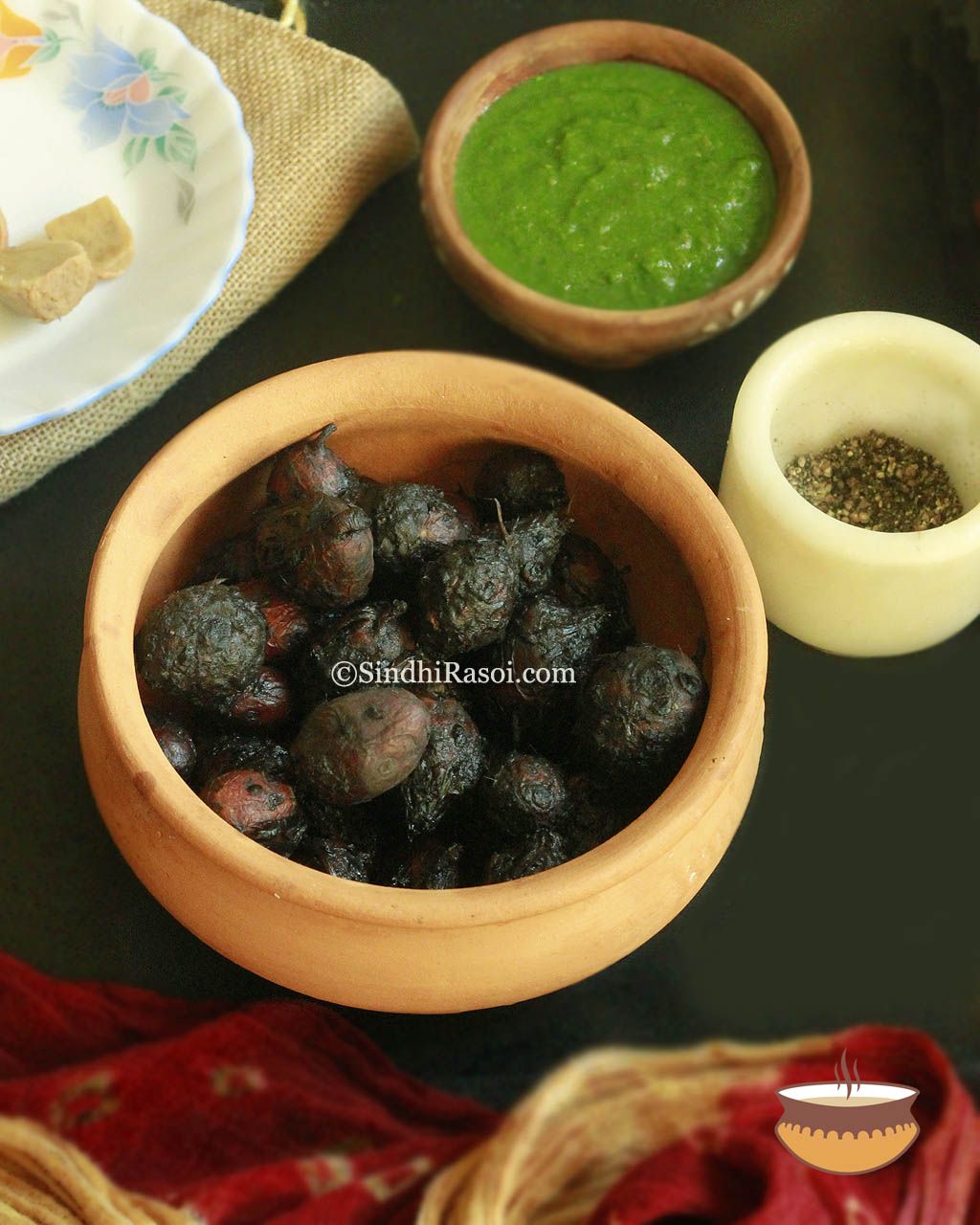
Not many of you might be aware of the Lor^h/Lor^hu/Lor^hiyun (लोड्ह/लोड्हु) from the Sindhi cuisine.
Not many of you might have tasted the earthy, rustic Lor^h. Only a few of you may remember your grandparents or parents relishing these and I bet only a handful of you appreciate the flavours of these ugly looking corms (or bulbs) of Lotus plant.
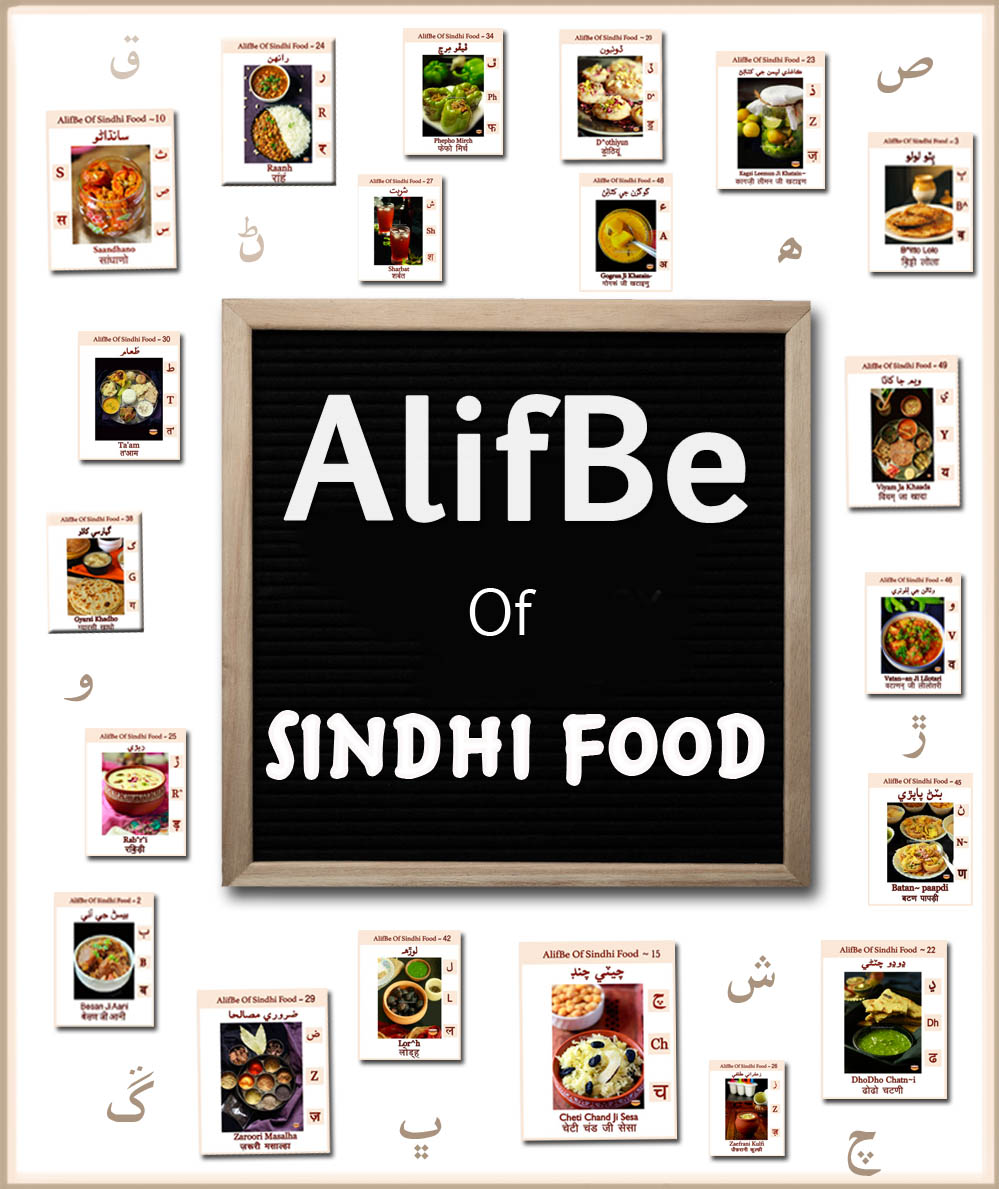
AlifBe # 42
The 42th alphabet of Arabic Sindhi script is ل in Sindhi, ल in Devanagari and ‘L‘ in Roman Sindhi.
When I first made the list of dishes for the AlifBe of Sindhi food series, I had plenty of options for the letter ‘L’ as there are many Sindhi dishes with names starting with this alphabet but as the project kept delaying, the list kept changing depending on the availability of the ingredients or the season.
At the beginning of this month I had made up my mind that it would be Lor^h for ‘L‘ as these black beauties appear in the market for a brief period around Navratri.
Lor^h are very hard to find as these are neither available online, nor in the super marts, nor in your local markets, unless there is a large percentage of Sindhi dwellers around.
I literally approached every possible source to connect me with the vendor from whom I used to buy these, till a decade ago.
But no one was able to help. I was about to give up!
But then as the saying goes ” What you seek is seeking you”….I experienced the magic !
I received a call from the Chef Vicky Ratnani (Ah! the joy of boasting!), the celebrity Chef (no introduction needed) who also runs The Speak Easy kitchen dishing out scrumptious meals, including popular Sindhi gems like Dal Pakwan, Sindhi Mutton/Chicken, Saibhaji, Kadhi etc that you can order online. And guess what he had to discuss? Yes, the Lor^h!!! He was telling about how he spotted the Lotus corms at a popular Sindhi shop in Khar and that he was wondering how these could be used in interesting ways (Do watch his Insta video about the lovely salad he made using Lorh).
I couldn’t help but crib about how I was unable to find some around.
And guess what? The most humble, generous celebrity Chef, packed some for me and despite the courier chaos he didn’t give up and sent one of his staff members to personally deliver it to my home. Who does that?
Well, that sweet gesture of Chef Vicky Ratnani truly touched my heart! Thank you Chef Vicky, for the Lor^h and Zillion thanks for always encouraging me to work harder!

Coming back to the Lor^h (लोड्ह), you may have read about my love for these unusual tasting corms in this post!
But like many of you, even I had limited knowledge about what exactly these are.
My friend Sangeeta Khanna enlightened me a few years ago, that these are the corms of Lotus or maybe a Water Lily plant.

So what are corms?
Some plants have underground stems that are swollen (mostly round or oval) and are used as the storehouse of nutrients/food. The plant stores nutrients in these stems, called corms, during the season. These reserved nutrients in the corms are then used by the plant to produce leaves, flowers, roots etc in the next season.
So basically corms store nutrients throughout the unfavourable season to help the plant reproduce when the right season arrives.
Experts, kindly correct me if I am wrong!!
Ps: A little more research lead me to the fact that these are probably known as Shaluk, the Nymphaeaceae root vegetable (also the Lily is called with the same name, I guess) and are relished in Bangladesh as well.

And Lor^h are the corms of Lotus or maybe the water lily plant. Sindhi dictionary mentions it as a root tuber of water lily.
These are often found on the carts along with Lotus stem and Pabhodi (Pabhun) i.e Lotus pods around Navratri and the season lasts for barely a few weeks.
My father was very fond of such seasonal vegetables and fruits and would often buy these when in season. Mom would boil these with just salt and water and we would enjoy these, hot and fresh, with a dash of salt and pounded black pepper and some mint coriander chutney.
Video Recipe of Lor^h:
Back in Sindh, the elderly would add Lor^h instead of potatoes in many vegetable preparations.
Have you ever tasted these?Do you like the Lor^h?
Show the picture of Lor^h to the elderly around you and let me know if they could recognise these or if they remember eating these?

- 250 gm Lor^h
- 2 Tbsp Salt
- 1 lit Water
- Salt & Pepper
- 1 Cup Coriander leaves
- ½ Cup Mint leaves
- 3-4 Spinach leaves
- 2-3 Green chillies
- 3 Garlic cloves
- 1” Ginger
- 1 tsp Cumin Seeds
- 4-5 Black PepperCorns
- ½ tsp Black salt
- Tamarind (a small lump, soaked in few tbsp of water
- Salt as per taste
- 2-3 ice cubes (to retain the green color)
- Rinse Lorh with water and get rid of mud and grit.
- In a pressure cooker, add the Lorh. Add the water (must be above the level of Lorh) and 2-3 tbsp of salt.
- Wait for 1 whistle and then lower the heat. Cook on low flame for 30-40 minutes. Switch off the heat.
- When the pressure subsides, open the lid of the cooker and drain the boiled Lorh.
- Peel, cut in slices/quarters/cubes and garnish with salt and black pepper powder.
- Dip each slice in mint coriander chutney and enjoy the seasonal bliss!
- Pick and rinse with water, coriander leaves (along with tender stems), mint and spinach leaves.
- Soak a small lump of tamarind in some water.
- In a blender jar, mix the leaves, chillies, ginger, garlic, salt, peppercorns, cumin and black salt/rock salt.
- Add soaked tamarind and 2-3 ice cubes.
- Blend till the chutney is smooth.
- Stays good for 2 days in the refrigerator.
- If you wish to make the chutney in bulk and store it for a longer duration, then do not add tamarind. In that case, while serving, add some fresh lemon juice or beaten curds (dahi).
And here is a short tutorial about how to write alphabets in Arabic Sindhi!