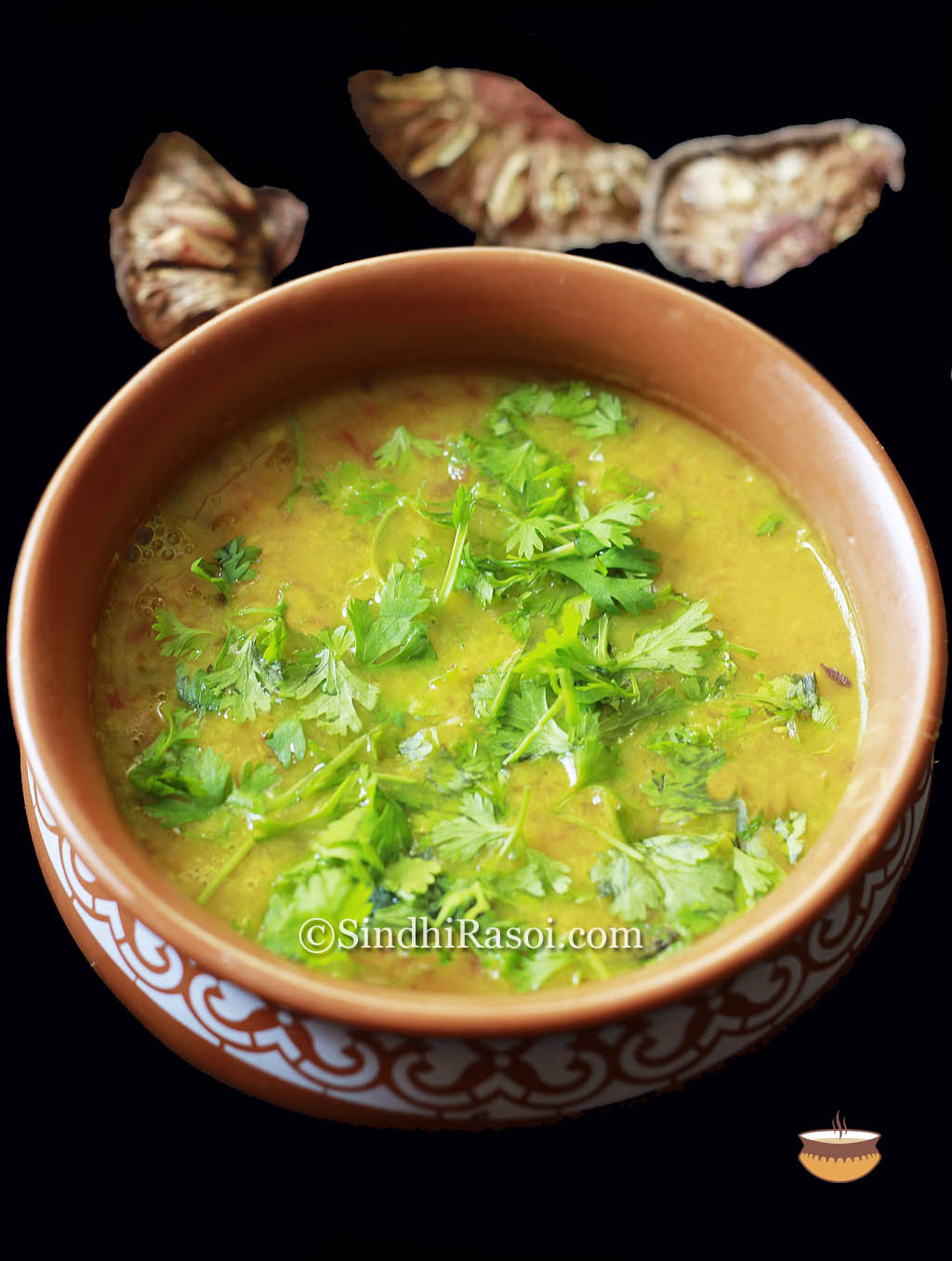
To check the recipe video of Kokum Wari Dal click here
To know details about Kokum, please do read on!
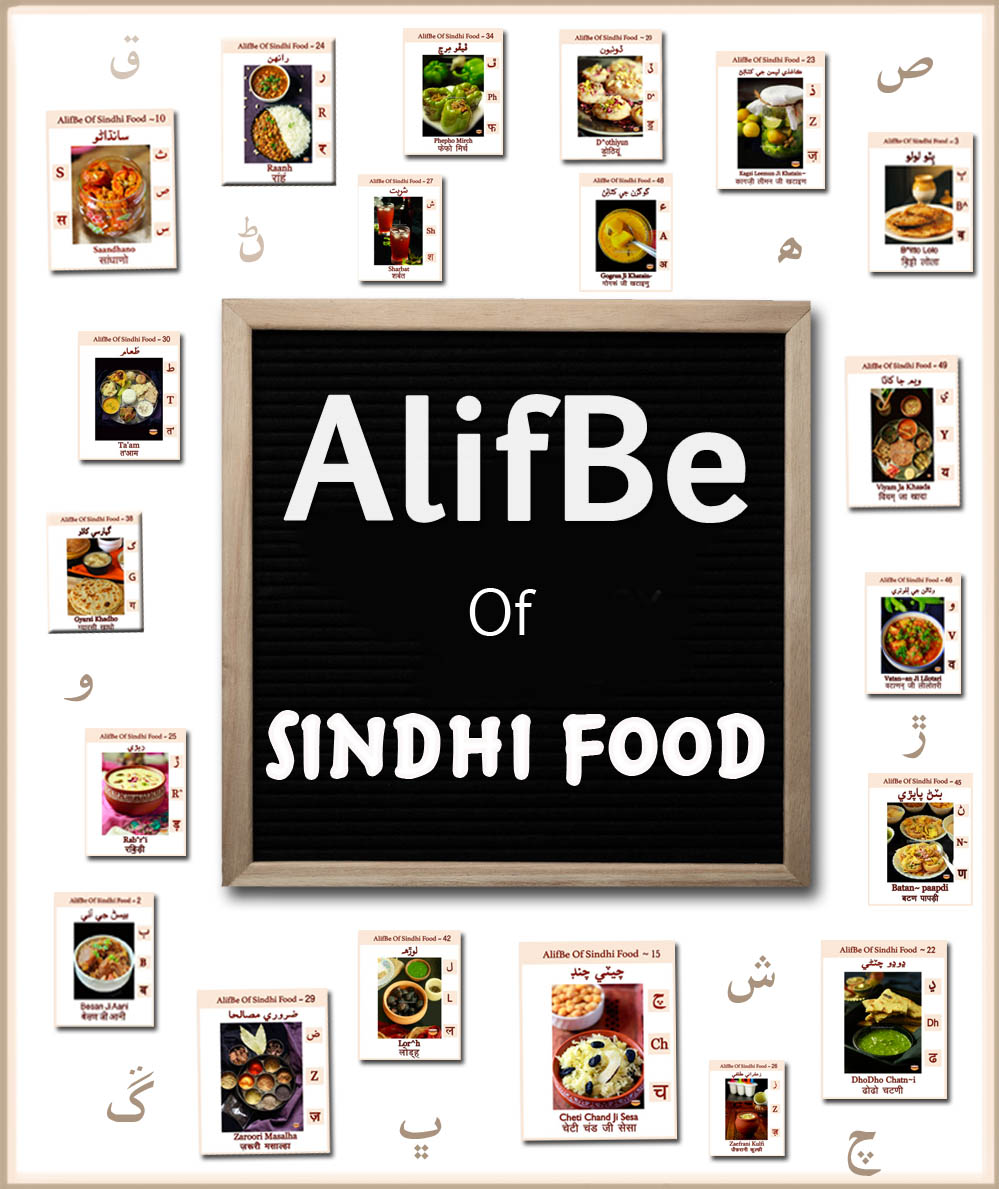
We are now at the 36th consonant in AlifBe of Sindhi food (A-Z of Sindhi Food) and it is ڪ in Sindhi, क in Devanagari and K in Roman Sindhi.
And while I had plenty of options to choose from, for a Sindhi dish starting with this alphabet, I picked Kokum Wari Dal.

Few days ago, I was having an interesting conversation with Saaz Aggarwal; the well known Biographer, columnist, Historian and author of wonderful books like ‘Sindh: Stories from a Vanished Homeland’, Sindhi Tapestry, The Amils of Sindh and more and as we spoke about Sindhis, about their culture, food, rituals and about the influences we have from varying communities she did mention Kokum (Garcinia indica) and we both were curious to know how this tangy sun dried fruit from the Konkan belt paved its way in Sindhi Kadhi and Dal.
So I decided to look around for some information about the Kokum phool or Kukum ja Gullah (also known as Kokum Ja Gullah) and I ended by feeling more confused.
Firstly I could never figure out why the fruits of Garcinia indica (Kokum) are called Kokum phool in Hindi and Kukum ja gullah (Gullah = flowers in Sindhi language).
Secondly, there is no proper information available about the difference between black kokum and white kokum.
Fruits of Garcinia indica are generally sold either as the dried rind (the dark purple leathery skin) or as the dried slices of fruit along with seeds. The slices could be circular or the fruit could be sliced vertically.
I haven’t seen the leathery rind being used in any Sindhi preparation. What we use, is generally called the ‘White kokum’ by non Sindhis while we call it as Kukum ja gullah.

I did compare many samples from different shops and I found that the seeds and the dried fibre of Kokum phool from different places appeared different in terms of shape, size and texture but then a lay man cannot figure out if those batches came from different species of the same family or if those are different fruits altogether. I regret not capturing pictures of all the samples that I saw in different kirana shops.

Sometimes I doubt if the Kokum phool that we Sindhis consume are actually the fruits from Garcina (varying species) or are those the dried monkey fruits i.e Artocarpus lacucha (Vatamba), since the texture of some of the samples of Kukum Ja Gullah that I saw, looked very much like the dried Vatamba, though the pericarp appeared to be thicker. Not sure how different both (Kokum phool and Monkey fruit) are supposed to taste but the only sample I had of Vatamba, a long ago, tasted not very different in the Kadhi, from the Kokum phool (Garcinia indica) that Sindhis use.
So is it possible that Vatamba is sold in the name of Kokum phool? Or is my thinking too wild?
When and how did Kokum phool got infuse in Sindhi style preparations ?
Well, again there are vague theories only because I couldn’t track down the actual timeline and the route via which Kokum reached Sindhi kitchens.
To begin with, Kokum is found in the Konkan Belt, the western coastal region of India. The region was a part of the Bombay Presidency along with the Sindh region (Now in Pakistan) and perhaps the traders from Sindh took with them the dried kokum phool with better shelf life to use it as an alternate (or add on) souring agent.
Or perhaps the people from Goa who migrated to Karachi in 1820’s took these with them and Sindhi folks who are quick to adapt from the surroundings, selectively adapted the dried kokum fruits ignoring the leathery rind.
Perhaps the ancient Sindhis didn’t like the way the rind imparts color to the final dish and they were more happy with the dried fruit that infuses wonderful fruity, tangy flavors to the Dal or Kadhi, without affecting the color of the dish.
Or is Kokum an influence from Gujarat, since the dried Kokum is also used in Dal in Gujarati cuisine?
Or did it entered in our Kitchens via Malaysia? Since there is a mention of Garcinia cambogia in a dictionary where it is referred to as a ‘Malaysian plant’. There is a reference of Mangosteen too but I couldn’t find anything about Garcinia indica in Sindhi dictionary or articles that I could refer so far.
Would love to hear from you if you know the details. Please do share your views or bits of information on this, in the comments below.

For now, I am sharing a recipe of everyday dal, made in Sindhi homes, where mostly tomatoes are used as a souring agent but sometimes dried Kokum phool are added for the extra oomph!
Sindhis mostly consume mung dal with rice. Toor/masoor/urad dal chilka etc were less popular with previous generation of Sindhis, particularly those living around Bombay (Now, Mumbai). Of course now things have changed and we do include the above mentioned dal in our regular diet too.

One thing that I have noticed in many Sindhi kitchens is that unlike the regular practise, we cook dal for a while after tempering (mostly people do not cook dal after it is tempered).
Serves: 4 servings
- ½ Cup Mung Dal
- 2 small Tomatoes
- 1-2 Green Chillies
- ½ " Ginger
- 4-5 Dried Kokum Phool
- ½ tsp Turmeric
- ¼ tsp Red chilli Powder
- 1 tbsp Cumin seeds
- 2 tbsp Ghee/ Oil
- 7- 8 Curry Leaves
- Salt As per Taste
- Coriander Leaves for Garnish
- Soak half a cup of mung dal in water for 20- 30 minutes.
- Drain and rinse with fresh water, a couple of times.
- In a pressure cooker, add soaked dal and around 2- 2.5 cups of water.
- Let the dal boil. Collect the scum (froth) and discard it.
- Add grated tomatoes, chopped chillies and ginger along with salt and turmeric powder.
- Rinse Kokum phool with water properly.
- You can add Kokum at this stage or after the tadka. I prefer to add it along with tomatoes.
- Close the cooker with the lid and wait for 2 whistles of the pressure cooker.
- Switch off the flame.
- Once the pressure subsides, whisk the dal using wooden whisker.
- Add hot water, if needed. If eating with rice I do like the dal to be on thinner side so I did add around a cup of water.
- Heat 2 tbsp of oil/ghee in a tadka pan and add cumin and curry leaves. When cumin seeds turn darker, switch off the flame and add red chilli powder. Pour the tadka in the dal.
- Immediately cover the cooker with the lid so that the dal absorbs the aroma of the tempering.
- After 2 minutes, stir and add some coriander leaves.
- Close the pressure cooker with the lid and cook again (1-2 whistles of the pressure cooker).
- Garnish with some more coriander leaves before serving.
- Can have it with roti/phulka and/or rice.
- Note: Many prefer to cook this dal in open pan (Sipri). The process remains the same though the amount of water required may be more when cooked in an open pan.
- Many like to add kokum phool after tempering as they dont like to whisk the dal having kokum phool. In that case, do add kokum after the tempering and allow dal to simmer for 10 minutes so that it can absorb the flavors of Kokum phool.

So informative
Love it
Thank you so much 🙂