Gogo or Gogro is a Sindhi festival celebrated in honor of the God of snakes, named Gogal Devta. It is celebrated as Nag panchmi by many Indian communities.
Gogo is now observed only by a small percentage of Sindhi families and many are not aware of the rituals as well.
But for those who wish to know why and how this festival was celebrated, here I am, with some details about the Gogo festival.
The Legend:
Gogo (Gogal), as per a legend, was the grandson of King Gopichand who ruled a place in Thatta (Now in Sindh, Pakistan). Gogo’s mother inhaled the aroma of a flower carrying the ‘soul’ of a saint and got pregnant. No one in her family and around, believed her and to save his family from embarrassment, the King abandoned her.
She gave birth to a son named Gogo, in the forest.
Gogo grew up in the forest and the legend says that he was immune to snake poison as he was probably bitten by many snakes (many believe that snakes would feed him poison) and when he grew up he started treating snake bites just by his powerful gaze.
He also started extracting more venom from snakes to feed his seven disciples.
The snakes were offended as no one was afraid of snakes any more and hence one of the snakes decided to kill Gogo. It borrowed venom from a Python and bit Gogo on his jaw where his own gaze won’t reach and hence Gogo couldn’t treat himself and succumbed to the snake bite.
When King Cobra came to know about the death of Gogo, it got furious and immediately killed the snake . King Cobra also cursed the Python that it won’t be able to produce venom any more. The legend says that from that moment onwards Pythons turned non poisonous.
A logical reason behind celebrating Nag panchmi: Most of our ancestors were either farmers or lived in villages around jungles. In the monsoon when it rains, the burrows where snakes live are often filled with water and hence snakes tend to move out and find shelters around causing fear and anxiety in people living in the vicinity. Also during rains many frogs are found around the ponds and in the fields and snakes like to feast on the amphibians. More the snakes venture out in the field, more scared people would feel. In the mode of panic, even the non-poisonous snakes were/are killed.
But our ancestors were aware of the fact that snakes are farmer’s best friends as snakes kill rodents and pests that often destroy the crops. When snake population declines, rodents increase in number causing harm to the crops and the ecosystem is affected too.
In olden days many people would collect snakes and keep them covered in huge earthen pots, during monsoons, particularly during Shravan month, feeding the snakes from time to time so that neither villagers are harmed by freely moving snakes nor the snakes get killed. So to sensitise the people about the reptiles and to remove the fear of snakes from their minds, Naag Panchami was celebrated where people would bow down to the otherwise scary reptiles, offering milk to the snakes to seek blessings!
In most of the temples or around, on this day, you will find snake charmers carrying non poisonous snakes in baskets. People offer milk to the snakes and money/food/fruits to the snake charmer.
Sadly, eventually, this became a business for some people. Ideally snakes do not drink milk but are actually forced to drink it by the charmers to appease people for the sake of money.
Urban population is clueless about how to tackle snakes or snake bites so it is not advisable for them to visit snake mounds to offer milk or grains, without a local guide.
Considering this situation many Sindhi families no longer observe Gogo.
The Food:
Sindhis cook food on the eve of Gogo and eat only ‘stale’ or Thadho (cold) food on Naag panchmi.
The food made on Gogo is same as that made for Thadri (Satain) but the Pooja rituals are bit different.
 The stove (Kerosene stove or gas burner) on which Lola are made on the eve of Gogo is not lit for the whole day on Gogo.
The food cooked is as follows:
(Please click on the name of the dish for its recipe)
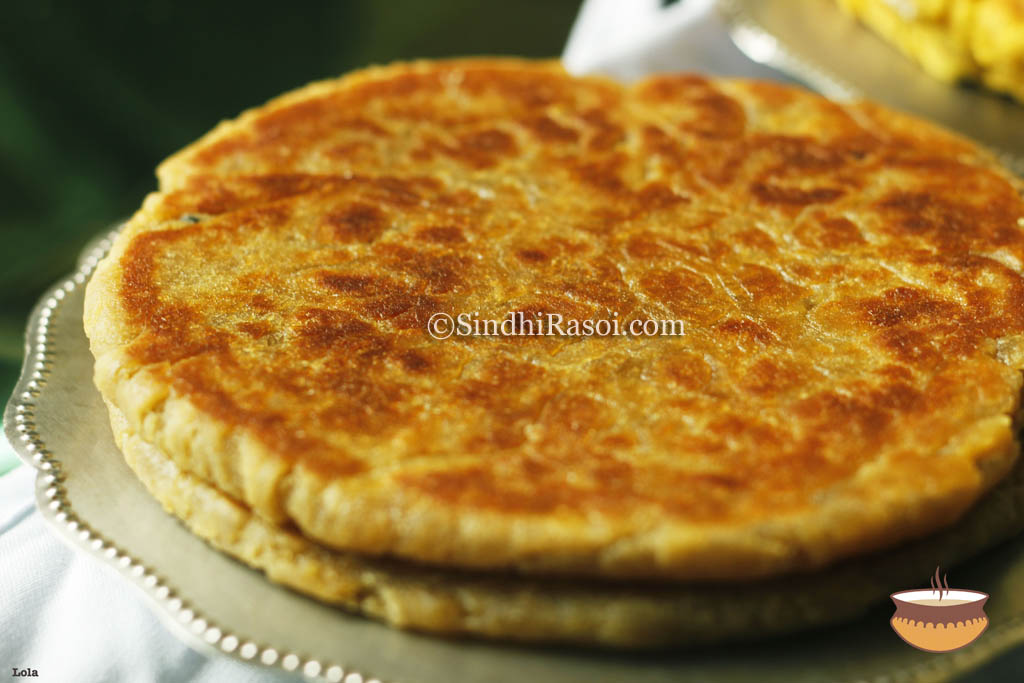
1) Lolo : Jaggery sweetened whole wheat flat bread.

2) Koki. : Savory whole wheat roti spiced with onions, chillies, coriander leaves, dried pomegranate seeds etc.

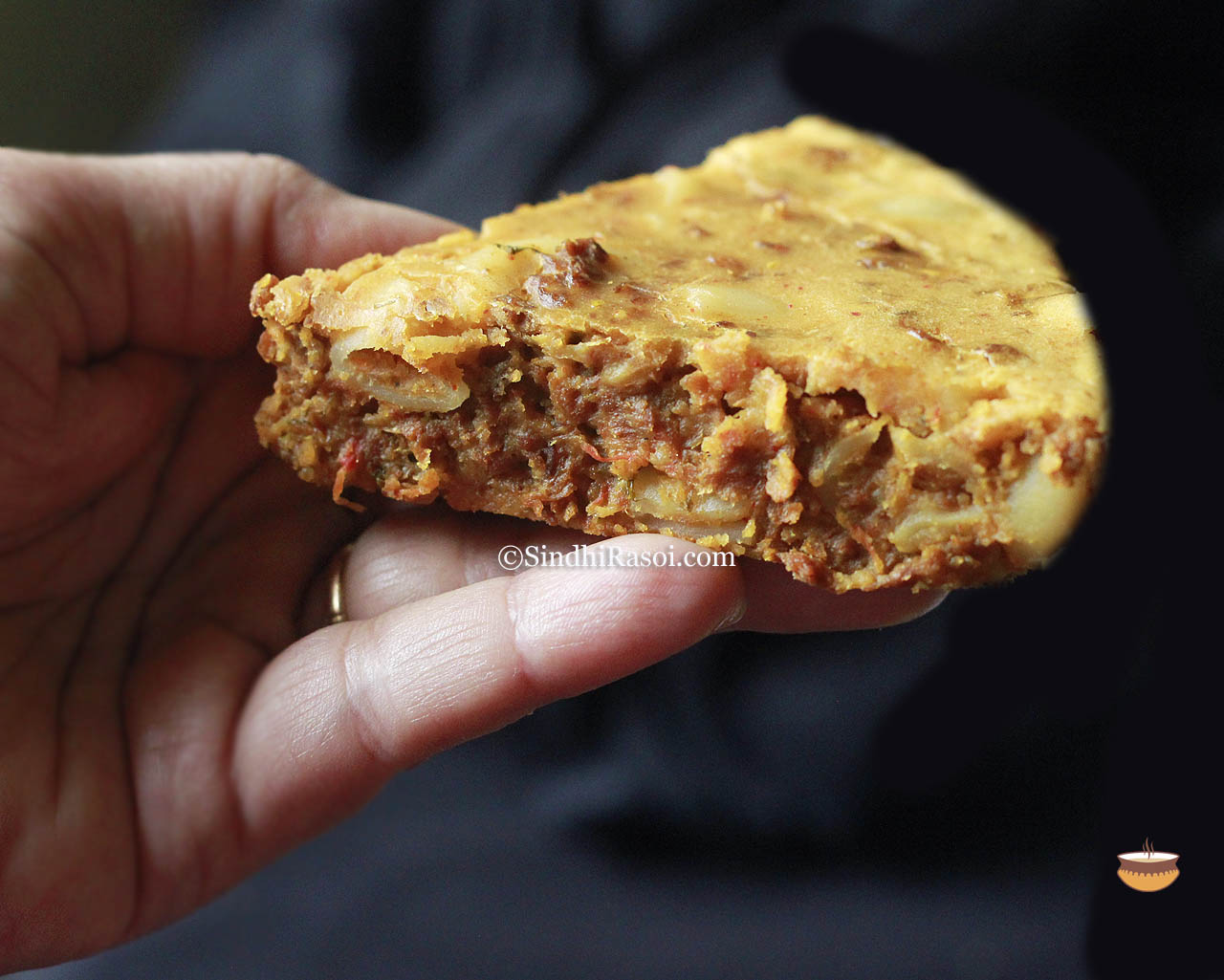
3) Besani : Same as Koki, but here, gram flour is used instead of whole wheat flour

4) Dal paata: Mung dal stuffed paratha.

To make dal paata phulka, rinse well and soak moong dal for an hour. Drain and roast slightly with some oil in a pan, add salt, turmeric powder and green chillies (optional) and boil in little water till al dente. Drain if there is any excess water. You can add a tempering of cumin seeds, coriander powder and red chili powder and add some amchoor too. Cool properly and use this to make stuffed parathas, the way aloo parathas (or any other stuffed paratha ) are made, using whole wheat flour dough.
Around 1 cup of dal is needed to make 4-5 parathas.
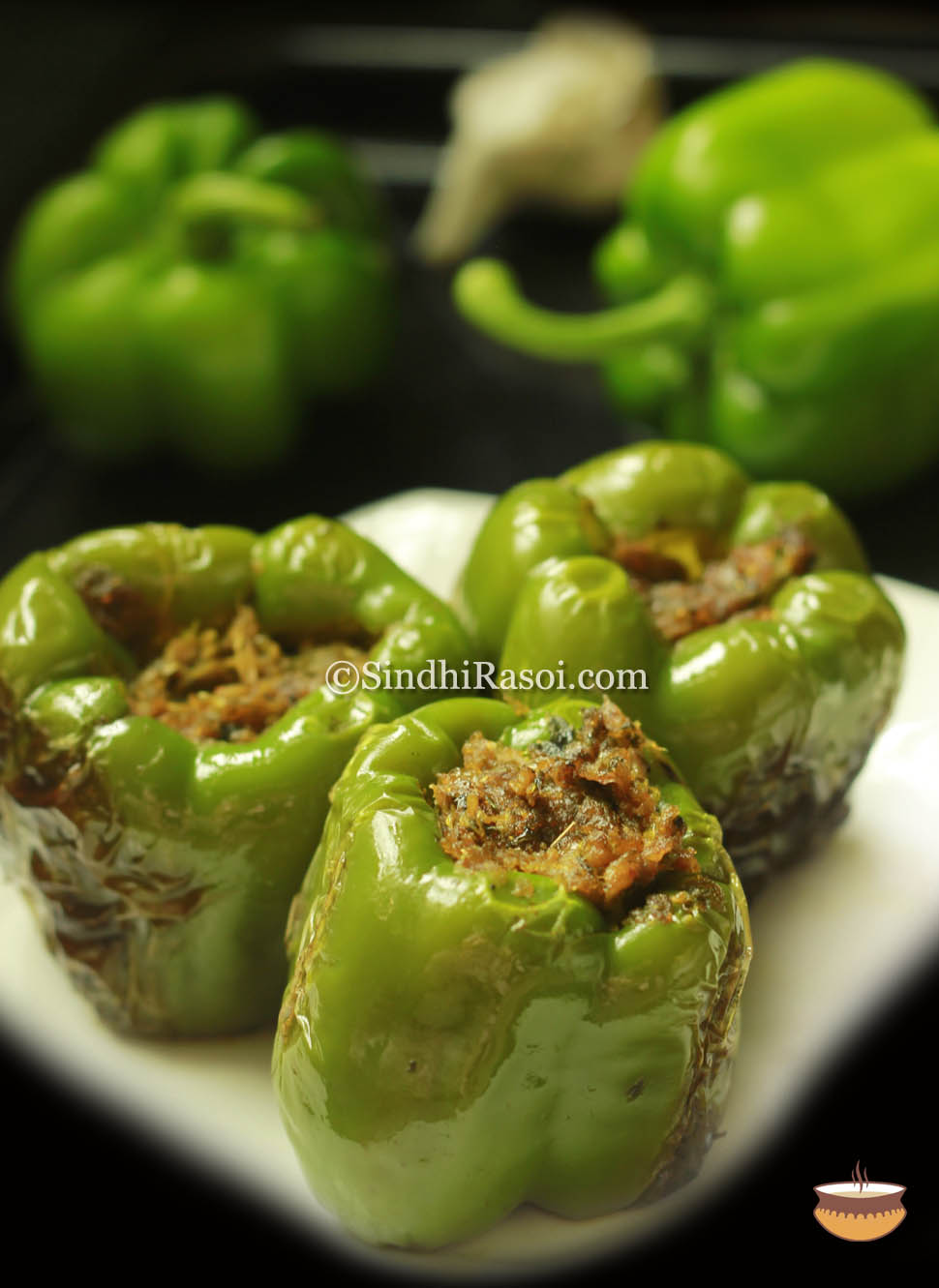
Apart from the flatbreads, fried vegetables like Okra, potatoes etc are also made. Urad dal vada are made and are added to beaten curds to make dahi vada on Gogo. Many prefer boondi raita over dahi vada.

Some make fritters ( mostly Mirchai pakora i.e Chilli fritters are preferred) while other cook subzis with better shelf life. Stir fried methi, spinach etc are often made for the occasion, along with stuffed bitter gourds.

Green chutney, boiled potatoes, beetroot, bread etc are kept handy for those who cannot consume the heavy food for all the three meals and vegetarian sandwich is a nice option for them as it involves no cooking.
Pickles and home set curds are mostly had on this day to add to the probiotic quotient of the food.
Khatto bhat~u or Kanbo bhat~u is also made in some homes, for this festival. It is basically boiled rice, cooled and mixed with some milk and curd starter (jaaman) along with a little of mustard powder. The mix is allowed to set overnight and is had in the morning, with some fresh curds and a garnish of mustard and pepper powder.

Rituals:

After making all the food, seven ( the number varies from family to family) Akhryun/Akhdyun are made. A portion of Lola dough is kept aside (or some people make the dough for Akhryun/Akhdyun, separately) and at the end of the cooking process, a small earthen plate called daangi is kept on the stove. The reserved dough is divided in to seven portions.
In some families the Akhryun/Akhdyun are cooked on the earthen plate, while in other families, it is left uncooked for the Puja. In some homes these are deep fried.
Basically Akhryun are flattened dough balls and are an integral part of Puja rituals.

The puja rituals vary considerably from family to family. As mentioned earlier, most of the families follow the same rituals as that of Thadri and you can read all the details about it in this blog post!
Now, mostly, on this day, Sindhis offer a mix of milk and water to the snake idols in the temple instead of going around looking for the real snakes.