In Arabic Sindhi there are two consonants that sound similar but are actually different; ت and ط , i.e ‘T’ as in Taiwan, Tahini, Tabla etc.
ت as in Tosha was covered in the AlifBe~ 6 , while the 30th consonant i.e ط is what we are discussing today. Unlike the ت that is used for words of Sindhi origin, ط is used for words of Urdu/Persian/Arabic origin.
So what are we going to discuss today?
Ta’am is what we will talk about.

Meaning of the word Ta’am varies across the different languages. While in Jewish it means ‘taste’, in Turkish and in Urdu it means ‘Food’.
Many believe that the word Ta’am comes from ‘Tamsik’ or Tamasic,
one of the three Gunas or attributes in which food could be divided as per yogic concept or as per ‘Samkhya’ school of Indian (Hindu) philosophy. Tamsic food is what that makes you lethargic. Not sure that’s what Ta’am in Sindhi means!
In Sindhi it generally means ‘Dish’ which could be both; food as well a serving plate/thal!
Also in Sindhi, the word Ta’am (pronounced as त’आम) could mean the variety of dishes or a festive spread or even a daawat. You would often hear a child being asked “What Ta’am did your Grandmother feed you”? after he or she is back from a visit to Grandparents. Or a sarcastic remark ” Ta’am toh khaeen” (“enjoying a feast”) hurled at you by a friend or a neighbor when you are spotted eating a luxurious meal, is not uncommon.
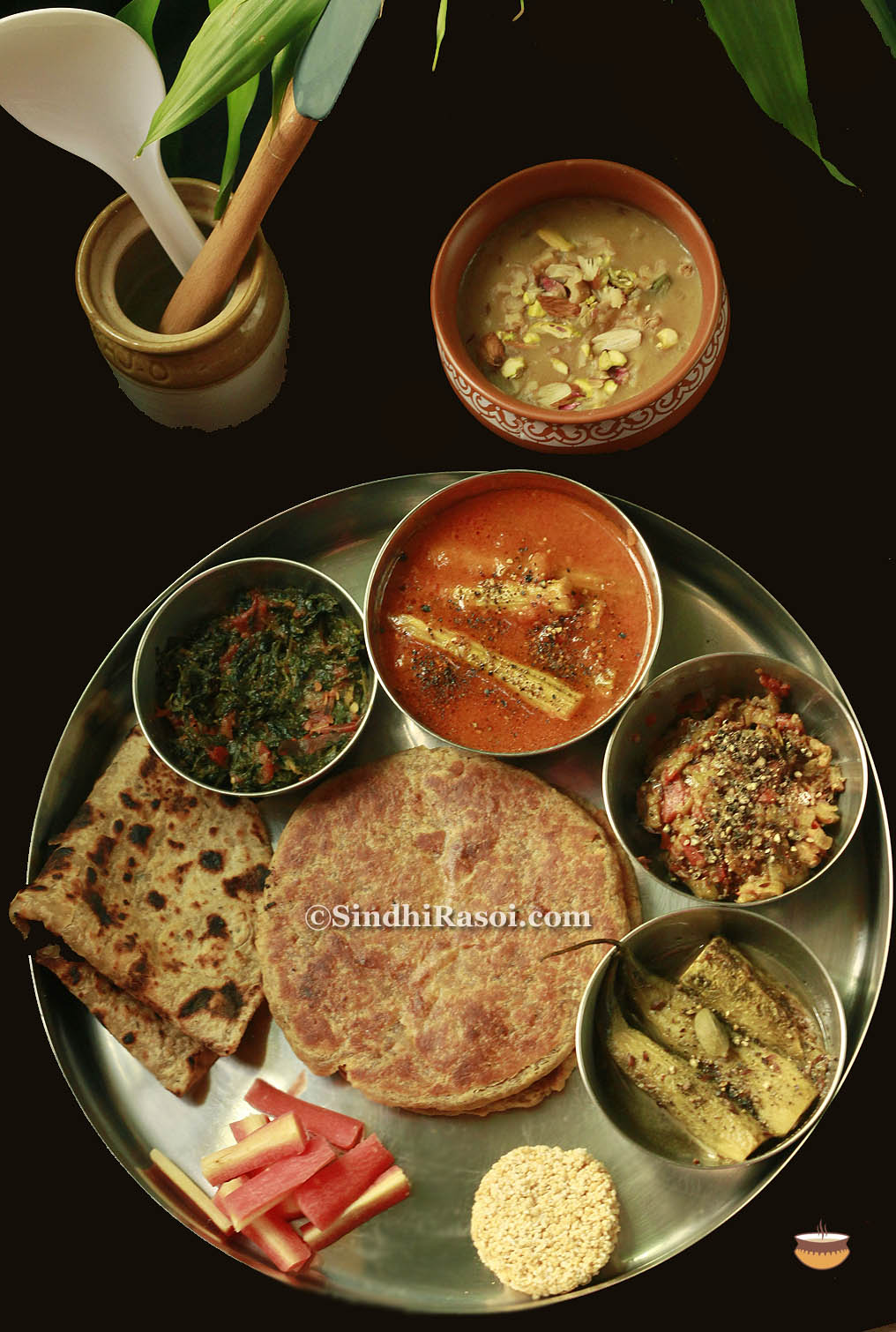
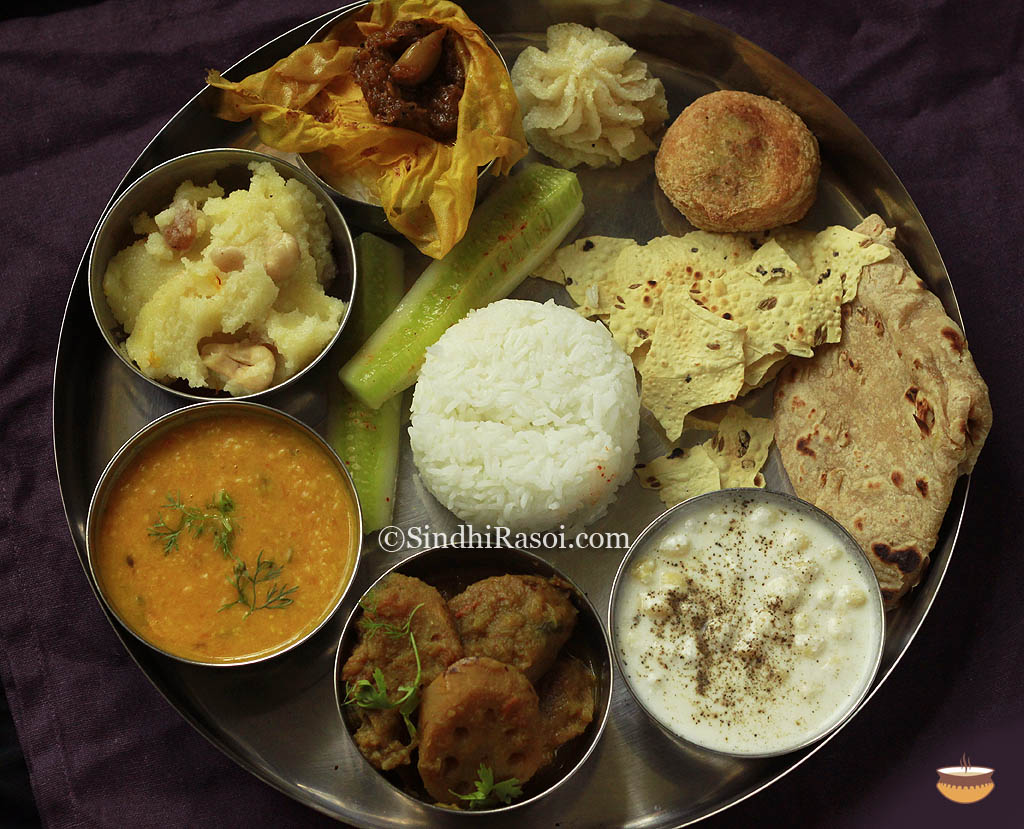
And here is one such platter or Sindhi Ta’am for AlifBe of Sindhi Food!

Starting from Raita in the clockwise direction:
D^ahi Boondi (Raita)
Beeh Patata (in thickish or ‘lipti hui‘ gravy)
Dhotal dal (Yellow Mung dal)
Sooji jo seero (Sooji or Semolina halwa)
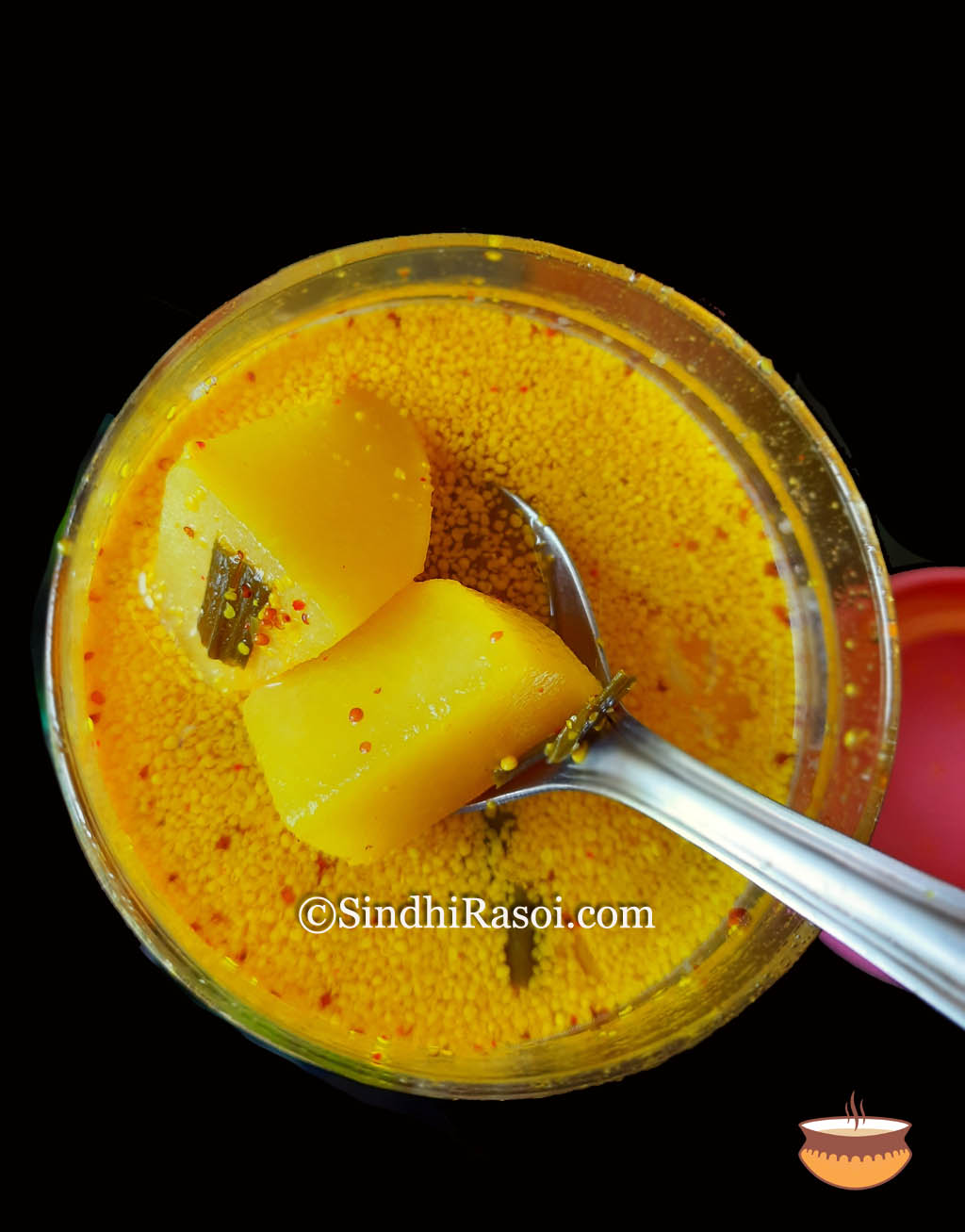
Bheendi pickle (grated raw mango pickle)
Sindhi Kachri (Rice flour Fryums made in flower shape)
Beeh patate ji Tikki (Mashed lotus stem and potato vada)-Scroll down for the recipe!
Sindhi Papad
Phulko (Whole wheat flour roti)
Chanvar (Boiled rice)
Vangi (Cucumber)

We don’t get good quality lotus stem around our home so our parents (MIL and FIL) make sure to send in some for me to cook and relish it the way I would prefer. This time too, the lotus stem is courtesy Papa, my father-in-law!
For the Recipe click here: Beeh Patata (in thickish or ‘lipti hui‘ gravy)

Dal Recipe: Dhotal dal (Yellow Mung dal)

Recipe: Sooji jo seero (Sooji or Semolina halwa)

Recipe: Bheendi pickle (grated raw mango pickle)


- 150 gm Lotus stem
- 2 Potatoes, boiled
- 2 green chillies
- Salt as per taste
- 2-3 cloves of garlic (optional)
- Ginger ½ inch piece
- Garam masala powder ½ tbsp
- Coriander powder ½ tsp
- Turmeric (Optional) ¼ tsp
- Amchoor ½ tsp
- Annardana (Dried Pomegranate seeds) 1 tsp
- Whole coriander seeds 1 tsp
- Coriander leaves, a handful
- 1 Cup Besan
- Salt as per taste
- Turmeric powder ½ tsp
- Red chilli powder ½- 1 tsp
- Meethi soda (Cooking/baking soda) a generous pinch
- Oil for frying
- Clean Lotus stem and slice in small pieces.
- In a pressure cooker, add lotus stem, salt and 2-3 cups of water.
- Cook under pressure for 2-3 whistles or till lotus stem is soft enough to mash.
- Drain and mash it well.
- Pound ginger, garlic, chillies, annardana and coriander seeds.
- In a mixing bowl, add mashed lotus stem, mashed boiled potatoes, salt, pounded mix, spices, coriander leaves and mix well.
- Divide this dough into 5- 6 balls, more or less depending upon how big or small you wish the vadas to be.
- In a separate bowl, mix besan, salt, chilli powder, turmeric and baking soda and gradually add water to make a smooth batter of pouring consistency.
- Heat oil for frying in a kadai.
- Dip each ball into the batter, coat well and drop carefully in the hot oil. Do not crowd the kadai/pan. Fry in batches if needed.
- Fry on medium flame till almost cooked.
- Remove from the pan and let the vada cook down a bit.
- Press each vada, gently, in between your palms to flatten it (i.e make a tikki).
- Flash fry in hot oil to make the besan coating crisp.
- You can avoid double frying and instead fry the vada just once but a typical Sindhi style tikki is twice fried.
- Tastes best with mint coriander chutney.
And before I sign off for the day, here is a small video about how to write Sindhi AlifBe!